

Table of Contents
ToggleWhat is SEO and How It Works
When most business owners hear “SEO,” they think of rankings, keywords, or something technical their developer mentioned once and never explained again. In reality, SEO is much simpler—and much more strategic—than it’s often made out to be.
After working with local service businesses, real estate professionals, and small brands for years, I’ve learned this truth the hard way:
SEO is not about pleasing Google. It’s about removing friction between a buyer’s problem and your solution—using search engines as the bridge.
This guide explains what SEO actually is, how it works behind the scenes, and how businesses can use it to generate predictable leads, not just impressions.

What Is SEO ?
SEO (Search Engine Optimization) is the process of making your website the most useful, trustworthy, and relevant answer when someone searches for a problem you solve.
It has two audiences:
- Real people searching with intent (buyers, not browsers)
- Search engines trying to decide which result deserves attention

How Search Engines Actually Work
Search engines don’t “rank websites.” They evaluate pages.
Behind the scenes, three things happen continuously:
1. Discovery
Search engines discover pages mainly through:
- Links from other websites
- Internal links within your own site
- Sitemaps (optional but helpful)
Real-world issue I see often:
tructure guides crawlers. Result? Pages sit invisible for months.
Fix:
- Build internal links intentionally
- Earn local citations and mentions
- Promote content beyond just “publishing it”
2. Understanding
Once discovered, search engines try to understand:
What problem the page solves
It helps buyers make clear, confident decisions by removing confusion and misinformation. The page answers real questions with practical, experience-backed guidance.
Who it’s for
It’s for serious buyers, investors, or decision-makers who want clarity, not sales talk. Especially useful for people comparing options and reducing risk before acting.
Whether it’s trustworthy
Trust comes from real experience, verified data, and transparent pros and cons. When claims are supported with proof and honest insights, credibility is earned.
They do this by analyzing:
- Page structure
- Language clarity
- Context (not keyword repetition)
- Supporting signals like images, links, and references
Buyer problem:
I wrote a long blog, but it never ranks
Common reason:
The page talks around a topic instead of solving one specific search intent.
3. Evaluation
Your page is evaluated against others based on:
Usefulness
The content directly helps users make a decision by answering real questions and reducing risk. It focuses on actions, outcomes, and practical guidance.
Clarity
Information is structured, easy to understand, and free from jargon. Clear explanations remove confusion at each decision stage.
Authority signals
Real experience, verified data, and references to trusted sources build credibility. Honest pros, cons, and case examples reinforce expertise.
User satisfaction indicators
Time spent on page, engagement, and repeat visits show the content meets intent. When users don’t need to search again, satisfaction is high.

SEO Starts With Intent, Not Keywords
Most SEO fails because businesses optimize for words, not intent.
Example from real estate:
- Bad target: “Luxury homes”
- Strong target: “4 BHK luxury apartments near [location] under ₹X crore”
My rule:
If a keyword doesn’t represent a decision-making moment, it’s not a priority.
Read More: How to Choose the Best SEO Services in Ahmedabad (A Practical, Experience-Based Guide)
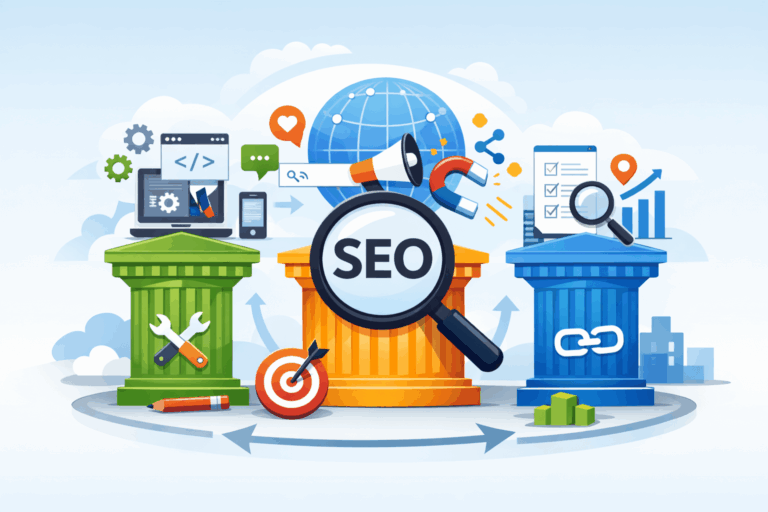
The Three Pillars of SEO
1. Content That Solves a Specific Problem
High-ranking pages don’t try to impress Google. They answer one question better than anything else online.
Effective SEO content:
Addresses objections
It directly answers doubts, risks, and “what if” concerns instead of avoiding them. This builds trust and reduces hesitation.
Explains trade-offs
It clearly shows what you gain and what you give up with each option. Honest comparisons prevent regret later.
Uses real examples
Actual scenarios, numbers, and outcomes make the information believable and practical. Readers can relate it to their own situation.
Helps the reader decide
The content guides readers toward the right choice based on their needs, not a sale. Clear conclusions turn information into confidence.
Case example:
A local property consultant replaced generic area guides with:
Is buying a flat in [Area] a good investment in 2026?
Reply with the area (e.g., “Satellite Road, Ahmedabad”) and I’ll tell you in 2 lines whether buying a flat there in 2026 is a good investment.
2. Structure That Makes Understanding Easy
That means:
- Logical page flow
- Clear headings
- Descriptive URLs
- One main topic per page
Mistake I see often:
Businesses cram multiple services, locations, and offers onto one page.
Fix:
Create focused pages that match how buyers search.
3. Trust Signals That Reduce Risk
Search engines look for:
- Real expertise
- First-hand experience
- External validation
What actually helps:
- Case studies
- Author credentials
- Customer reviews
- Accurate, up-to-date information
- Honest comparisons (pros & cons)

Technical SEO: Only What Actually Matters
But these do matter:
- Pages must load properly
- Content must be accessible (no blocked resources)
- Mobile experience must be usable
- Duplicate URLs should be controlled
Reality check:
If your site is readable, fast enough, and crawlable, you’re already ahead of many competitors.
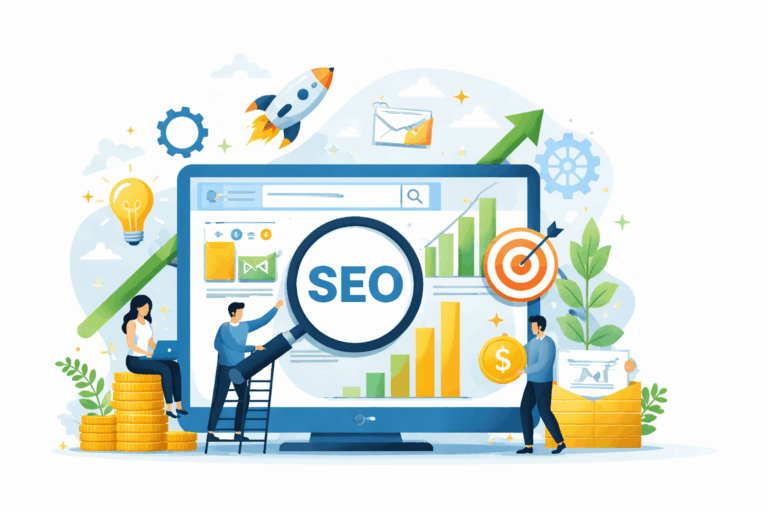
How SEO Delivers Business Results
SEO works when it supports decision-making, not vanity metrics.
Real buyer journey:
Research problem
The reader is trying to clearly understand their needs, risks, and constraints. Accurate, experience-based information reduces early-stage confusion.
Compare options
They want side-by-side clarity on choices, trade-offs, and outcomes. Honest comparisons help narrow down the best fit.
Evaluate trust
The reader looks for proof, transparency, and real-world experience. Credible data and balanced insights build confidence.
Take action
Once clarity and trust are established, the reader is ready to move forward. Clear next steps remove hesitation and enable action.
Example:
- Blog → Awareness
- Comparison page → Consideration
- Service page → Decision
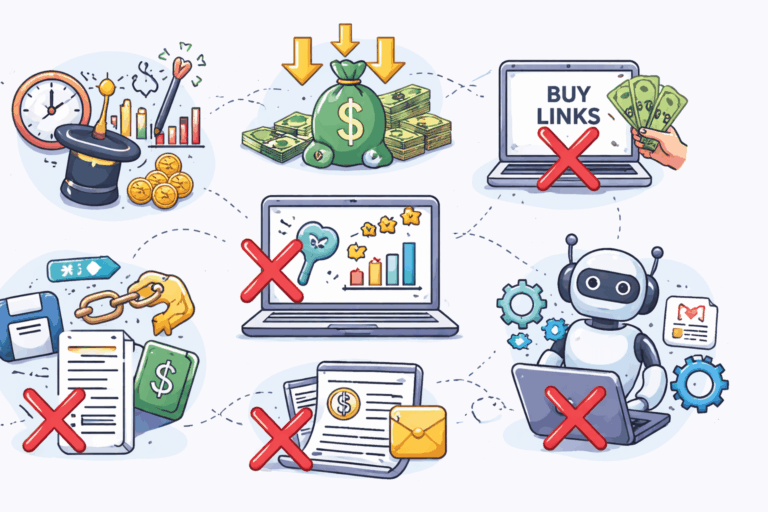
What SEO Is NOT
Let’s clear some myths that cost businesses time and money:
- ❌ Keyword stuffing doesn’t work
- ❌ Meta keywords don’t matter
- ❌ Domain keywords won’t save weak content
- ❌ Word count alone doesn’t rank pages
- ❌ SEO is not a one-time setup
Read More: Local SEO mistakes to avoid in 2026

How Long Does SEO Take to Work?
From experience:
- Small improvements: weeks
- Meaningful growth: 3–6 months
- Authority building: 6–12 months

A Simple Step-by-Step SEO Framework
Identify buyer-intent searches
Focus on keywords that show clear problems, comparisons, or readiness to act. These searches signal real decision-making, not casual browsing.
Create one focused page per intent
Each page should solve one specific need or question completely. This prevents dilution and improves relevance for both users and search engines.
Structure content for clarity
Use logical sections, clear headings, and simple language. Well-structured content helps users scan, understand, and decide faster.
Add proof and experience
Include real examples, data, case studies, and firsthand insights. Experience-backed content builds trust and authority.
Internally link strategically
Guide users to related, helpful pages at the right moment. Internal links support deeper understanding and better navigation.
Structure content for clarity
Share content where your audience already spends time. Distribution ensures the right people actually see valuable information.
Add proof and experience
Analyze engagement, drop-offs, and feedback. Optimize content based on how real users interact, not assumptions.
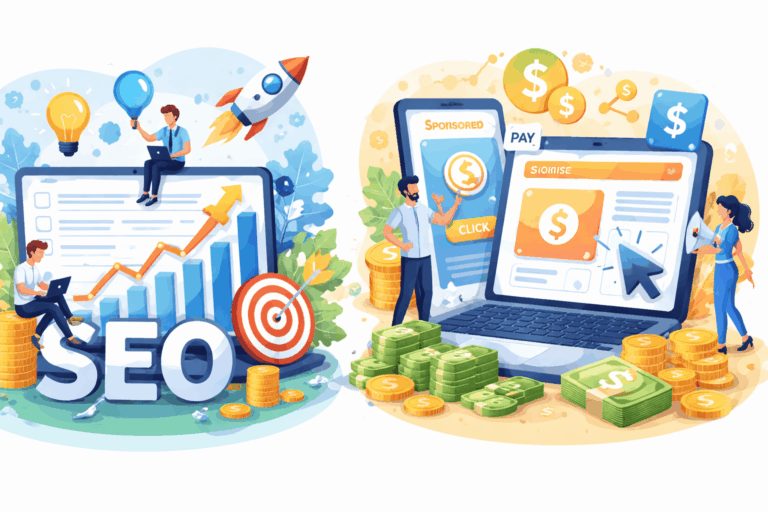
Why SEO Still Beats Paid Ads Long-Term
SEO:
Builds trust before contact
Buyers feel informed and confident before reaching out. This reduces skepticism and shortens sales conversations.
Lowers acquisition costs over time
Strong content and organic visibility reduce reliance on paid ads. Cost per lead drops as authority compounds.
Attracts higher-intent buyers
People who engage already understand the value and fit. Leads are more qualified and easier to convert.
Compounds month after month
Quality content continues to drive traffic, trust, and leads over time. Results grow without proportional increases in spend.
Conclusion
All the content principles discussed point to one clear truth: modern digital success is built by helping people make better decisions, not by pushing them faster to convert. When content is designed to respect buyer intelligence, reduce confusion, and answer real questions, it naturally builds trust before contact ever happens. This trust is what separates high-performing pages from content that only generates traffic but no results.
By identifying buyer-intent searches and creating one focused page per intent, you align directly with what users are trying to solve. Clear structure, honest trade-offs, and real examples make information easier to understand and harder to doubt. When objections are addressed upfront and proof is added through experience, data, and credibility signals, users don’t need to “believe” the content — they can verify it.
This approach attracts higher-intent buyers because it filters out curiosity-driven traffic and speaks to people who are actively evaluating options. These users spend more time on the page, engage deeper, and are more likely to take action because their trust has already been earned. Over time, this reduces acquisition costs, shortens sales cycles, and improves lead quality.
SEO Explained for Business Owners - FAQs
Q1. Is SEO still worth it in 2026?
Q2. Can small local businesses compete?
Q3. Do I need to publish content frequently?
Q4. Is AI replacing SEO?
Q5. Should I hire an SEO expert or do it myself?
References
About the Author