
Table of Contents
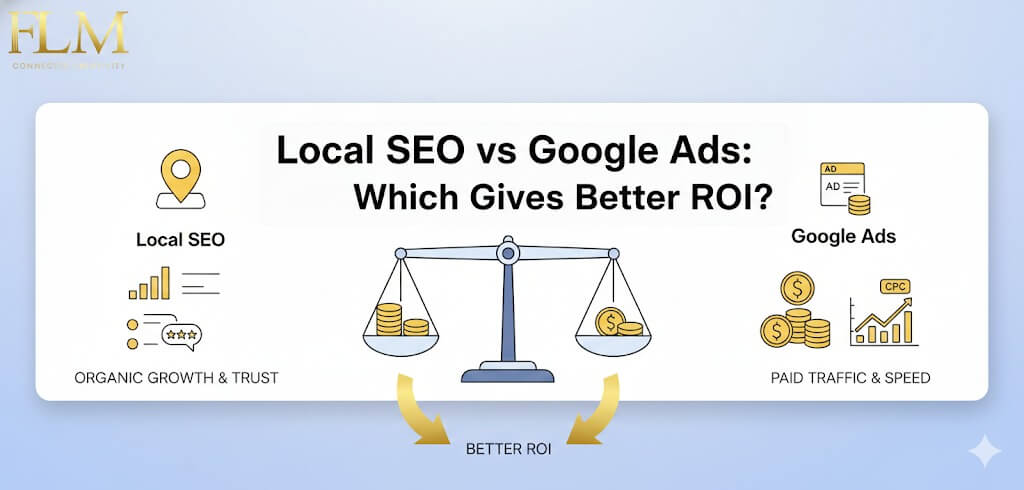
ToggleLocal SEO vs Google Ads: Which Gives Better ROI?
If you run a local business, this question comes up sooner or later—usually right after you’ve spent money on marketing and thought, “Was that actually worth it?”
I’ve worked with local service providers, real estate offices, clinics, and small professional firms. Some relied entirely on Google Ads. Others swore by SEO. Most were confused because both channels were bringing leads—but not always profit.
Let’s break this down properly, without theory or hype, and look at how real businesses actually get ROI from Local SEO and Google Ads.
What Local SEO Really Means (Beyond the Buzzwords)
Local SEO isn’t about “ranking on Google” in general. It’s about showing up when someone nearby is ready to act. When a person searches:
- “property dealer near me”
- “physiotherapist in [area]”
- “commercial real estate agent [city]”
Google shows:
- A map pack (local listings)
- Organic local websites
- Sometimes ads above both
Local SEO is the work that gets you into those trust-heavy positions without paying for every click.
The Local SEO Foundation Most Businesses Get Wrong
1. Google Business Profile (GBP)
This is not optional. It’s your storefront on Google.A properly optimised profile includes:
- Correct categories (not just one)
- Service areas clearly defined
- Real photos (not stock)
- Weekly updates or posts
- Review replies that sound human, not scripted
2. Consistent Local Citations
If your address is written five different ways across the internet, Google doesn’t trust you.
Real example: A local agency had strong backlinks but inconsistent NAP data. After cleaning 40+ listings, their map visibility doubled without any new content.
3. Location-Focused Website Content
Not blogs for traffic—but pages for buyers:
- Area-specific service pages
- “Who we work with” pages
- Process and pricing explanations
- FAQs based on real calls, not SEO tools
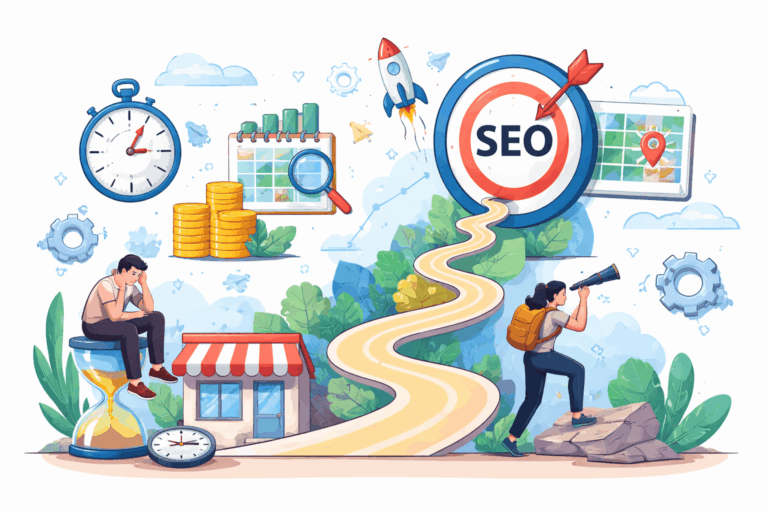
How Long Local SEO Takes (And Why Many Quit Too Early)
Month 1–2: Cleanup and Foundation
The first two months focus on fixing what holds visibility back. This includes optimising the Google Business Profile, correcting inconsistent business information across directories, and resolving technical website issues. These changes help search engines trust your business details. While leads may still be limited, this phase sets the groundwork for all future growth. Skipping this step usually slows results later.
Month 1–2: Cleanup and Foundation
During months three and four, local search visibility begins to improve noticeably. Your business starts appearing more often in map results and local listings. Calls and enquiries become more consistent rather than occasional. Reviews, local content, and citation strength start influencing rankings more strongly. This is where businesses usually see early momentum.
Month 6+: Stable Leads and Lower Cost per Lead
After six months, local SEO efforts begin to compound. Rankings stabilise, and lead flow becomes predictable week after week. Because traffic is organic, the cost per lead drops significantly compared to paid ads. Businesses at this stage rely less on advertising for daily enquiries. The focus shifts from building visibility to maintaining and strengthening it.
How Google Ads Actually Work for Local Buyers
Google Ads are powerful—but unforgiving. You’re paying to interrupt the search results. And the moment you stop paying, you disappear.
Where Google Ads Shine (From Real Campaign Data)
Google Ads work best when:
- The buyer intent is urgent (“book now”, “call today”)
- You need leads this week, not in 3 months
- You’re testing a new service or location
- Organic rankings are locked by big players
Example: A new real estate consultant used Google Ads to test two micro-locations. One converted at ₹900 per lead, the other at ₹3,200. SEO investment later focused only on the profitable area.
Where Google Ads Burn Money Fast
Common problems I see:
- Paying for broad keywords with low intent
- Sending traffic to weak landing pages
- No call tracking
- No follow-up system
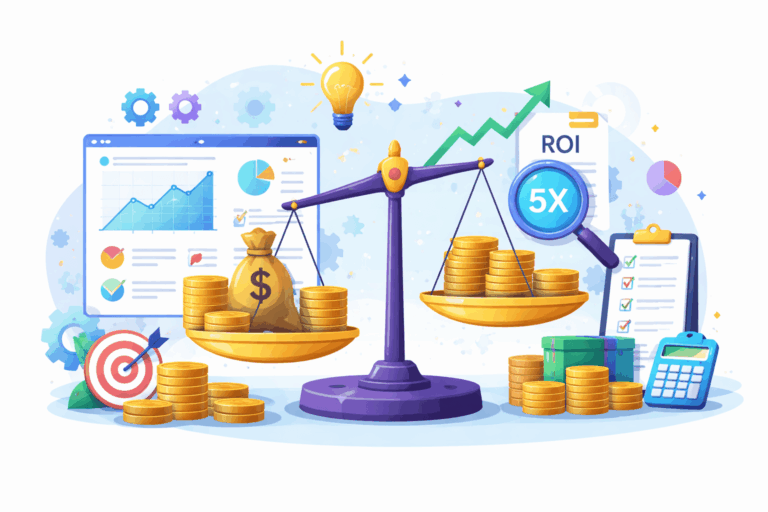
The Real ROI Difference (Not the Marketing Version)
Google Ads ROI
- Easy to measure
- Immediate feedback
- Predictable scaling (if budget allows)
- High dependency on constant spend
Once ads stop → leads stop.
Local SEO ROI
- Slower start
- Harder attribution
- Compounding returns
- Lower cost per lead over time
One strong local ranking can outperform ads for years. I’ve seen businesses spend ₹5–6 lakh on ads annually and still panic when budgets tighten. Meanwhile, others invested steadily in SEO and now get calls daily without touching ads.

Which One Should You Choose? (Decision Framework)
Choose Google Ads first if:
- You need leads immediately
- You’re new or rebranding
- You’re testing demand
- You can track and optimise properly
Choose Local SEO first if:
- You want predictable long-term leads
- Your service relies on trust
- Your margins can’t support high CPCs
- You want marketing stability
The Smartest Strategy I Recommend
Phase 1 (0–3 months):
- Ads for cash flow
- SEO foundation work
Phase 2 (3–9 months):
- Reduce ads gradually
- Double down on local SEO assets
Phase 3 (9+ months):
- Ads become optional, not essential
- SEO becomes your lead engine
Mistakes Competitors Don’t Talk About
1. Ignoring Lead Quality
Many businesses focus only on the number of leads and overlook their quality. SEO leads often convert better because users trust organic results more than ads. These searchers are usually researching carefully and have stronger intent. As a result, they ask better questions and are closer to making a decision. Fewer SEO leads can often generate more revenue than a high volume of paid clicks.
2. No Offline Tracking
A large portion of local business enquiries happen offline through phone calls, walk-ins, and WhatsApp messages. When these interactions aren’t tracked, marketing performance looks weaker than it really is. This leads to poor budget decisions and overreliance on clicks and impressions. Proper call tracking and enquiry logging give a clearer picture of true ROI. Without it, profitable channels are often underestimated.
3. Treating SEO as a One-Time Task
Local SEO is not a one-time setup; it requires ongoing attention to stay competitive. Reviews, business updates, and content freshness all influence local rankings. When businesses stop maintaining SEO, competitors who stay active slowly overtake them. Rankings may not drop immediately, but visibility weakens over time. Consistent effort keeps your local presence strong and reliable.
Conclusion:
Google Ads buy attention. Local SEO builds authority. Ads give speed. SEO gives stability.
The businesses that win long-term don’t argue SEO vs Ads. They use ads to accelerate and SEO to protect their future.
If your goal is not just leads—but sustainable growth, Local SEO should be your foundation, with Google Ads used strategically, not desperately.
Local SEO vs Google Ads: FAQs
Yes. Local SEO typically delivers a lower cost per lead over time because traffic continues without paying for every click, unlike Google Ads.
Google Ads can start generating enquiries within hours of launch, making it ideal for immediate visibility or short-term demand.
Most local businesses see noticeable improvements in 3–6 months, depending on competition and consistency of optimisation.
Yes, but only with tight targeting, strong landing pages, and proper conversion tracking; otherwise, costs rise quickly without ROI.
Absolutely. Google Ads provide short-term leads, while Local SEO builds long-term, sustainable traffic and reduces ad dependency.
References
About the Author