
Table of Contents
ToggleHow Will Voice Search Affect Local SEO?
Voice search didn’t “arrive” overnight. It crept in quietly—through phones in cars, smart assistants on kitchen counters, and one-handed searches during work breaks. What did change fast is how local decisions are made.
Today, when someone asks, “Who’s the best physio near me right now?”
They are not browsing. They are ready to act. As someone who works closely with local service businesses and healthcare practices, I’ve seen one clear truth: Voice search rewards clarity, speed, and trust—not clever SEO tricks.
This guide breaks down how voice search really affects local SEO today, what most businesses get wrong, and how to fix it step by step.
The Reality of Voice Search for Local Businesses
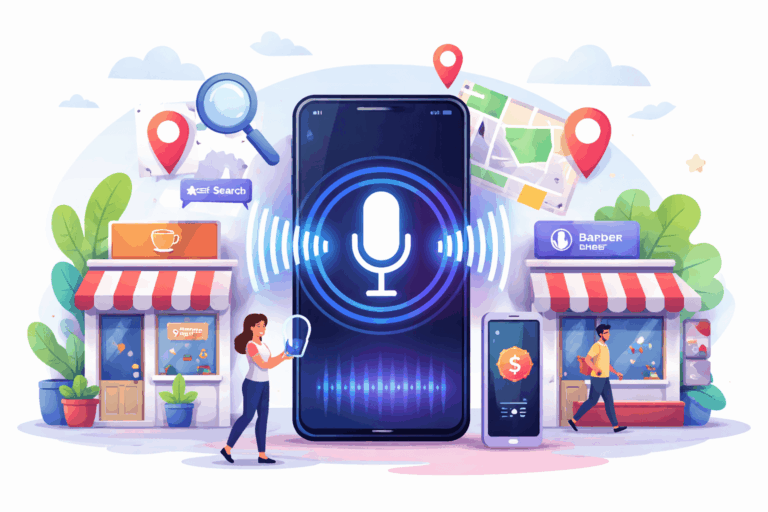
Voice search compresses the customer journey.
There is no:
- Long comparison phase
- Endless scrolling
- Ten blue links
Instead, users expect:
- One clear answer
- One obvious business
- One easy action (Call, Directions, Book)
From real call logs and GBP data, here’s what voice-led searches typically look like:
- “Is there a clinic open now?”
- “Can I get treatment today near me?”
- “How far is the nearest specialist?”
These searches are urgent, local, and action-oriented. If your business cannot answer clearly in seconds, you’re invisible—even if your website ranks well traditionally.
Why Traditional Local SEO Falls Short for Voice
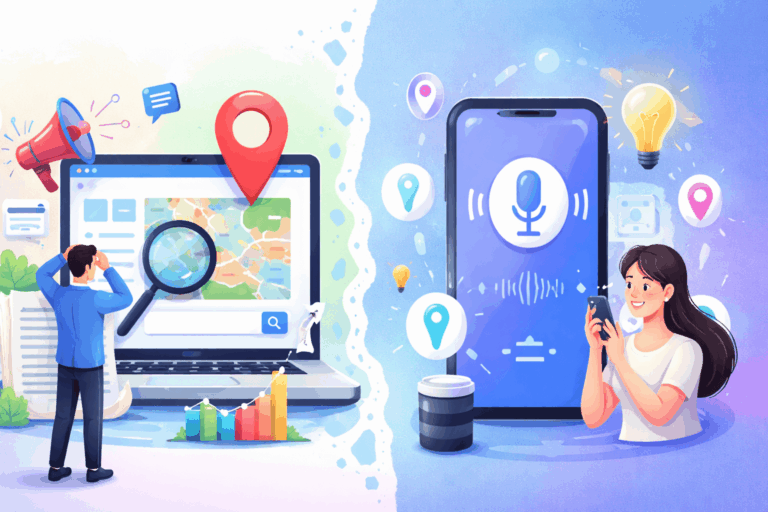
Common problems I see during audits:
Important info buried halfway down the page
Users and voice assistants need answers instantly. When key details like phone, hours, or services are hidden, you lose the moment and the lead.
Long paragraphs that never answer the question directly
Voice search favors direct answers. If the first line doesn’t clearly respond to the question, both users and Google move on.
Pages optimized for keywords, not human questions
Stuffing keywords ignores how people actually speak. Voice search rewards natural, conversational questions with clear, helpful answers.
Google Business Profiles treated as “set and forget”
An outdated profile breaks trust. Voice results depend on accurate categories, hours, services, and fresh activity to trigger calls and directions.
Voice assistants don’t interpret intent kindly. They choose the clearest, fastest, most structured option.That means your SEO must shift from:
“How do I rank?”
to
“How do I get chosen?”

How Google Actually Decides Voice Results (In Practice)
Google doesn’t publicly say “this is for voice,” but after hundreds of local audits, patterns are obvious. Three factors dominate voice-led local visibility:
Immediate Relevance
Voice search rewards speed and clarity. Your content must answer the spoken question clearly in the very first lines. If users or Google have to scan, infer, or scroll to understand the answer, the moment is lost. Direct answers signal strong relevance and improve selection for voice results.
Entity Trust
Google needs confidence that your business is real, credible, and clearly defined. This comes from consistent name, address, phone details, accurate categories, and service-specific content across your site and listings. When trust signals align, Google is more likely to surface your business for local voice queries.
Action Readiness
Voice searches are intent-driven and action-focused. Google prefers businesses that make the next step obvious with clear call, directions, or booking options. If the action is unclear or hard to access, users move on to a competitor instantly.
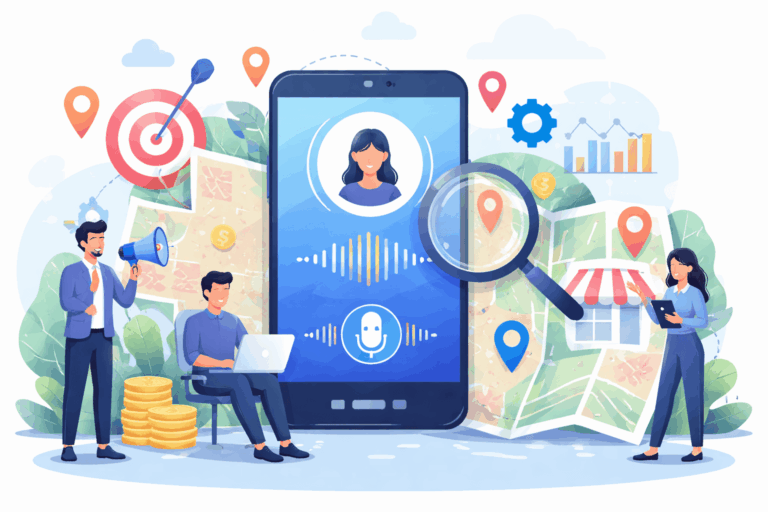
Step-by-Step Framework to Win Voice Search–Driven Local Leads
Step 1: Translate Spoken Questions Into Buyer Intent
Voice searches are not keywords. They are complete thoughts. Instead of targeting:
- “Physiotherapy clinic city”
You need to answer:
- “Do you treat back pain without surgery near me?”
- “How many sessions does vertigo therapy take?”
- “Is this clinic open on Sundays?”
Practical Method (Used With Clients)
Pull:
- Call transcripts
- WhatsApp chats
- Front-desk questions
- Google Business Q&A
Group questions by intent:
- Find: “Who treats this?”
- Verify: “Are they open / experienced / nearby?”
- Act: “Can I book now?”
Step 2: Rebuild Your Google Business Profile for Voice
Your Business Profile is often the only thing a voice assistant reads.From hands-on experience, these changes move the needle fastest:
What to Fix First
Primary category must be exact (not broad)
Your primary category tells Google exactly what you are. Broad categories dilute relevance, especially for voice search. An exact category helps Google confidently match your business to spoken, service-specific queries. This directly improves visibility for high-intent local searches.
Services written in plain language, not jargon
Voice assistants understand natural language better than technical terms. Writing services the way real people speak improves matching with spoken queries. Clear, human phrasing also reassures users instantly. This increases both selection and conversion.
Opening hours updated weekly (especially holidays)
Voice searches often happen in urgent, time-sensitive moments. Incorrect hours break trust and cause missed calls and visits. Regular updates signal reliability to Google and users. Accurate hours directly influence “open now” voice results.
Real Q&A added manually (not ignored)
Unanswered questions create hesitation and lost leads. Real Q&A based on actual customer queries adds clarity and trust. Google uses these answers to understand intent and surface your business in voice results. This reduces friction before the call or visit.
Step 3: Write Pages That Answer Before They Explain
Voice search favors answer-first content. Every important page should follow this rule: The first 2 lines must fully answer the question.
Example Structure
Question (H2):
“Do you offer same-day treatment for acute pain?”
Answer (first line):
“Yes. We provide same-day appointments for acute back pain and vertigo, subject to availability.”
Then:
- Proof (experience, cases)
- Local relevance
- Clear CTA (Call / Book)
This format consistently wins snippets and voice answers.
Step 4: Use Real Local Proof (Not Generic Claims)
Voice assistants trust signals, not slogans. What works in real-world testing:
- Reviews mentioning location + service
- Short patient stories (2–3 lines)
- Photos tied to real treatments
FAQs based on actual conversations
Mini Case Example
One clinic added:
- 5 Q&As from reception call logs
- 3 reviews mentioning “same-day relief”
- A clear “Open Now” indicator
Result in 6 weeks:
- Calls up 32%
- Direction requests up 21%
- Fewer price-shopping calls
Step 5: Structured Data That Actually Helps
Schema is not decoration—it’s clarity. For voice-led local SEO, prioritize:
- LocalBusiness
- MedicalBusiness / ProfessionalService
- Service schema (only real services)
Rules I follow strictly:
- Mark up only what users can see
- Keep name, address, phone identical everywhere
- Revalidate after every content change
When schema matches reality, Google trusts faster.
Step 6: Design for Zero-Click Decisions
Voice search often ends without a website visit. That’s not a loss if you track the right outcomes. What to optimize for:
- Calls
- Directions
- Bookings
What to stop obsessing over:
- Pageviews
- Bounce rate alone
If the phone rings, SEO works—even without a click.

Mistakes I See Even Strong Businesses Make
Talking Too Much, Answering Too Little
Focusing only on traffic hides real performance. Voice and local SEO often drive calls, directions, and bookings without a website visit. Track actions as primary success metrics to understand true ROI and decision-stage impact.
Treating Reviews as Reputation Only
Focusing only on traffic hides real performance. Voice and local SEO often drive calls, directions, and bookings without a website visit. Track actions as primary success metrics to understand true ROI and decision-stage impact.
Measuring the Wrong KPIs
Focusing only on traffic hides real performance. Voice and local SEO often drive calls, directions, and bookings without a website visit. Track actions as primary success metrics to understand true ROI and decision-stage impact.
Read More: How To Rank A Local Business On Google Maps?

How to Measure Voice Search Impact (Simple & Honest)
Calls from GBP
This measures how many users directly called your business from your Google Business Profile. Voice and local searches often end with a call, especially for urgent or service-based needs. A rise here usually signals stronger trust, better relevance, and clearer CTAs. It’s one of the most reliable indicators of voice-led local SEO success.
Direction requests
Direction requests show how many users intend to physically visit your location. These actions are common after “near me” and voice searches where proximity matters. Growth here indicates stronger local visibility and confidence in your address accuracy. It also reflects real-world intent, not just online interest.
Local pack impressions
Local pack impressions track how often your business appears in Google’s local results. This metric reflects improvements in relevance, distance, and prominence. Rising impressions mean Google is trusting your entity more for local queries. It’s an early signal that optimization efforts are working, even before conversions increase.
Conversion rate on location pages
This shows how effectively your location pages turn visitors into calls, bookings, or enquiries. Voice and local traffic is high-intent, so weak conversion rates point to buried CTAs or unclear answers. Improving page clarity, speed, and action buttons usually lifts this metric fast.
Conclusion:
Voice search doesn’t reward clever marketers.
It rewards helpful businesses.
The winners are not the loudest or most keyword-heavy. They are the ones that:
- Answer clearly
- Show proof
- Make action easy
If your local SEO strategy doesn’t support a spoken question and an instant decision, it’s already outdated.
Voice search isn’t the future of local SEO. It’s the filter deciding who gets chosen today.
How Will Voice Search Affect Local SEO?: FAQs
Voice search prioritizes conversational queries and shows one clear local result, increasing the importance of accuracy, relevance, and actions like calls.
Voice users want instant solutions, so businesses with optimized profiles and clear contact details get more calls and visits.
Natural, long-tail, question-based keywords that match how people speak perform best.
Yes, many voice results lead directly to calls or directions without website visits.
By improving Google Business Profiles, answering common questions clearly, and ensuring fast, mobile-friendly pages.
reference
About the Author