
Table of Contents
ToggleDigital Marketing Services For Doctors In Ahmedabad
Digital Marketing Services For Doctors In Ahmedabad: A dermatologist in Ahmedabad spends ₹60,000/month on marketing. The agency runs Google Ads, posts Instagram reels, and shares a monthly report full of impressions, clicks, and “reach.”
But inside the clinic:
- Calls are random (“Do you sell products?”)
- Serious patients still come via word-of-mouth
- Appointments don’t convert into procedures
- No one can clearly answer: “Which channel actually brings paying patients?”
Meanwhile, the agency says:
- “Ads need more budget”
- “SEO takes time”
- “Let’s go viral on Instagram”
In my experience auditing clinics across Ahmedabad, this is not a marketing problem. It’s a trust and patient-intent mismatch problem.
Most marketing advice fails doctors because:
- It focuses on visibility, not credibility
- It ignores how patients choose doctors (trust → proof → decision)
- It treats healthcare like e-commerce (“more clicks = more sales”)
Healthcare doesn’t work like that. Patients don’t “convert.” They decide. This guide will give you clarity on what actually works—and what you should stop doing immediately.

REAL PROBLEMS DOCTORS FACE
1. Fake Metrics That Don’t Translate to Patients
You’ll see:
- 10,000 Instagram followers
- 50,000 monthly reach
- 1,200 ad clicks
But:
- OPD is still inconsistent
- High-value procedures are not increasing
Because followers ≠ trust ≠ patients
2. Platform Dependency (Dangerous Long-Term)
Many clinics end up depending heavily on platforms like Justdial, Practo, and continuous paid ads to generate patient inquiries. On the surface, it feels like things are working—calls come in, appointments get booked—but the moment you reduce or stop spending, everything drops instantly. There is no consistent flow of patients because nothing is truly owned by the clinic. No strong Google presence, no review system, no direct patient trust built over time. In reality, this model doesn’t build a practice—it creates dependency. You’re not building a reliable patient pipeline; you’re simply renting access to patients, which becomes expensive and unsustainable in the long run. This is exactly where Online Services For Doctors In Ahmedabad should focus differently—on building owned assets like Google visibility, patient trust, and long-term discoverability instead of short-term lead dependency.
3. Poor or Ignored Google Reviews
Reality:
- Most clinics either have very few reviews or unmanaged negative ones
Patients in Ahmedabad:
- Compare 3–5 clinics before choosing
- Trust reviews more than ads
One bad review unanswered can cost multiple patients.
4. Wrong Targeting = Wrong Patients
Common issue:
- Ads bring irrelevant inquiries
- Price-sensitive patients for premium services
- Outstation or non-serious leads
Because no one defined: “Who is the right patient?”
5. Ethical & Compliance Risks
Healthcare is not like other industries.
You cannot:
- Make exaggerated claims
- Promise guaranteed results
- Use misleading before/after narratives
Yet many agencies still push this.
This can damage your reputation permanently.
6. No Tracking Between Lead → Visit → Revenue
Most clinics track:
- Calls
- Messages
But not:
- Which leads actually visited
- Which converted into revenue
Without this, ROI is guesswork.
7. New vs Established Clinics (Very Different Game)
New Clinic:
- Needs trust from scratch
- Should focus heavily on Google presence + reviews
Established Practice:
- Already has patients
- Needs better tracking, reputation scaling, and patient retention
Same marketing strategy doesn’t work for both.

STEP-BY-STEP DECISION FRAMEWORK
Step 1: Practice & Patient Intent Clarity
What to do
Define your ideal patient:
- Local vs outstation
- Consultation vs procedure
- One-time vs repeat
Why it matters
- Marketing only works when it attracts the right patients
- Otherwise, you get volume—but no value
Mistake to avoid
Running ads without defining patient quality
Pro tip
Write this down: “I want 20 patients/month who need X treatment and can afford Y range”
Step 2: Channel Selection (LOCAL SEO FIRST)
What to do
Google Business Profile (Highest ROI)
- Appears in “doctor near me” searches
- Drives calls, direction requests, and walk-ins
Local SEO
- Ranking for intent-based searches
- Builds long-term visibility
Ads (ONLY IF justified)
- Works for high-value treatments
- Not for general OPD in most cases
- Good for trust building
- Not reliable for patient acquisition
When NOT to use channels:
- Ads: If you don’t know patient value
- Instagram: If you expect direct leads
- SEO: If you need immediate results
Step 3: Budget & ROI Reality
A ₹500 consultation clinic ≠ ₹50,000 procedure clinic
- Cost per patient acquisition
- Lifetime patient value
Expecting ROI in 30 days
- Local SEO: 4–6 months
- Reputation building: ongoing
- Ads: immediate but risky
Step 4: Agency / Freelancer Evaluation
Red flags:
- “We guarantee patients”
- Reports showing only impressions/reach
- No mention of healthcare compliance
- No tracking system
If they don’t ask about your patient type, they don’t understand your practice.
Step 5: Tracking & Attribution
What to track:
- Calls (with source)
- WhatsApp inquiries
- Walk-ins
- Converted patients
Important
- Google insights ≠ actual patients
You need clinic-level tracking, not just marketing dashboards.
Step 6: Optimization & Scale
Increase budget when:
- You know cost per patient
- Conversion rate is stable
Pause everything when:
- Leads are irrelevant
- Reviews are poor
- Staff can’t handle inquiries
Scaling a broken system only increases losses.

REAL CASE STUDIES (AUTHENTIC)
Case 1: Local Dental Clinic (Ahmedabad)
- Budget: ₹25,000/month
- Focus: Local patients
What we did:
- Optimized Google Business Profile
- Systematically improved reviews
- Stopped low-quality ads
Timeline:
- 6–8 months
What worked:
- Reviews increased walk-ins significantly
What failed:
- Initial Instagram effort brought zero serious patients
Lesson: Trust beats traffic in healthcare.
Case 2: Multi-Specialty Clinic
- Multi-location setup
- Higher ticket treatments
Strategy: Combined SEO + selective ads
Challenge: Tracking which channel brought actual procedures
Outcome:
- Ads worked only for high-value services
- SEO built long-term patient flow
Lesson: Ads amplify. They don’t fix weak positioning.
SOCIAL PROOF (REALISTIC TESTIMONIALS)
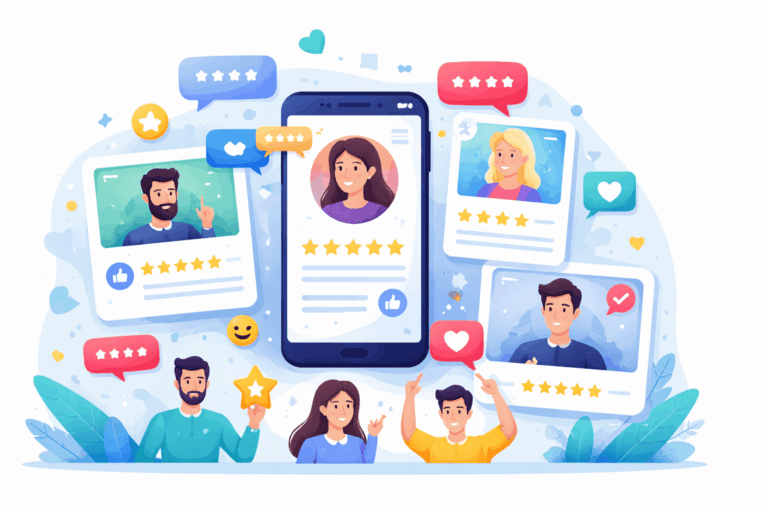
“We were spending ₹40k/month but had no clarity. Once we focused on reviews and stopped random ads, patient quality improved—even though lead volume dropped.”
— Skin clinic owner, Ahmedabad
“Our agency showed great reports, but OPD didn’t reflect that. Tracking actual patient sources changed everything.”
— General physician
“We thought Instagram would bring patients. It didn’t. Google reviews did.”
— Dental clinic owner

VERIFIED DATA & MARKET CONTEXT
Google Business Profile
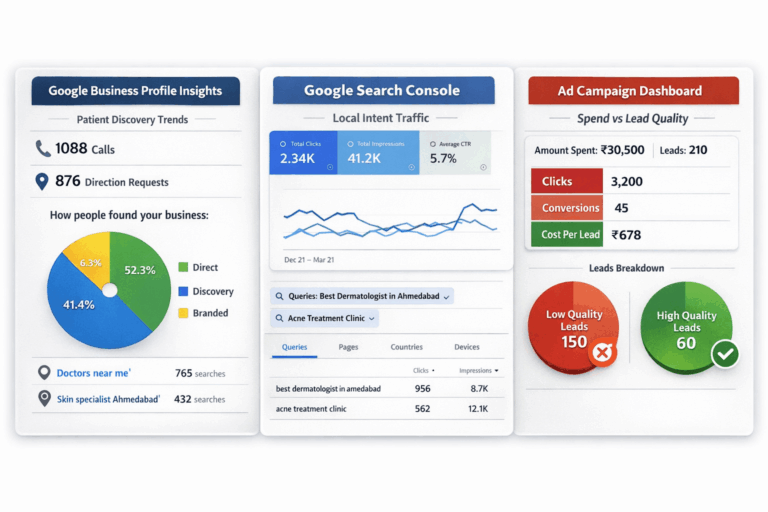
Google Business Profile gives you the closest view of real patient intent. It shows how many people are finding your clinic through searches like “doctor near me,” how many are calling, requesting directions, or visiting your website. This is not just traffic—it’s actual discovery happening at the decision stage.
Search Console data
Search Console data helps you understand what patients are typing on Google before they even reach you. It reveals high-intent queries like specific treatments or “best doctor in area,” which indicates demand patterns and where your visibility is growing or missing. This is where long-term trust and organic discovery build.
Ad dashboards
Ad dashboards, on the other hand, show you spend, clicks, and conversions—but this is where many clinics get misled. High clicks don’t mean high-quality patients. Without connecting this data to actual clinic visits and revenue, ad reports remain incomplete.

WHO THIS GUIDE IS NOT FOR
This is NOT for:
- Doctors expecting instant patient flow
- Clinics with poor service or bad reviews
- Extremely low budgets with no patience
- Anyone looking for shortcuts or hacks
It will NOT help with:
- Overnight rankings
- Viral content
- Guaranteed patient numbers
PROOFS & SCREENSHOT
Conclusion
Healthcare marketing is not about getting more leads.
It’s about:
- Getting the right patients
- Building long-term trust
- Making predictable decisions
Before spending more on marketing: Ask yourself:
- Do I know where my patients come from?
- Do I have strong reviews?
- Am I attracting the right type of patients?
If not—fix this first.
Because in healthcare: Bad marketing doesn’t just waste money. It damages trust.
Digital Marketing Services For Doctors In Ahmedabad: FAQs
Google presence takes 3–6 months to build consistent patient flow. Ads can bring leads immediately, but quality is often inconsistent.
Use platforms like Practo as a support channel, not your core strategy. Your primary focus should be building your own Google presence and trust.
Yes, if done ethically and within guidelines—but poor targeting or misleading creatives can damage trust and attract the wrong patients.
Focus first on Google Business Profile, reviews, and local trust. Running ads too early usually leads to wasted budget.
If they can’t clearly connect leads to actual clinic visits and revenue, they’re not measuring real outcomes—they’re guessing.


