
Table of Contents
ToggleDigital Marketing For Ecommerce Ahmedabad
In my experience auditing ecommerce brands in Ahmedabad, the story is almost always the same:
A founder shows me:
- ₹8–10 lakh monthly revenue
- 3–4x ROAS on ads
- “Growth” reports from their agency
Then I ask one question: “How much profit are you making after ads, returns, and logistics?”
Silence.
Because behind that “growth”:
- Margins are 20–30%
- CAC is eating 60–70% of that
- Repeat purchase rate is weak
- Cash flow is tightening every month
They’re not scaling. They’re circulating money through ads. Most ecommerce blogs fail because:
- They glorify ROAS instead of profit
- They ignore CAC, LTV, and inventory realities
- They treat marketing like magic, not math
This guide will not help you “grow faster.” It will help you stop scaling losses and build a profitable system.
However, this is the truth: clients in Ahmedabad are not just depending on the word of the mouth and the conventional advertising such as newspapers and billboards.
They are instead searching online, reviewing, and comparing before purchasing a product or service or booking a service.
Real Ecommerce Problems
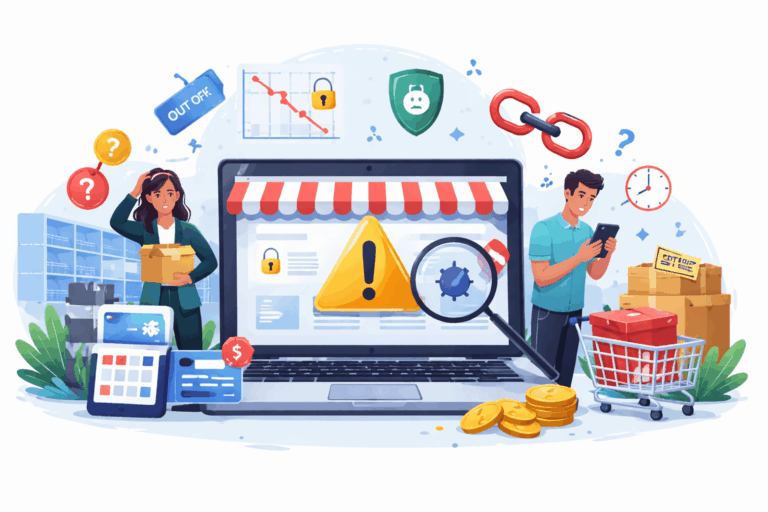
Running ecommerce in Ahmedabad comes with real challenges—high CAC, misleading ROAS, and over-dependence on ads. That’s why Digital Marketing For Ecommerce Ahmedabad isn’t just about running campaigns, but fixing the entire funnel from acquisition to retention to drive actual profit.
1. ROAS is Lying to You
A high ROAS on your dashboard can be misleading. Once you include product margins, shipping, COD losses, and returns, the real profitability drops significantly. Many brands think they’re making money when they’re actually just breaking even. ROAS alone doesn’t show the full picture.
2. High CAC Killing Your Brand Slowly
When your customer acquisition cost is too high compared to your AOV, scaling becomes risky. Without strong repeat purchases or high margins, profits shrink quickly. Many ecommerce brands ignore this until cash flow starts getting tight. Sustainable growth needs a balanced CAC.
3. Total Dependency on Ads
If your sales disappear when ads stop, your business is overly dependent on paid traffic. This means no strong brand recall, organic presence, or customer retention system. You’re constantly paying to stay alive. Long-term growth requires reducing this dependency.
4. Marketplace vs Website Confusion
Selling on both marketplaces and your own website without a clear strategy creates conflict. Pricing overlap, poor differentiation, and cannibalization hurt profits. Many brands fail to leverage each channel properly. A structured approach is needed to maximize both.
5. Inventory & Marketing Disconnect
Marketing often pushes products without considering inventory or margins. Ads on low-stock or poor-margin items waste budget and create operational issues. This disconnect reduces profitability and efficiency. Marketing and inventory planning must work together.
Step-by-Step Decision Framework
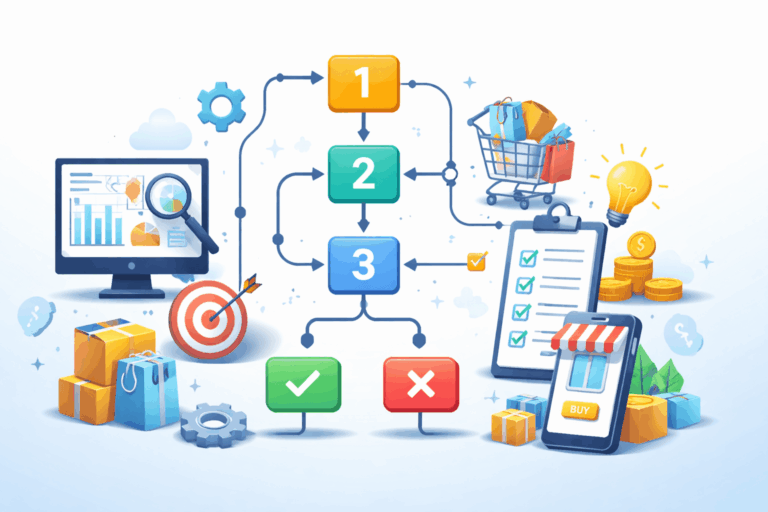
Step 1: Fix Unit Economics First
Before touching ads, answer this:
- What is your net margin per order?
- What is your maximum allowable CAC?
- What is your break-even ROAS?
- What is your repeat purchase rate?
If you don’t know these, stop marketing discussions here.
Brutal truth: If your numbers don’t work, no marketing channel will save you.
Step 2: Channel Selection (When & When NOT to Use)
Meta Ads (Facebook/Instagram)
Use when:
- You have impulse or visually appealing products
- You understand creatives testing
Avoid when:
- Margins are thin
- No repeat purchase model
Google Ads (Search + Shopping)
Use when:
- People are already searching for your product
- You can compete on price or differentiation
Avoid when:
- Generic products (too competitive)
- Weak product pages
Marketplaces (Amazon, Flipkart)
Use when:
- You want volume
- You can manage pricing + reviews
Avoid depending fully:
- You don’t own customer data
- Margins are tighter
SEO (Long-term engine)
Use when:
- You want consistent, low-CAC traffic
- You’re building a real brand
Avoid expecting:
- Instant results
Email & WhatsApp Retention
Most ignored channel. Use when:
- You already have customers
This is where profits actually come from.
Step 3: Budget & Profit Validation
Before scaling ads:
- Test with small budgets
- Validate profitability per order
If:
- You’re losing ₹100 per order
Scaling will just multiply losses.
Step 4: Agency / Freelancer Reality Check
Red flags I see constantly:
- Reporting only ROAS
- No discussion on margins
- No repeat purchase strategy
- No contribution to business decisions
If your agency doesn’t talk business, they’re just running ads blindly.
Step 5: Tracking & Attribution Issues
Common problems:
- Pixel tracking broken
- GA4 data mismatch
- COD orders not tracked properly
Step 6: Optimization & Scaling
Scale only when:
- CAC is stable
- Margins are protected
- Repeat rate is improving
Stop scaling when:
- Profit per order drops
- Returns increase
- Cash flow tightens
Growth without profit = slow failure.
Read More:- Online Marketing Trends for 2026: What Indian Businesses Must Change Now to Stay Profitable

Real Case Studies
Case 1: Small Fashion Brand (Ahmedabad)
- Monthly spend: ₹1.5 lakh
- Channel: Meta Ads
- ROAS: ~3.2x
Reality:
- High return rates
- COD losses
- Net profit: almost zero
Fix:
- Reduced COD exposure
- Focused on high-margin SKUs
- Improved product pages
Result (6 months):
- Lower revenue
- Higher actual profit
Lesson
Revenue down, business healthier.
Case 2: Scaling D2C Skincare Brand
- Aggressive ad scaling
- ROAS looked strong
Problem:
- CAC rising month by month
- No retention system
Fix:
- Built email + WhatsApp flows
- Introduced bundles
- Reduced reliance on cold ads
Result:
- CAC stabilized
- LTV improved
- Profitability achieved
Real Testimonials

“Before working with this team, we were getting sales but no profits. They helped us fix our ROAS tracking and reduce wasted ad spend. Within 2 months, our margins improved significantly.”
- Rahul Mehta (Apparel Brand Owner)
“We were heavily dependent on ads, and sales dropped whenever we paused campaigns. They built a proper funnel with retention and email marketing. Now we’re seeing consistent orders even with lower ad spend.”
- Priya Shah (D2C Skincare Founder)
“Our CAC was too high, and scaling felt impossible. They restructured our campaigns and focused on better targeting. We brought CAC down by almost 35% while maintaining revenue.”
- Amit Patel (Electronics Seller)

Who This Guide Is NOT For
This will not help you if:
- You want quick-profit dropshipping
- You believe in “viral product = success”
- You ignore unit economics
- You want guaranteed ROAS
Conclusion
Ecommerce marketing is not about:
- Running ads
- Increasing traffic
- Showing growth graphs
It’s about: Building a system where every order makes sense financially
Digital Marketing For Ecommerce Ahmedabad: FAQ
Pause aggressive scaling. First fix your pricing, margins, and backend costs. Then build retention so every customer becomes more valuable.
Use both, but with clear roles. Marketplaces help you acquire customers, while your website should focus on better margins and repeat purchases.
Lower CAC by improving ad creatives and targeting. At the same time, increase conversion rate and AOV so you get more value from each visitor.
Start SEO when your business has stable cash flow. It’s a long-term channel that reduces dependency on paid ads over time.
Don’t rely only on platform data. Compare ROAS with actual profit after all costs to understand if you’re truly making money.


