
Table of Contents
ToggleFacebook Ads Optimization Tips For Local Brands
If you run a local business in India—a salon, café, clinic, coaching centre, gym, or service shop—you’ve probably asked this question recently:
“Do Facebook ads still work in 2025, or am I just burning money?”
I’ll answer this honestly, based on running and auditing local ad accounts across Indian cities:
👉 Facebook ads still work—but only for businesses that understand how local buying behaviour has changed.
Most local businesses fail with Facebook ads not because the platform is “dead,” but because they:
- Copy generic agency strategies
- Target too broadly or too narrowly
- Focus on clicks instead of customers
- Expect instant results without testing
This guide is written for real Indian local business owners, not marketing hobbyists.
By the end, you’ll know:
- When Facebook ads make sense for you
- How to structure them in 2025
- What mistakes quietly kill ROI
How to turn ads into actual walk-ins, calls, and bookings
Why Local Businesses Should Still Care About Facebook Ads in 2025
Let me put this in simple terms. Your customer is not “searching” all the time. They’re scrolling.
They’re on:
Facebook Marketplace
Facebook Marketplace is widely used by local buyers to discover nearby services and products with intent to act quickly. For local businesses, it works well for visibility, inquiries, and trust-building because users expect real sellers, real locations, and direct communication.
Instagram Reels
Instagram Reels influence discovery and recall, especially among mobile-first users. Short, authentic videos showing real staff, services, or customer experiences help local businesses build familiarity and credibility before a customer ever searches or walks in.
WhatsApp Status
WhatsApp Status is a powerful local touchpoint because it reaches people who already know or trust your number. Businesses can use it to share offers, availability, or updates, reinforcing relationships and driving repeat visits without paid advertising.
Local Community Pages
Local community pages and groups act as digital word-of-mouth hubs. Recommendations, reviews, and business mentions here carry high trust, making them effective for local discovery, reputation building, and generating inquiries from nearby residents.
This matters because local buying is impulsive. A haircut, café visit, physio appointment, demo class, or repair call often happens because:
- The business felt nearby
- The offer felt timely
- The brand felt familiar
Facebook and Instagram are still the best platforms for creating that familiarity at scale, especially for local businesses.
But here’s the catch 👇
The way ads worked in 2021–2023 does NOT work anymore.
Read More: Best Digital Marketing Agency in Ahmedabad — A Reality-First Guide for Business Owners
What Changed in Meta Ads (And Why Local Businesses Feel the Pain)
From what I’ve personally seen while managing Indian local ad accounts, 3 major shifts matter in 2025:
1. Meta Now Decides More Than You Do
Interest stacking, micro-tweaking audiences, endless ad sets—most of that is obsolete.
Meta’s AI now:
Chooses placements
Meta’s system automatically decides where your ads appear—Facebook Feed, Instagram Reels, Stories, or Audience Network—based on where it predicts the lowest cost and highest likelihood of action. This reduces manual guesswork but requires strong creatives that work across multiple formats.
Tests creatives automatically
Instead of relying on manual A/B testing, Meta now rotates different headlines, visuals, and formats to identify what resonates fastest. Advertisers who provide multiple quality creatives see more stable performance than those relying on a single ad.
Expands audiences beyond your initial inputs
Even when you set a local radius or interest signals, Meta may widen delivery if it predicts better conversion opportunities. This makes creative relevance and location cues critical, as targeting alone no longer controls who sees your ads.
If your creativity and offer are weak, the algorithm can’t save you.
2. Costs Punish Lazy Advertisers
CPMs haven’t exploded randomly. They rise when:
Ads look generic
When ads use the same layouts, fonts, and phrases everyone else uses, users scroll past without noticing. Generic ads signal low effort and make it hard for customers to differentiate your business from dozens of nearby competitors.
Creatives feel stock-like
Stock images and polished but impersonal visuals reduce trust for local businesses. Customers want to see real locations, real staff, and real environments stock visuals create distance and make the business feel less authentic.
Messaging isn’t locally relevant
Ads that don’t mention the area, neighbourhood, or local context fail to create urgency or connection. Local buyers respond better when they clearly understand “this business is close to me and meant for people like me.”
I’ve seen:
- ₹300 CPM ads with strong local videos
- ₹900 CPM ads with polished but “soulless” creatives
The difference wasn’t targetingit was relevance.
3. Indian Local Buyers Are More Skeptical
People now:
- Read reviews before clicking
- Prefer messaging or calling over forms
- Want proof before visiting
Ads without trust signals simply don’t convert.
The Real Question: Should Your Local Business Run Facebook Ads?
Before tactics, ask this honestly:
Facebook ads work best if:
- You serve customers within a clear local radius
- You can handle calls, messages, or walk-ins
- Your margins allow some testing
You can show real people, not just designs
If you sell:
Low-margin commodities
Businesses selling low-margin products (where profit per sale is small) often struggle with paid ads because even a modest cost per click or lead can wipe out profits. Unless you have strong repeat purchase behavior or bulk sales, Facebook ads may not be sustainable.
Services with long decision cycles
Services that require weeks or months of consideration such as high-ticket consulting or complex B2B offerings rarely convert directly from Facebook ads. In these cases, ads work better for awareness and education, not immediate leads.
Can’t track results at all
If you can’t measure calls, messages, bookings, or visits, it becomes impossible to know whether ads are profitable. Running Facebook ads without tracking turns marketing into guesswork and often leads to wasted spend and wrong decisions.
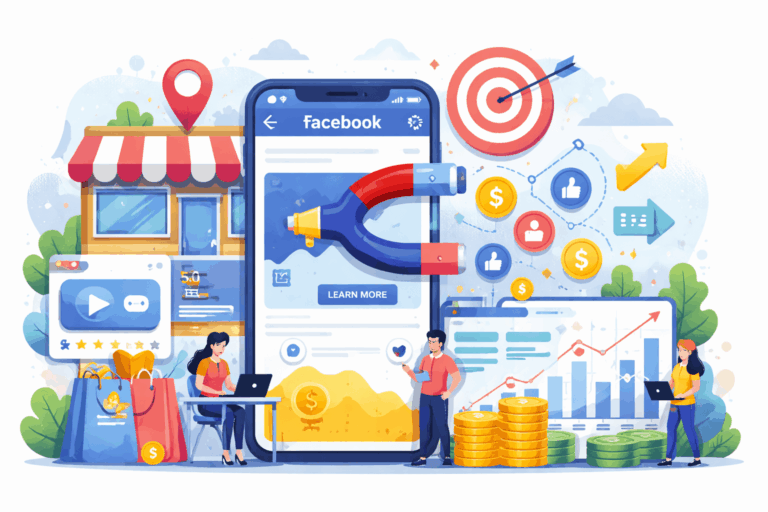
The Practical Facebook Ads Framework for Local Businesses (2025)
This is the structure I personally use and recommend.
Step 1: Start With the Business Outcome, Not the Ad
Don’t ask:
“Which campaign type should I choose?”
Ask:
“What action makes me money?”
Common local outcomes:
- Phone calls
- WhatsApp messages
- Appointment bookings
- Walk-in visits
Choose one primary action, not five.
Example:
A dental clinic should optimize for calls or WhatsApp, not website traffic.
Step 2: Fix Your Local Radius (Most People Get This Wrong)
Bigger is not better.
For most local businesses:
- 3–5 km radius in dense cities
- 5–8 km radius in spread-out areas
Why?
Because proximity beats interest targeting.
I’ve seen ads perform better targeting:
“Anyone within 4 km of the shop” than:“People interested in beauty & fashion across the city”
Step 3: Campaign Structure That Doesn’t Confuse the Algorithm
In 2025, simpler wins.
Recommended setup:
1 campaign
Running a single campaign helps Meta’s algorithm gather data faster and optimise delivery more efficiently. For local businesses, this reduces learning delays and prevents budget dilution across multiple underperforming campaigns.
1–2 ad sets
Limiting ad sets allows you to focus on one primary local audience (radius-based or retargeting) without splitting spend too thin. This gives each ad set enough volume to stabilise performance and generate meaningful insights.
2–3 strong creatives
Providing multiple high-quality creatives gives Meta room to test without overwhelming the system. For local ads, a mix of one short video, one customer-focused visual, and one offer-based creative is usually enough to identify a clear winner.
Avoid:
Multiple small ad sets
Creating many small ad sets splits your budget and data, preventing Meta from learning what actually works. For local businesses, this slows optimization and often leads to unstable results and higher costs.
Tiny budgets split everywhere
When a limited budget is divided across too many ads, none receive enough spend to exit the learning phase. This results in inconsistent delivery, poor optimisation, and misleading performance data.
Over-engineering
Overloading campaigns with complex targeting, excessive rules, or constant tweaks confuses the system. In 2025, simpler setups with strong creatives consistently outperform heavily customised structures for local advertising.

Creative Is No Longer Optional — It’s the Strategy
Here’s my blunt opinion:
If your ad doesn’t look like it belongs to your neighbourhood, it won’t work.
From real campaigns:
Short vertical videos (15–30 sec)
Owner or staff on camera
Real customer experiences
Clear local callouts
Not:
- Canva-heavy posters
- Stock models
- Corporate slogans
Example That Works (Salon)
Instead of:
“Best Salon Services in Pune”
Use:
“I run this salon in Baner. Most clients come to us for one reason—consistent results. If you’re nearby, message us and I’ll suggest what actually suits you.”
This builds:
- Trust
- Familiarity
- Authority
Hyperlocal Retargeting: Where Profits Actually Come From
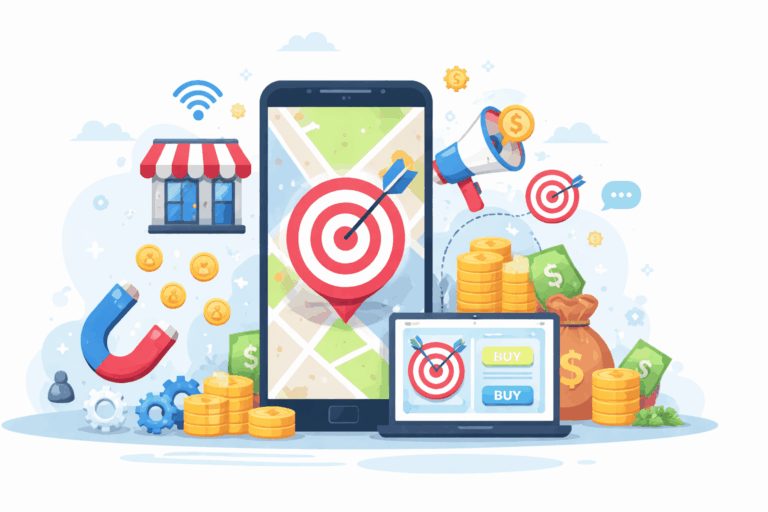
Most people won’t convert on the first view. That’s normal. What matters is what you do next.
High-Intent Retargeting Audiences
- People who watched 50%+ of your video
- Page or profile engagers
- WhatsApp or DM openers
- Website visitors (last 30 days)
Then show them:
- A stronger offer
- A testimonial
- A limited-time local deal
This is where CPAs drop.
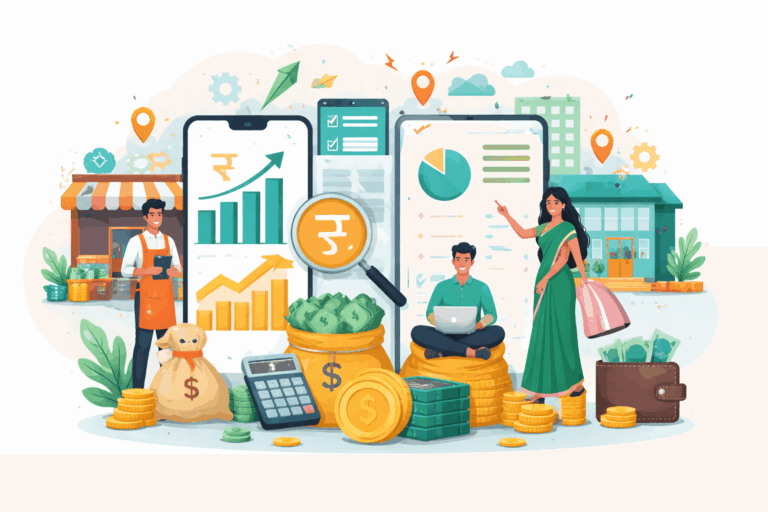
Real Case Examples (From Indian Local Accounts)
Case 1: Local Gym (Tier-2 City)
- Objective: WhatsApp leads
- Budget: ₹700/day
- Creative: Trainer explaining common mistakes
Result:
- ₹85 per qualified message
- 22 paid memberships in 30 days
Case 2: Boutique Clinic
- Objective: Phone calls
- Creative: Doctor explaining one specific problem
- Added: Google reviews screenshot
Result:
- Lower call volume
- Higher show-up rate
- Better patient quality
The lesson:
Quality beats quantity for local businesses.
Common Mistakes I See Local Businesses Make
Let me save you money here:
- Boosting posts randomly
- Running ads without call/message tracking
- Copying e-commerce strategies
- Expecting ₹10 leads forever
- Never refreshing creatives
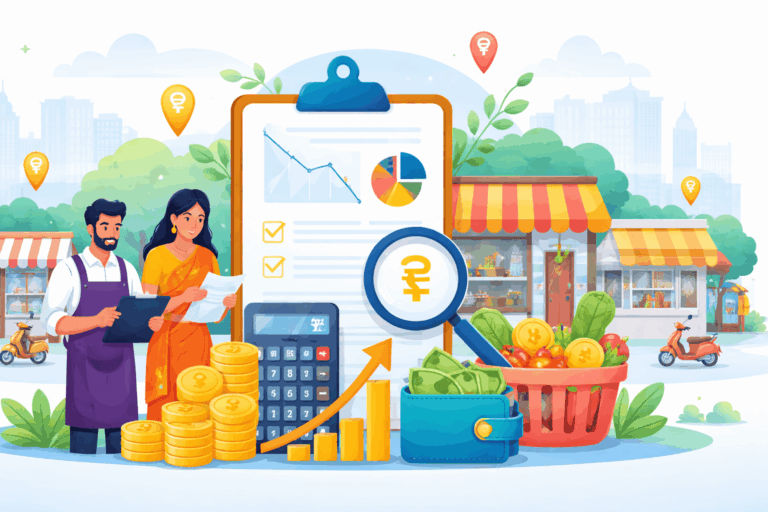
Budget Reality for Indian Local Businesses
You don’t need massive spends.
Testing range:
- ₹500–₹1,000/day
- Minimum 10–14 days
What matters:
- Cost per conversation
- Cost per booking
- Actual revenue generated
How to Decide If Your Ads Are “Working”
Ask:
- Are calls/messages relevant?
- Are people mentioning the ad in-store?
- Is footfall improving?
- Is repeat exposure increasing?
If yes, you’re on the right patheven if numbers aren’t perfect yet.
Conclusion:
Facebook ads are not magic. They are amplifiers.
They amplify:
- Your clarity
- Your offer
- Your trust
- Your local presence
If you treat them like a shortcut, they’ll disappoint you. If you treat them like a local growth system, they’ll reward you.
What to Do Next
If you’re serious:
- Start small
- Focus local
- Show real people
- Track real actions
- Improve every 2 weeks
That’s how Facebook ads still work for local businesses in India in 2025.
Master Facebook Ads Optimization Tips : Faqs
1. What is the most important Facebook ads optimization tip for local brands?
2. How often should local brands optimise or change Facebook ads?
3. Which campaign structure works best for local Facebook ads?
4. How can local brands reduce Facebook ad costs?
5. How do local brands know if Facebook ads are optimized properly?
Reference:
About the Author