
Table of Contents
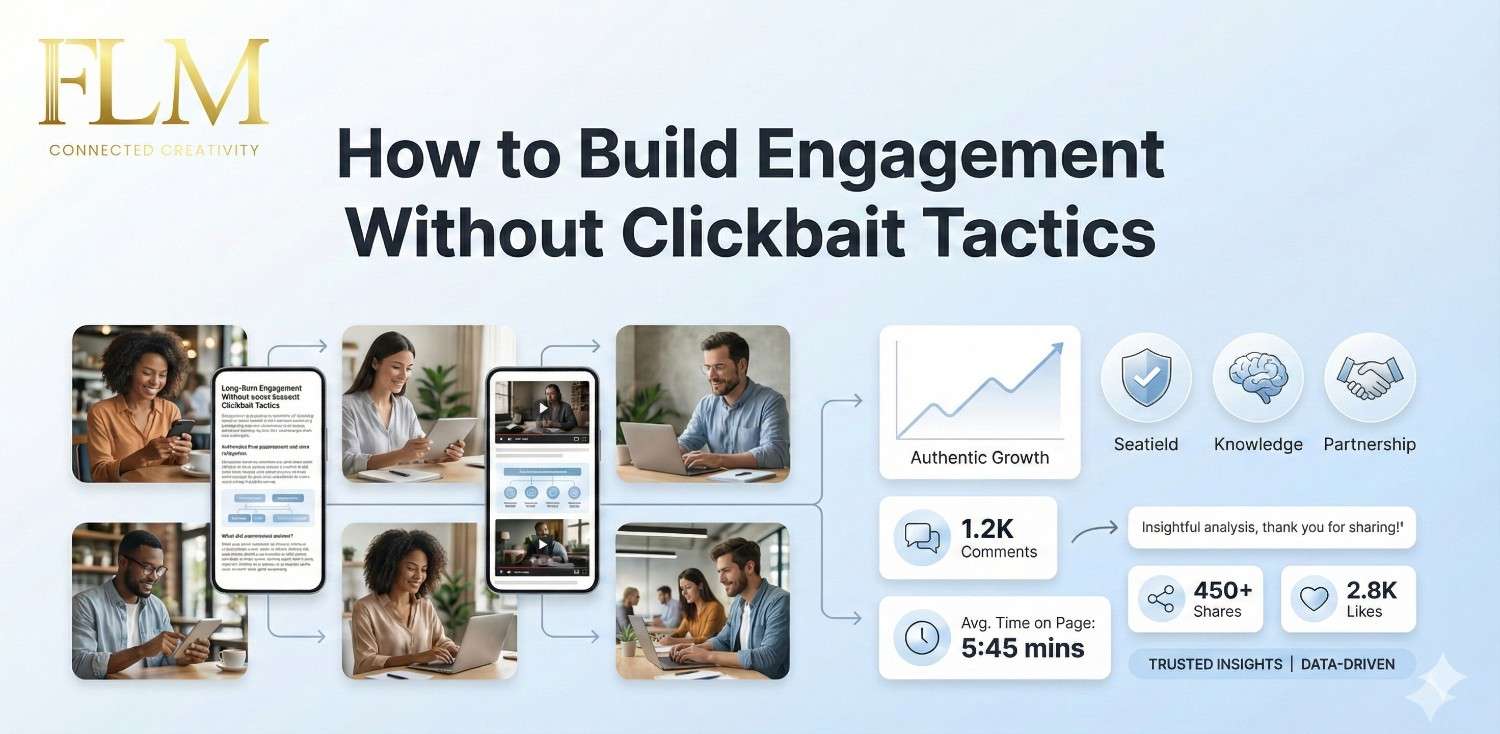
ToggleHow to Build Engagement Without Clickbait Tactics
If you’re publishing blogs, newsletters, or long-form content and wondering why people click but don’t stay, the problem isn’t your topic.
It’s usually one of three things:
- You’re overpromising and underdelivering
- You’re writing at people instead of for them
- You’re designing content for algorithms, not humans
I’ve seen this mistake across industries—from real estate and local services to SaaS and media brands. Engagement doesn’t come from louder headlines. It comes from clarity, relevance, and trust.
This article breaks down how to earn attention without clickbait, how to keep it, and how to convert that attention into real business outcomes.

First: What “Engagement” Actually Means
Engagement is not:
Pageviews
High traffic alone doesn’t equal success. Without intent and engagement, pageviews don’t drive business results.
Likes
Likes signal surface-level interest, not buying intent. They rarely translate into trust or conversions.
Sensational headlines
Clickbait may attract attention, but it erodes credibility. Long-term growth comes from clarity, not hype.
Real engagement looks like:
- Longer time-on-page
- Scroll depth past 60–70%
- Newsletter replies, not just opens
- Leads who reference your content when they contact you
I know an article is working when a buyer says:
“I read your blog and felt like you actually understood my situation.”
That’s engagement.
Before writing a single word, answer this:
Who exactly do I want attention from—and what decision should this content help them make?
If you can’t answer that, no formatting trick will save you.
Read More: How Topical Relevance Improves Search Visibility in 2026

How to Get Attention Without Sounding Spammy or Desperate
Attention is earned when readers feel:
Seen
The message reaches the right audience at the right time, addressing a real need they recognize.
Understood
The content is clear and relevant, so users quickly grasp what’s being offered and why it matters.
Respected
Communication feels honest and helpful, valuing the reader’s intelligence instead of pushing or exaggerating.
1. Start With the Real Problem, Not the Clever Line
Instead of:
You won’t believe this content strategy trick…
Try:
“Most blogs fail because they answer questions nobody is actually asking.”
In property content, this works because buyers don’t want hype—they want risk reduction. People click when they recognize themselves in the first few lines.
2. Be Unapologetically Clear About Your Point of View
Safe content gets ignored. Strong content takes a position.
Example from my own experience:
When I stopped writing “balanced” SEO blogs and started clearly stating who should NOT buy, engagement doubled.
Why?
Because confidence builds trust. You don’t need profanity to stand out—but you do need a spine.
3. Lead With Immediate Value
Within the first 10 seconds, the reader should know:
What they’ll learn
Clear, practical insights that explain the topic without jargon or fluff. Knowledge is easy to apply.
Why it matters
The impact on cost, risk, or results is made explicit. Readers understand the consequences of ignoring it
Examples that work:
- A hard-earned lesson
- A specific mistake you see repeatedly
- A clear promise of practical guidance
Read More: What Is Social Media Marketing?

Keeping Attention: Content Design Is Not Optional
You can write brilliant insights and still lose readers if your content is hard to consume.
How People Actually Read Online Content
From heatmap and UX studies (and thousands of real user sessions):
- People scan first
- They don’t read linearly
- They look for anchors: headings, bullets, bold text
Practical Formatting Rules That Increase Time-on-Page
From testing across blogs, landing pages, and guides:
- Paragraphs: 2–4 lines max
- Headings every 150–200 words
- Bullet points for comparisons and decisions
- Bold key insights (sparingly)
- Clear visual hierarchy

Clarity Beats Cleverness
One mistake I see in “expert” content is the urge to sound smart.
But buyers don’t reward intelligence. They reward understanding.
Simple Language = Higher Trust
Clear writing signals:
- You know the subject deeply
- You respect the reader’s time
- You’re confident enough not to hide behind jargon

Step-by-Step: Writing Engaging Content Without Clickbait
Here’s a framework I actually use.
Step 1: Define the Reader’s Decision Stage
Are they:
Researching
They’re trying to understand the problem and possible solutions. Your role is to educate clearly, without selling.
Comparing options
They’re weighing alternatives, pricing, and risks. Your content should explain trade-offs honestly and build trust.
Ready to act but afraid of making a mistake
They need reassurance, proof, and clarity on next steps. Reduce anxiety so the decision feels safe.
Step 2: Open With the Tension They’re Feeling
Name the doubt, fear, or confusion.
Example:
“Most buyers don’t lose money because of bad properties. They lose money because of bad assumptions.”
Step 3: Educate, Don’t Perform
No theatrics. No bait-and-switch.
Teach:
What matters
Clear intent-driven content, real experience, trust signals, and a smooth user experience that helps people decide.
What doesn’t
Vanity traffic, keyword stuffing, copied strategies, and ranking without conversion.
What most people overlook
Buyer psychology, decision anxiety, and the small trust gaps that stop users from taking action.
Step 4: Offer Clear Next Actions
Engagement increases when readers know what to do next:
Questions to ask
this right for me, what are the risks, what will it cost long-term, and what happens if I delay or choose wrong
Checks to perform
Verify data, compare alternatives, review proof and experience, and validate claims against real-world outcomes.
Conversations to have
Talk to experts, past buyers or users, and internal stakeholders to surface hidden objections and confirm confidence before deciding.

Case Study: Engagement Without Hype
Scenario
A local real estate blog was getting traffic but no leads.
What Changed
- Removed sensational titles
- Added buyer-specific objections
- Used real examples from site visits and negotiations
- Improved formatting and scannability
Result (within 60 days)
- Time-on-page ↑ 47%
- Scroll depth ↑ 38%
- Inquiry quality improved significantly

Personal Branding: Why People Engage With People, Not Logos
When you allow:
…to speak honestly and clearly, engagement rises.
Let real experience show.
It’s impossible to fake—and impossible to compete with.

Mistakes That Kill Engagement
- Writing for keywords instead of questions
- Long intros that say nothing
- Over-explaining obvious concepts
- Avoiding opinions to “appeal to everyone”
- Designing content only for desktop users
Engagement drops when content feels:
- Generic
- Safe
- Transactional

New Insight Most Competitors Miss: Engagement Is a Trust Signal
In 2026, engagement isn’t just a UX metric—it’s a credibility indicator.
Search engines, AI overviews, and human readers all respond to:
Depth
Content should go beyond surface advice, explain why things work, and address real risks, trade-offs, and outcomes.
Consistency
Messaging, claims, and expertise should align across pages, platforms, and time—no contradictions, no sudden shifts.
Real expertise
Insights must come from hands-on experience, proven results, and verifiable knowledge—not generic theory or copied opinions.
Conclusion
Engagement isn’t about grabbing attention.
It’s about deserving it.
When you respect your reader’s time, intelligence, and real problems—attention follows naturally. And more importantly, so does trust.
How to Build Engagement Without Clickbait Tactics - FAQs
Q1. Do I need bold or provocative language to get attention?
Q2. Does content design really affect SEO?
Q3. Is this approach suitable for B2B and local businesses?
Q4. How long should an engaging article be?
Q5. Can I still optimize for keywords?
References
About the Author