
Table of Contents
ToggleCommon SEO Mistakes That Stop Businesses From Ranking
A business spends 8 months paying ₹60,000–₹1,50,000 per month for SEO. They get:
- Monthly traffic reports
- Ranking screenshots
- Technical audit PDFs
- “Algorithm update impact” explanations
But they don’t rank for their money keywords. They’re not getting qualified leads. Revenue from organic is flat.
The agency says:
“SEO takes time.”
“Competitors have more backlinks.”
“Google core update affected everyone.”
And the founder starts blaming Google. In my experience auditing SEO for real businesses, ranking failure is rarely technical. It’s almost always strategic.
Most SEO blogs don’t help real businesses because:
- They teach tactics, not judgment.
- They focus on traffic, not revenue.
- They ignore commercial intent.
- They assume infinite time and budget.
This guide is not about hacks. It’s about preventing you from wasting another 6–12 months on SEO that was never designed to generate business in the first place.
Ground Reality: What’s Actually Going Wrong
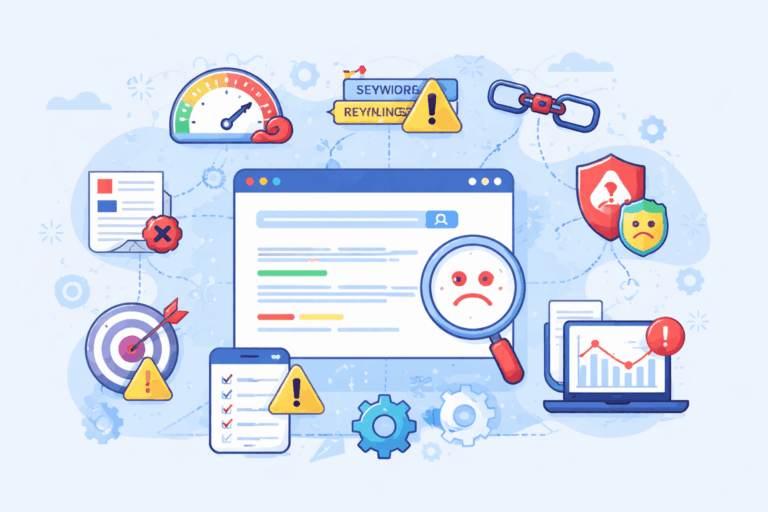
Let’s talk about the patterns I see across small businesses, mid-sized brands, and scaling companies.
1. Ranking for Irrelevant Keywords
You’re ranking for:
- “What is physiotherapy”
- “Digital marketing meaning”
- “Benefits of SEO”
But not for:
- “Neuro physiotherapy clinic in Ahmedabad”
- “B2B SaaS SEO agency India”
Traffic looks good. Revenue doesn’t move. That’s not a ranking problem. That’s a targeting failure.
2. Traffic Without Leads
I’ve seen sites with 40,000 monthly visitors generating 12 inquiries. Why?
Informational Traffic
Informational traffic comes from people searching for general knowledge, not solutions. They are researching, learning, or browsing — not ready to buy. While this can increase your visitor numbers, it rarely brings qualified leads on its own. If your SEO strategy focuses only on these keywords, you may see traffic growth but no revenue growth.
No Conversion Structure
A website without conversion structure fails to guide visitors toward action. There are no clear calls-to-action, weak service positioning, and no strategic lead capture points. Visitors land, read, and leave without contacting you. Traffic becomes a vanity metric instead of a business asset.
No Internal Intent Funnel
An internal intent funnel connects blog readers to service or product pages logically. Without it, users consume content but never move closer to becoming customers. There’s no strategic internal linking guiding them from awareness to decision. As a result, your content educates the market — but your competitors close the deal.
Blog-Heavy, Service-Light Architecture
This happens when a website publishes many blogs but invests little in strong service pages. Blogs may rank, but service pages remain weak and unconvincing. Buyers don’t find enough authority signals or detailed value propositions. The site looks active, but it doesn’t look trustworthy enough to convert serious prospects.
3. Over-Optimized, Under-Trusted Content
100 Blogs
Publishing a high number of blogs may look like strong SEO activity, but volume alone doesn’t build rankings. If those blogs aren’t strategically aligned with business goals, they simply increase page count — not authority or revenue.
AI-Generated
Content created purely by AI without human expertise often lacks depth, originality, and real-world insight. It may sound correct, but it doesn’t demonstrate experience — which weakens trust and long-term ranking potential.
Keyword-Dense
Overloading content with keywords to manipulate rankings makes it unnatural and harder to read. Modern search engines prioritize value and clarity over repetition, so keyword stuffing often does more harm than good.
Zero Authority
Without credibility signals — such as industry relevance, expertise, strong service pages, or quality backlinks — content struggles to rank. Authority is built through trust and positioning, not just publishing more pages.
4. Technical SEO That Never Ends
Audit After Audit
Constant technical audits without strategic changes create activity but not progress. Reports keep coming, but rankings and revenue remain the same. SEO becomes maintenance work instead of growth work.
Page Speed from 82 to 91
Improving a speed score from 82 to 91 may look impressive in reports, but it rarely changes rankings or conversions significantly. Once your site is reasonably fast, marginal score improvements have minimal business impact.
Schema Markup Updates
Adding or tweaking schema markup can enhance search appearance, but it’s not a magic ranking lever. If your positioning and authority are weak, structured data alone won’t fix it.
Core Web Vitals Tweaks
Optimizing Core Web Vitals is important for usability, but obsessing over minor metric improvements can distract from bigger strategic gaps like intent targeting and authority building. Technical polish cannot compensate for weak fundamentals.
Meanwhile:
- Competitors build authority.
- Your brand remains invisible.
Technical SEO matters — but overengineering it while ignoring positioning is a classic waste of budget.
5. Blaming Algorithm Updates
Every dip is blamed on:
- Core update
- Helpful content update
- Spam update
But when I review Google Search Console data, the pattern is clear:The site never had strong authority to begin with.
Updates don’t kill strong businesses. They expose weak strategies.
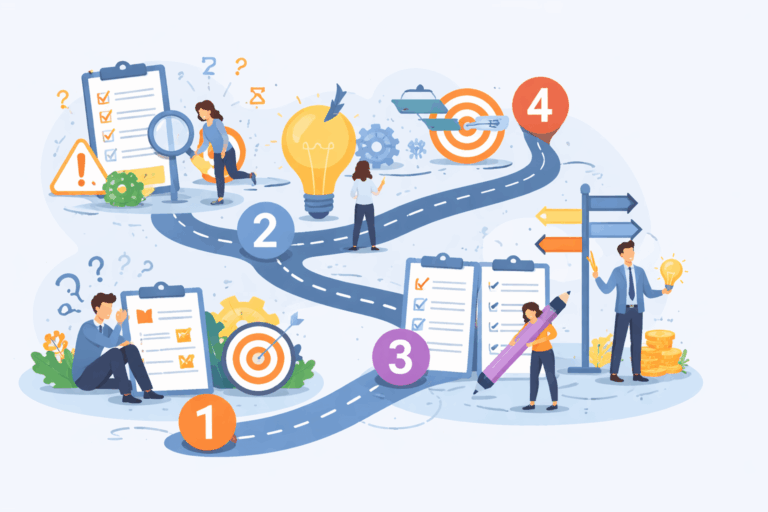
The Diagnostic Framework (Use This Before Renewing Any SEO Contract)
This is not “how to do SEO.” This is how to decide whether your SEO even makes sense.
Step 1: Business & Keyword Intent Alignment
What to check:
Start by listing your top 10 keywords — the ones bringing the most traffic or the ones your agency claims to be targeting. Then ask a simple but uncomfortable question: are these searched by people ready to buy, or just people researching? Buyer-intent keywords include terms like “pricing,” “near me,” “best provider,” or specific service queries. Browser-intent keywords are informational — definitions, tips, and general how-to searches. If most of your list falls into the second category, you don’t have a ranking problem — you have an intent alignment problem.
Why it matters:
SEO traffic without buying intent is just vanity.
Common mistake:
Chasing volume instead of commercial depth.
Pro insight:
I’d rather rank #3 for a 500-search buying keyword than #1 for a 10,000-search educational keyword.
Step 2: On-Page & Content Reality Check
What to check:
Ask yourself honestly: if a serious buyer reads your page, do they feel confident choosing you — or just informed? Good content doesn’t just explain a topic; it reduces doubt, answers objections, shows proof, and clarifies why you’re different. If your pages educate but don’t position, visitors will leave smarter — and hire your competitor. Content should move someone closer to a decision, not just help you rank.
Why it matters:
Google ranks what satisfies intent — not what stuffs keywords.
Common mistake:
Publishing 4 blogs/month without strengthening service pages.
Pro insight:
In competitive industries, your service pages matter more than your blog count.
Step 3: Technical SEO vs Overengineering
What to check:
Ask yourself honestly: are you solving real crawl and indexing problems, or just chasing higher scores in SEO tools? Fixing broken pages, indexing errors, and crawl blocks matters because they directly affect visibility. But obsessing over moving an audit score from 88 to 94 usually has zero impact on rankings or revenue. If most of your SEO discussions revolve around tool scores instead of business outcomes, you’re optimizing reports — not results.
Why it matters:
Audit tools exaggerate minor problems.
Common mistake:
Paying for 3 technical audits in 6 months with no strategic change.
Pro insight:
If your site loads under 3 seconds and is indexable, your biggest problem is probably not technical.
Step 4: Authority & Backlink Quality
What to check:
Ask yourself: would this website realistically mention your business if SEO didn’t exist? If your backlinks come from unrelated blogs, random directories, or foreign sites with no topical connection, they won’t build real authority. Relevance matters more than domain metrics. A few links from respected, niche-specific sources will outperform dozens of generic ones that exist only to inflate reports.
Why it matters:
Relevance beats volume.
Common mistake:
Buying DA instead of building authority.
Pro insight:
One relevant industry backlink > 30 generic directory links.
Step 5: Tracking & ROI Clarity
What to check:
Open your analytics and check one simple thing: can you clearly see how much revenue or how many qualified leads came specifically from organic search? If you can’t connect SEO traffic to actual sales, then you’re measuring activity — not impact. Rankings and impressions don’t pay salaries; revenue does. If attribution is unclear, fix tracking before spending another rupee on SEO.
Why it matters:
If you can’t track revenue, SEO becomes faith-based.
Common mistake:
No call tracking, no lead attribution.
Step 6: Timeline & Industry Reality Check
What to check:
Don’t just say “local competitors.” Look at who actually ranks on page one for your target keywords. Are they 10-year-old domains, national brands, VC-funded companies, or high-authority publishers? If you’re competing against businesses with massive content depth and backlink profiles, your strategy and budget must reflect that reality. Misjudging your true competition is one of the fastest ways to waste SEO investment.
Why it matters:
SEO difficulty is industry-dependent.
Pro insight:
Sometimes the smartest decision is to pause SEO and invest in brand + ads first.

Real Case Studies
Case 1: Local Physiotherapy Clinic
- Industry: Healthcare (local)
- Budget: ₹45,000/month
- Initial mistake: Ranking for generic “what is physiotherapy” blogs
Fix:
- Shifted to location + condition pages
- Improved service authority
- Stopped backlink packages
Result after 8 months:
- Traffic ↓ 20%
- Leads ↑ 70%
- Revenue ↑ 52%
Case 2: B2B SaaS Company
- Industry: HR Tech
- Budget: ₹2.5L/month
- Entry mistake:Mass AI blog production.
Strategic pivot:
- Cut 60% content output
- Built comparison + decision-stage pages
- Targeted high-intent queries
Outcome (12 months):
- Traffic ↓ 30%
- Demo requests ↑ 85%
- Organic revenue became 34% of pipeline

What Clients Actually Said
“We thought SEO meant more blogs. We were wrong. Fewer pages, better targeting changed everything.”
— Dr. Amit Shah, Founder – Healthcare Clinic
“Traffic growth was addictive. Revenue growth wasn’t happening. Once we tracked real conversions, everything changed.”
— Priya Mehta, Marketing Head – SaaS Company
“I stopped buying backlinks after realizing they were just report fillers.”
— Rohit Verma, E-commerce Owner

Market Reality & Verified Context
Post-Core Updates, Weak Authority Sites Fluctuate Heavily
After major Google core updates, websites with weak authority often see sudden ranking drops or unstable performance. These updates are designed to reward trust, depth, and credibility — not just optimized content. Sites without strong backlinks, clear expertise, or consistent quality tend to fluctuate the most. If your rankings swing dramatically after every update, it usually signals foundational weakness. Strong brands rarely collapse overnight.
AI Content Saturation Is Increasing Competition
AI tools have made it easy for businesses to publish content at scale. As a result, search results are now crowded with similar, surface-level articles. This saturation makes it harder to stand out unless your content offers real experience, insight, or differentiation. Publishing more AI content alone no longer creates an advantage. Quality and positioning now matter more than volume.
Trust Signals Matter More Than Keyword Density
Modern search algorithms evaluate credibility, not just keyword usage. Factors like authoritative backlinks, strong service pages, an expert digital marketing service, and brand reputation influence rankings more than keyword repetition. Over-optimizing content with dense keywords often reduces readability and trust. Search engines prioritize pages that demonstrate real value and reliability. Authority beats keyword stuffing every time.
SEO Results Are Cycle-Dependent
SEO performance does not grow in a straight line. Rankings often move in cycles influenced by algorithm updates, competitor activity, and market trends. Short-term drops can happen even with a solid strategy. However, long-term stagnation usually indicates deeper structural problems. Sustainable SEO requires patience, consistency, and realistic expectations.
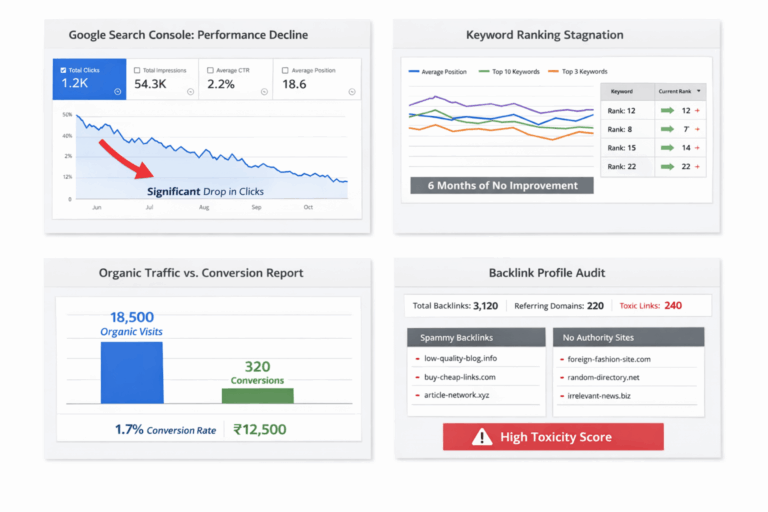
Proof & Screenshot
Conclusion:
SEO doesn’t fail because Google is unpredictable. It fails because:
- Strategy is misaligned.
- Intent is misunderstood.
- Authority is weak.
- Tracking is unclear.
- Expectations are unrealistic.
Before renewing your SEO contract, ask one question: “Can we directly connect this work to future revenue?”
If the answer is vague — pause.
Common SEO Mistakes That Stop Businesses From Ranking: FAQs
If your paid ads are generating leads but organic traffic isn’t, the issue is likely SEO positioning — not your offer. That usually means you’re ranking for the wrong intent or failing to align content with buyer-stage searches.
If cash flow is urgent and your domain lacks authority, ads can generate faster results. Use them to validate demand and fund SEO properly instead of forcing long-term strategy to solve short-term revenue pressure.
Six months is enough to see directional improvement in rankings, keyword quality, and qualified traffic. If nothing meaningful changes in that time, it’s a strategy issue — not a patience issue.
In most cases, “unfair” simply means they’ve built stronger authority, better intent alignment, or deeper content. Instead of blaming Google, analyze what they’re doing structurally better.
AI itself isn’t the problem — low-quality, mass-produced content without expertise is. If your site looks generic and lacks real insight, search engines will struggle to trust and rank it consistently.
references
About the Author