
Table of Contents
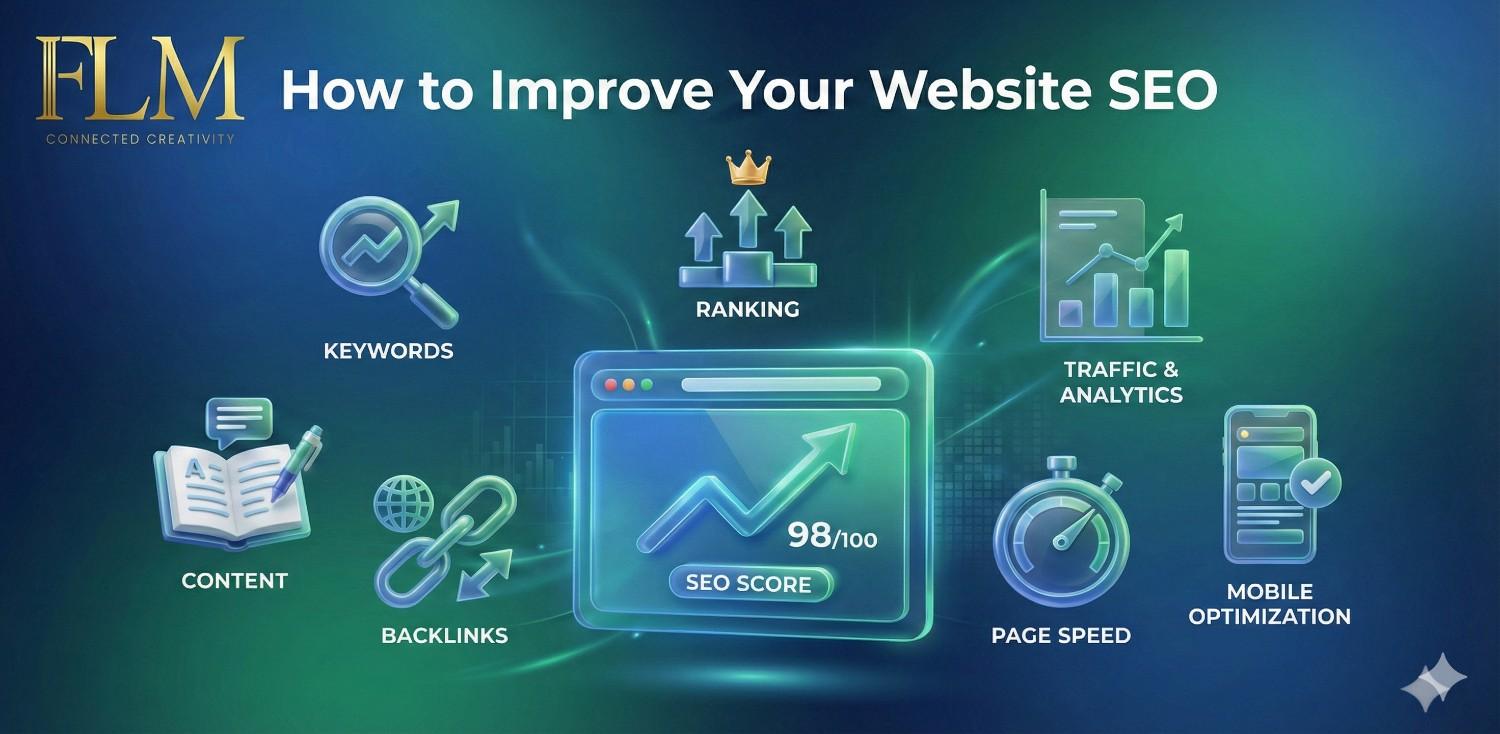
ToggleHow to Improve Your Website SEO in 2026 : A Practical, People-First Guide That Drives Real Results
How to Improve Your Website SEO: I’ve worked with local service businesses, property consultants, and regional brands that all had one thing in common: They had a website, but it wasn’t bringing in consistent, qualified leads.
In almost every case, the issue wasn’t “Google doesn’t like my site.” The issue was that the site wasn’t built around how real people search, decide, and take action.
Search engine optimization is no longer about tricks or tools. It’s about earning visibility by being genuinely useful.
This guide explains how to improve your website’s SEO step by step, based on real-world experience—not recycled advice.

First, Reset Your SEO Mindset
Before touching keywords or tools, understand this:
Google rewards websites that reduce effort for users.
If a visitor lands on your page and immediately understands:
What you offer
A clear, outcome-focused solution that solves a specific problem. No fluff—just practical value tied to real results.
Who it’s for
For buyers who are actively evaluating options and want clarity before deciding. Especially useful for people who value informed, low-risk decisions.
Why they should trust you
Trust is built through real experience, transparent pros and cons, and verifiable proof. Claims are supported by data and real-world examples.
What to do next
Take a clear, low-friction next step—contact, consult, or explore deeper. The path forward is simple and confidence-driven.
Step 1: Start With Search Intent, Not Just Keywords
Many websites target keywords without understanding why people search.
Real buyer intent falls into three buckets:
Problem awareness – “Why isn’t my website ranking?”
Your website usually isn’t ranking because search engines don’t see it as the best, clearest answer for a specific search intent. Ranking issues almost always come down to gaps in relevance, trust, or usefulness—not just SEO tactics.
Solution research – “How to improve website SEO”
Improving website SEO is about making your site the best answer for real users, not just optimizing for algorithms. When clarity, usefulness, and trust improve, rankings.
Decision stage – “SEO expert near me” or “SEO audit cost”
This indicates the user wants a local professional who can personally assess and improve their site’s performance. They’re looking for hands-on help, credibility, and real engagement.
This shows they’re evaluating budget and value before buying a service. They want clear pricing, deliverables, and what’s included so they can compare offers confidently.
What I recommend:
- Prioritize solution-focused
- keywordsAvoid chasing volume alone
- Choose keywords that match action
Tools I trust:
- Google Search Console (real user queries)
- Google Keyword Planner
- Ahrefs or SEMrush (for difficulty + intent)
Expert insight:
If a keyword doesn’t connect to a decision or next step, it may bring traffic—but not business.
Step 2: Create Content That Answers Real Questions
Google’s Helpful Content updates made one thing clear:
content written for rankings will eventually lose.
What actually improves SEO today:
- Clear explanations
- Practical steps
- Examples from real situations
- Honest limitations and advice
Content best practices:
Write like you explain things to a client
Communicate clearly, honestly, and practically—just as you would in a real consultation. Focus on solving their problem, not impressing them with jargon.
Use headings that mirror search questions
Frame headings around what people actually ask and search for. This improves clarity, relevance, and search alignment.
Include “why this matters” sections
Explain the impact of each point on cost, risk, or outcomes. This helps readers connect information to real decisions.
Remove filler words and vague statements
Every sentence should add value or clarity. Clear, specific language builds trust and keeps readers engaged.
From experience:
When we rewrote pages to answer objections (cost, time, results), bounce rates dropped—and rankings improved naturally.
Step 3: On-Page SEO That Improves Clarity, Not Keyword Density
On-page SEO should guide both users and search engines.
Focus on:
- One clear topic per page
- A single, meaningful H1
- Descriptive subheadings (H2, H3)
- Natural keyword placement (not repetition)
- Internal links that help navigation
Common mistake:
Over-optimizing titles instead of making them click-worthy. A good title should make a human want to click—not just include a keyword.
Step 4: Technical SEO That Removes Invisible Barriers
You can have great content and still struggle if technical issues exist.
Priority technical fixes:
- XML sitemap submitted to Google Search Console
- Broken links fixed or redirected
- Clean, readable URLs
- HTTPS enabled
- Fast loading pages (especially mobile)
Real example:
A local business site gained rankings simply by fixing crawl errors and improving mobile speed – without adding new content.
Step 5: Mobile Optimization Is Non-Negotiable
Most users search on mobile. bGoogle indexes your mobile version first.
Mobile SEO essentials:
Responsive design
The site adapts smoothly to all screen sizes and devices. This ensures a consistent, usable experience for mobile users.
Readable text without zooming
Text is sized and spaced for easy reading on small screens. Users shouldn’t struggle to consume content.
Tap-friendly buttons
Buttons and links are large, spaced, and easy to tap accurately. This reduces frustration and accidental clicks.
Fast load times on mobile data
Pages load quickly even on slower mobile networks. Speed directly impacts user satisfaction and search rankings.
Step 6: Build Authority With Trust-Based Backlinks
Backlinks still matter—but only when they make sense.
What works:
- Industry-relevant websites
- Guest articles that provide value
- Local directories and citations
- Mentions from trusted platforms
What hurts SEO:
- Spammy link packages
- Irrelevant websites
- Automated link building
SEO reality:
One strong, relevant link can outperform dozens of weak ones.
Read More: What is SEO and How It Works

Mini Case Example: Simple SEO Changes, Real Growth
Type: Local service website
Problem: Traffic but no inquiries
Actions taken:
Rewrote content for user intent
Content now directly answers what users are actually searching for. This improves relevance and engagement.
Added FAQs based on real customer questions
FAQs remove last-minute doubts and reduce friction. They reflect real concerns, not assumed ones.
Improved page speed and mobile UX
Faster load times and better mobile usability increase satisfaction. This reduces bounce rates and supports rankings.
Fixed technical crawl issues
Search engines can now properly access and understand the site. Clean crawling ensures content is eligible to rank.
Outcome:
- Increased qualified leads
- Better engagement
- More trust signals
- Stronger rankings without aggressive SEO tactics
Read More: Search Engine Optimization
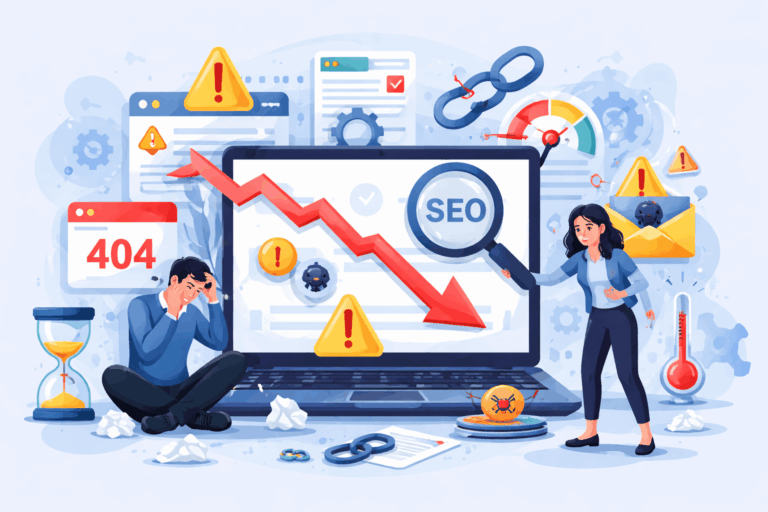
SEO Mistakes That Quietly Kill Growth
From hands-on experience:
From hands-on experience:
Focusing only on keywords instead of real users leads to low engagement. Search engines now reward usefulness, not manipulation.
Ignoring page experience
Slow speed, poor mobile UX, and cluttered layouts push users away. Bad experience cancels good content.
Chasing backlinks blindly
Links without relevance or trust don’t help long-term rankings. Quality and context matter more than volume.
Never updating old pages
Outdated content loses accuracy and relevance over time. Regular updates keep pages competitive.
Expecting instant results
SEO compounds gradually through trust and consistency. Short-term expectations lead to wrong decisions.
Conclusion
Improving your website’s SEO means building a digital property that:
Improving your website’s SEO means creating a digital property that genuinely educates and builds trust. By clearly explaining concepts, options, and risks, your content reduces uncertainty and confusion, helping users feel informed. When insights are honest, experience-backed, and transparent, trust naturally grows even before any direct interaction, making your brand a credible guide in the decision-making process.
At the same time, effective SEO ensures your content answers real questions and guides decisions. Instead of assuming what users want, it addresses actual buyer queries and pain points, providing relevant and practical information. Structuring content to lead readers step by step empowers them to make confident choices without feeling pressured, turning engagement into action and long-term loyalty.
How to Improve Your Website’s SEO - FAQs
Q1. How long does it take to improve website SEO?
Q2. Can beginners improve SEO without experts?
Q3. Is SEO still relevant with AI and ads?
Q4. How often should SEO content be updated?
Q5. Are keywords still important?
References
About the Author