
Table of Contents
ToggleHow Reviews Improve Local SEO Rankings?
Last quarter, I audited a 7-year-old home services company that had done “everything right” on Local SEO. Clean website. Decent content. Listings synced. The agency’s weekly refrain was: “You need more reviews. That’s why you’re not ranking.”
The owner was stuck between three real fears:
- If we push for reviews, will Google flag us for policy violations?
- If we don’t push, are we falling behind competitors’ gaming reviews?
- If we do push and get bad reviews, will rankings tank even harder?
In my experience auditing Local SEO for real service businesses, most blogs about “reviews = rankings” fail because they’re written to impress algorithms, not protect owners from costly mistakes. They oversimplify a messy system and quietly sell tools or agency retainers.
This guide promises clarity, not sales talk: when reviews help Local SEO, when they don’t, and when pushing for them actively hurts your business.

REAL BUSINESS PROBLEMS
Here’s what decision-makers actually face on the ground:
Fake or incentivized reviews killing trust
Discounts for 5-star reviews, staff nudging customers mid-meal, and templated “please leave 5 stars” blasts don’t build trust — they poison it. On platforms like Google, clusters of similar reviews get flagged or removed, and customers notice the pattern. I’ve seen businesses lose weeks of credibility overnight when reviews vanished. The short-term bump isn’t worth the long-term risk. If your reviews don’t reflect real experiences, you’re training customers to distrust you.
Review spam & competitor attacks
Sudden 1-star waves from empty profiles or fake complaints happen more often than owners expect. The mistake is panicking and blaming Local SEO instead of tightening reputation operations and response workflows. Understanding how reviews improve local SEO rankings helps businesses focus on managing review patterns, response quality, and trust signals rather than reacting emotionally to negative feedback. If you don’t have a clear escalation and documentation process, spam reviews linger and damage conversion trust. This is an operations and governance problem before it’s a ranking problem.
Zero clarity on how reviews affect rankings
Agencies often mash together ratings, volume, recency, and relevance as if they’re one lever — they’re not. A single viral negative review won’t nuke your visibility on Google Business Profile, but repeated low-star themes will quietly erode trust and performance over time. Reviews influence rankings indirectly and conversions directly. If you don’t separate these signals in reporting, you’ll make bad budget calls based on vibes instead of evidence.
Agencies pushing review tools before ops is ready
Automating review asks when scheduling, billing, or service delivery is broken just scales your worst moments. I’ve walked into clinics where the “review tool” worked perfectly — and amplified every ops failure into public 1-stars. Tools don’t fix experience; they broadcast it. If your frontline teams can’t consistently deliver, review automation becomes a reputational liability. Fix the service first, then scale the ask.
Operational gaps causing bad reviews
Slow callbacks, billing confusion, and inconsistent staff behavior show up in reviews within weeks. These aren’t marketing issues — they’re revenue leaks that reviews make visible. Businesses often chase stars instead of fixing the friction causing low stars. The result is mixed ratings that confuse buyers and depress conversions more than rankings. If the same complaint appears twice in a month, it’s an ops priority, not a PR task.
Common mistakes I see repeatedly
Chasing review count without fixing service quality is how you buy problems. Copy-pasting competitor tactics without checking platform policy risks removals and profile trust issues. Measuring Local SEO success only by star rating ignores calls, bookings, and qualified leads — the metrics that actually pay salaries. If your dashboard can’t tie reviews to revenue quality, you’re optimizing optics, not outcomes.
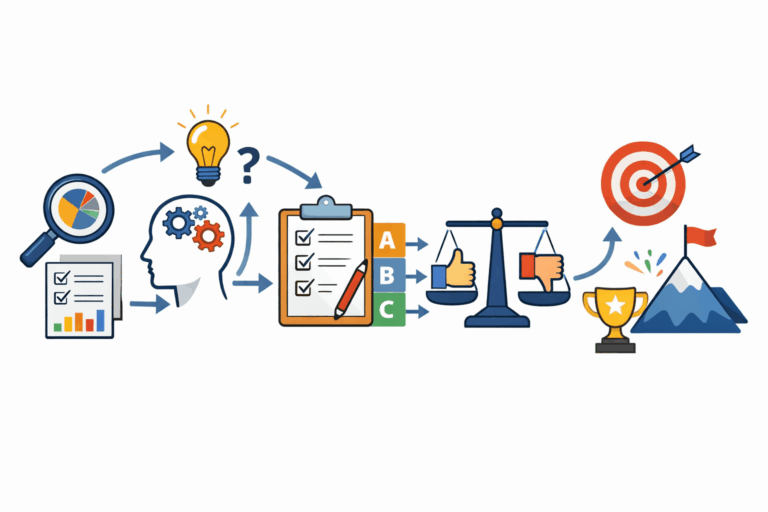
STEP-BY-STEP DECISION FRAMEWORK
Step 1: Business Readiness & Service Quality Audit
What to do
Map your top five complaint reasons using recent reviews, support tickets, and call logs — not gut feel. Rank them by how often they show up and how badly they hurt trust or conversions. Fix at least two of these before you ask for a single new review. This prevents your review push from amplifying the same mistakes publicly. If the same complaint appears across channels, it’s an ops failure, not a marketing issue. This one step alone saves businesses from avoidable reputation damage.
Why it matters
Reviews amplify reality. If reality is broken, you scale damage.
Mistakes to avoid
- Blaming marketing for ops failures
- Running review campaigns during peak operational chaos
Pro tip (from audits)
If your NPS or repeat-customer rate is dropping, pause review acquisition. Fix service first.
Step 2: Platform Prioritization (Google Business Profile vs others)
What to do
Prioritize reviews on Google Business Profile first because that’s where Local SEO visibility and buyer intent collide. Spreading effort across too many platforms early dilutes results and confuses teams. Only invest in Yelp or niche platforms if your customers already use them to decide. One clean, steady review stream beats scattered noise. This focus prevents wasted tooling and busywork that doesn’t move calls or bookings.
Why it matters
Google’s local rankings are most directly influenced by signals from its own ecosystem.
Mistakes to avoid
- Spreading effort thin across 5 platforms
- Paying for “review syndication” tools that copy reviews (often violates policies)
Pro tip
One clean, steady review stream on Google beats scattered noise elsewhere.
Step 3: Ethical Review Acquisition Strategy (No policy violations)
What to do
Ask every customer — neutrally — after service completion, without incentives or filtering for “happy” customers. This keeps you compliant with platform policies and protects your profile from sudden review removals. It also gives you cleaner feedback patterns to fix real issues, not just collect stars. Avoid scripts that hint at 5-star expectations — they backfire fast. Honest review flows build long-term trust and keep you out of policy trouble that costs rankings and credibility.
Why it matters
Policy violations lead to removals or profile trust issues.
Mistakes to avoid
- Discounts for reviews
- Asking only happy customers
- Using scripts that imply a 5-star expectation
Pro tip
Train staff to say: “If you found this helpful, your honest feedback helps us improve.” That language passes compliance checks more often than salesy scripts.
Step 4: Operational Fixes Before Review Push
What to do
Fix your top friction points first: slow response times, billing confusion, and missed appointments. These three show up in negative reviews faster than any other issue I audit. If you don’t address them before pushing for reviews, you’ll amplify frustration at scale. Tightening these basics improves ratings and conversion quality, not just optics. This prevents review campaigns from turning into public complaint funnels.
Why it matters
Operational friction shows up in reviews within 2–4 weeks.
Mistakes to avoid
- Assuming marketing can “outgrow” bad ops
- Ignoring repeated low-star themes
Pro tip
Create a simple “review trigger checklist” for frontline teams: only ask for reviews when service was delivered on time and in full.
Step 5: Tracking Review Impact on Local SEO Performance
What to do
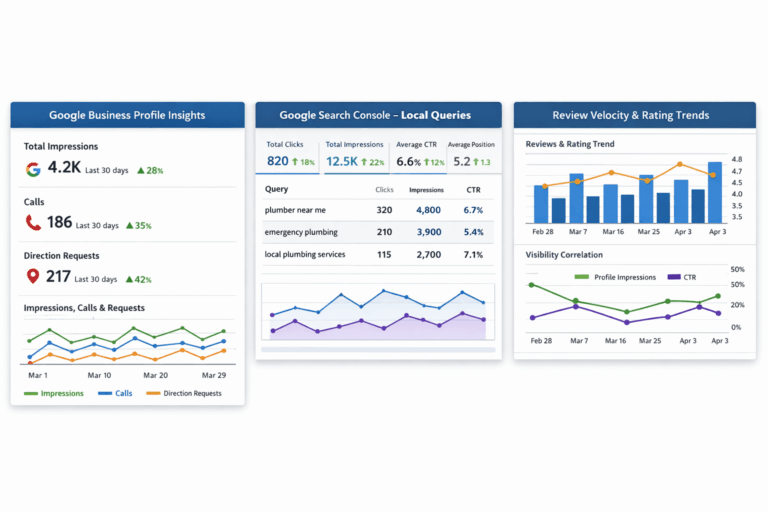
Track the relationship between review velocity, profile impressions, calls, and local query CTR instead of treating any one metric as “proof.” Use Google Business Profile Insights for calls and direction requests, and Google Search Console for query-level impressions and CTR. Look for sustained patterns over 60–90 days, not week-to-week noise. If visibility rises but calls don’t, reviews improve trust but not buyer intent. This stops you from scaling tactics that look good in dashboards but don’t pay back.
Why it matters
You need to separate coincidence from causation.
Mistakes to avoid
- Celebrating ranking jumps without tracking lead quality
- Ignoring seasonality and competitor activity
Pro tip
Overlay review spikes with local query trends from Google Search Console. If impressions rise but calls don’t, reviews improve trust but not ranking.
Step 6: When to Scale Review Systems vs Pause
What to do
Scale review systems only after 60–90 days of stable service quality and consistently positive review sentiment. This buffer helps you separate real improvement from short-term noise or seasonality. If the same negative themes repeat, pause immediately — don’t “push through” and hope volume fixes it. Scaling during service dips just multiplies public complaints. This discipline prevents reputation damage that takes months to undo.
Why it matters
Scaling a broken system scales losses.
Mistakes to avoid
- Automating review asks during staffing shortages
- Outsourcing review replies to people who don’t know your ops
Pro tip
I’ve paused review campaigns for months when ops slipped — rankings stabilized, conversions recovered.

REAL CASE STUDIES
Case 1: Small Local Service Business
Industry: Plumbing (single location)
Monthly marketing budget: $2,000
Reviews: 48 → 126 over 9 months
Local SEO impact:
Local Pack visibility for “emergency plumber” improved from page 2 appearances to consistent top-3 map pack visibility after month 7
What worked:
- Fixed callback delays before review push
- Neutral review asks post-job
What failed:
Early attempt at SMS review blasts during peak season led to 3 negative reviews about slow service
Lesson
Ops readiness mattered more than review volume.
Case 2: Scaling Service Brand (Multi-location)
Industry: Physical therapy clinics (5 new locations)
Entry strategy: Soft-launch ops for 60 days before review push
Review velocity vs rankings:
- Locations with steady 5–8 reviews/month saw local impressions rise 20–30% by month 6
- Locations pushed to 25+ reviews/month early saw more 2–3 star feedback and weaker conversion rates
CAC & ROI impact:
CAC dropped ~18% where reviews reflected service quality
Reputation challenges:
Inconsistent front-desk experience hurt trust
Course correction:
Paused review push for retraining
Final outcome:
Rankings stabilized; conversions improved once ops caught up
SOCIAL PROOF
“We were convinced reviews were our ranking problem. Turned out our callback delays were the real issue. Fixing ops before pushing reviews saved us from a public mess we weren’t ready for.”
— Rahul Mehta, Founder, Home Services
“Our agency wanted volume fast. We paused, trained the front desk and care teams, then restarted. Fewer reviews, better ratings, and leads that actually converted.”
— Dr. Ananya Iyer, CMO, Healthcare Clinic
“Competitor spam had us panicking. The framework helped us focus on patterns instead of reacting to every bad review. That alone changed how we manage reputation.”
— Saurabh Khanna, Marketing Head, B2B Services

VERIFIED DATA & MARKET CONTEXT
Google Analytics for lead quality shifts
Use this to separate traffic vanity from revenue reality. Track which local pages and profile visits turn into calls, form fills, and actual bookings. If review pushes increase traffic but not qualified leads, you’re scaling noise. Watch assisted conversions, not just last-click. This is where you catch agencies celebrating “growth” that doesn’t pay bills.
Google Search Console for local query impressions & CTR
This tells you whether reviews correlate with visibility for real buying-intent queries. Rising impressions with flat CTR usually means trust signals aren’t convincing. Falling impressions during review spikes can indicate competition or seasonality — not review impact. Use query-level trends to avoid attributing every ranking change to reviews. It keeps you from chasing the wrong fix.
Google Business Profile Insights for calls & direction requests
Policies change quietly, and outdated tactics get profiles flagged or reviews removed. If your agency can’t cite current policy, they’re guessing with your brand reputation. Tracking updates protects you from incentives, gating, and automation that look smart until your reviews disappear. This is basic governance — not “marketing hygiene.”
Platform policy updates from Google and Meta Platforms
This is your closest proxy to offline intent from Local SEO. If calls and direction requests don’t move after review growth, rankings alone aren’t translating into revenue. Spikes here during steady review velocity are healthier than sudden surges followed by drop-offs. It helps you decide whether to scale review systems or pause and fix ops.

WHO THIS GUIDE IS NOT FOR (MANDATORY TRUST SECTION)
This guide is not for:
- Businesses with broken service delivery
- Teams trying to game or fake reviews
- People chasing quick Local SEO hacks
- Low-budget, no-patience decision-makers
- Founders unwilling to fix ops issues causing bad reviews
This guide will not help with:
- Overnight ranking jumps
- Magically removing legitimate negative reviews
- Platform loopholes
- Guaranteed Local Pack placements
PROOFS & SCREENSHOT
Conclusion:
Reviews can help Local SEO — but only when they reflect real service quality and are collected ethically. Push them blindly, and you amplify your worst problems. Use them deliberately, and they become a compounding trust asset.
If you want to pressure-test your current setup without sales talk, use:
- A free review-readiness checklist
- A self-audit worksheet
- Questions to ask your agency about review strategy
- A review ethics framework for your team
No upsell. Just better decisions.
How Reviews Improve Local SEO Rankings?: FAQ
Both, indirectly. They’re a trust signal that influences visibility and a conversion signal that determines whether visibility turns into revenue.
There’s no magic number. In competitive niches, the trend (steady, authentic growth) matters more than raw count.
Focus on your ops and report obvious spam. Competing on fraud is a race to the bottom that often ends with profile issues.
Pause review pushes. Don’t pause Local SEO basics. Fix ops, then resume review acquisition.
Patterns can hurt trust and conversions long-term. One-off negatives won’t kill you. Repeated issues will.
References
About the Author