
Table of Contents
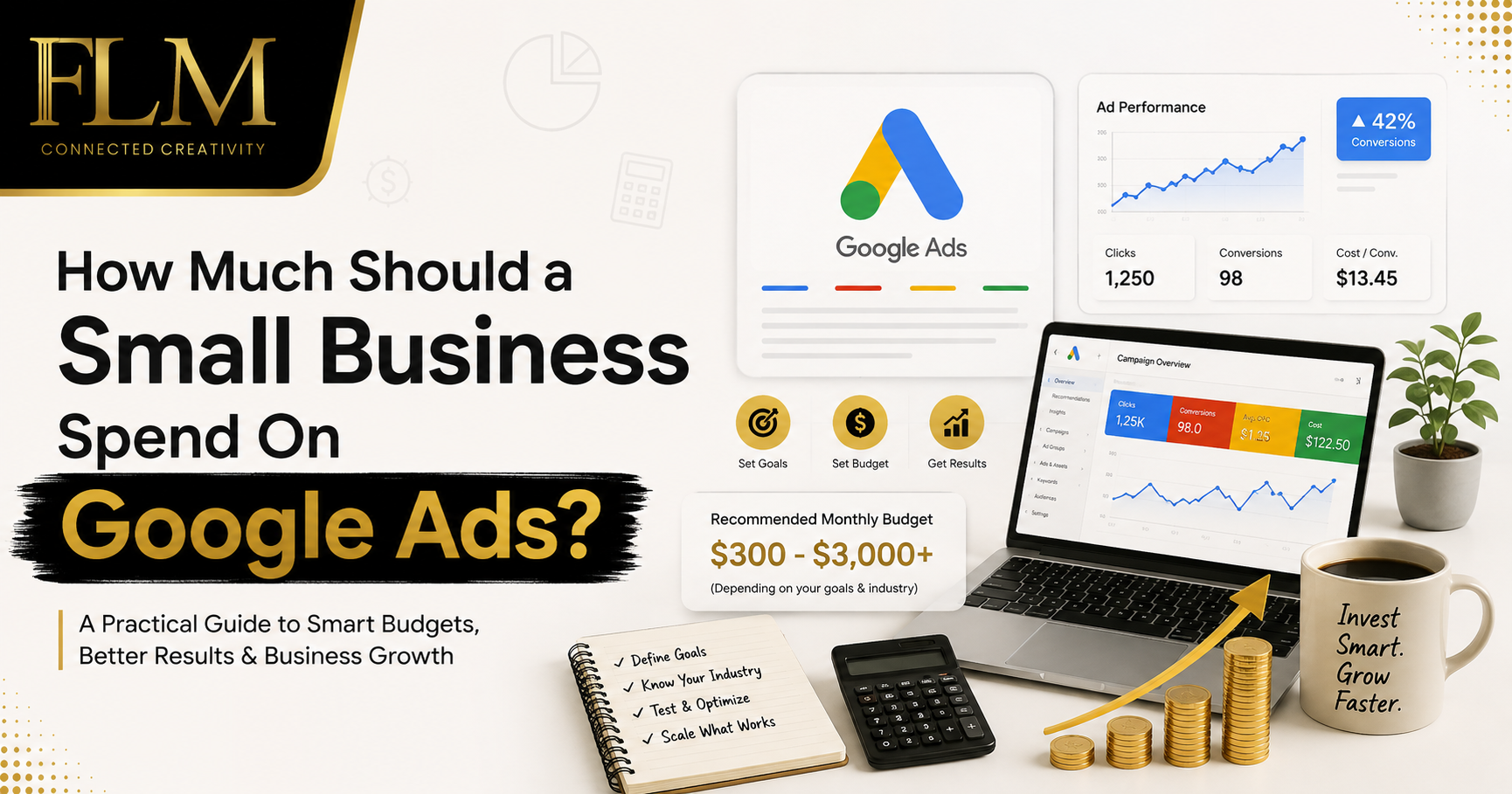
ToggleHow Much Should a Small Business Spend On Google Ads
For many small businesses, Google Ads can be an effective way to reach people who are already searching for their products or services. But one of the first questions business owners ask is: How much should a small business spend on Google Ads?
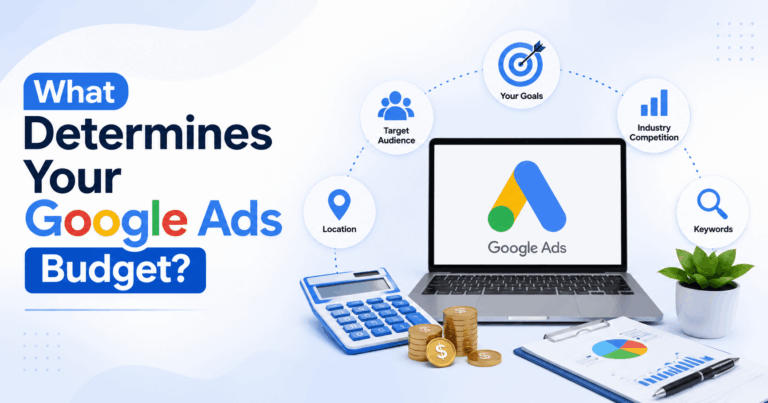
There is no single budget that works for every business. A suitable Google Ads budget depends on your industry, location, competition, average customer value, keywords, conversion rate, and business goals.
For many small businesses, starting with a controlled monthly budget of around ₹10,000 to ₹50,000 can provide enough data to evaluate campaign performance. Businesses in highly competitive industries may need a larger budget, while local businesses with a small service area may be able to start with less.
The important point is not simply how much you spend. It is how efficiently your advertising budget turns clicks into leads, sales, bookings, or customers.
How Much Should a Small Business Spend on Google Ads?
A small business can start Google Ads with a monthly budget of approximately ₹10,000 to ₹50,000, depending on its market and goals.
A simple starting framework is:
Business Type | Suggested Starting Monthly Budget |
Small local business | ₹10,000–₹20,000 |
Local service business | ₹15,000–₹30,000 |
E-commerce business | ₹20,000–₹50,000+ |
Competitive professional services | ₹25,000–₹75,000+ |
Highly competitive industries | ₹50,000+ |
These are starting ranges, not fixed rules.
For example, a dentist serving one city may not need the same budget as an online e-commerce store selling across India. Similarly, a business targeting expensive keywords may spend significantly more per click than a business operating in a less competitive niche.
What Determines Your Google Ads Budget?
Before deciding how much to spend, you should understand the factors that influence your advertising costs.
1. Cost Per Click
Google Ads generally works through an auction system. Advertisers compete for visibility when users search for relevant keywords.
If the keywords you target are highly competitive, the cost per click can be significantly higher.
For example, keywords related to:
- Legal services
- Insurance
- Real estate
- Financial services
- Business software
- Medical services
- High-value professional services
may be more expensive than keywords in less competitive industries.
A budget that generates 100 clicks in one industry might generate considerably fewer clicks in another.
2. Your Target Location
Location has a major impact on your Google Ads budget.
A business targeting customers within one city usually has a smaller potential audience than a company advertising throughout India.
For example:
Local campaign:
“Digital marketing agency in Ahmedabad”
National campaign:
“Digital marketing agency in India”
The second campaign may require a substantially larger budget because it targets a broader market and potentially more competition.
For small businesses, starting with a clearly defined geographic area can help control advertising costs.
3. Your Industry and Competition
Competition is one of the biggest factors affecting Google Ads costs.
If several businesses are bidding for the same high-intent keywords, advertisers may need to pay more to compete for prominent ad positions.
This is why you should not choose your budget based only on what another business spends.
Instead, consider:
Keyword competition + expected CPC + conversion rate + customer value
This gives you a much more realistic basis for determining your budget.
How to Calculate a Google Ads Budget
One of the simplest ways to estimate your Google Ads budget is to work backward from your customer acquisition goal.
For example, suppose:
- Average cost per click = ₹50
- Monthly budget = ₹20,000
- Expected clicks = 400
- Landing page conversion rate = 5%
- Expected leads = 20
Your approximate cost per lead would be:
₹20,000 ÷ 20 leads = ₹1,000 per lead
If 25% of those leads become customers:
20 leads × 25% = 5 customers
Your approximate customer acquisition cost would therefore be:
₹20,000 ÷ 5 customers = ₹4,000 per customer
This calculation gives you something much more useful than simply knowing how many clicks your budget can buy.
What Is a Good Starting Google Ads Budget for a Small Business?
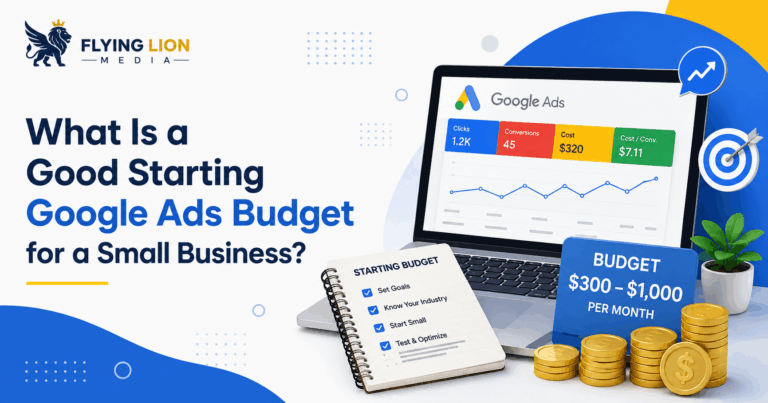
There is no universal minimum budget, but starting too aggressively can make it difficult to understand what is actually working.
For many small businesses, a controlled test budget can be a better approach.
₹10,000 Per Month
A ₹10,000 monthly budget can be suitable for a small local business testing Google Ads.
It may work particularly well when:
- Your service area is small
- Your keywords have relatively low CPCs
- You offer a high-value service
- Your campaign is focused on high-intent searches
- You have a strong landing page
However, a ₹10,000 budget may not provide enough data in highly competitive industries.
₹20,000–₹30,000 Per Month
This range can provide a more useful testing budget for many small businesses.
You may be able to test:
- Multiple high-intent keywords
- Different ad messages
- Several landing page variations
- Different audience segments
- Location-based campaigns
The objective should be to identify which searches and ads generate meaningful business results.
₹50,000+ Per Month
A larger budget may be appropriate when your business has:
- High customer lifetime value
- Strong profit margins
- A large service area
- High search demand
- An established conversion process
- Proven Google Ads campaigns
However, spending more does not automatically produce more profitable customers.
A poorly optimized ₹50,000 campaign can perform worse than a carefully managed ₹20,000 campaign.
How Much Should You Spend on Google Ads Per Day?
Google Ads budgets are often easier to manage when you think in terms of daily spending.
For example:
Monthly Budget | Approximate Daily Budget |
₹10,000 | ₹333/day |
₹15,000 | ₹500/day |
₹20,000 | ₹667/day |
₹30,000 | ₹1,000/day |
₹50,000 | ₹1,667/day |
₹75,000 | ₹2,500/day |
₹1,00,000 | ₹3,333/day |
These figures are simple monthly averages.
Your actual daily spend can vary depending on how Google Ads delivers your campaigns, so businesses should evaluate performance over a longer period rather than judging a campaign based on one day.
Should a Small Business Start Google Ads With a Small Budget?
Yes, in many situations.
Starting with a smaller controlled budget can help you learn:
- Which keywords generate qualified traffic
- Which ads attract potential customers
- Which locations perform best
- Which landing pages convert
- How much a lead costs
- Which campaigns deserve additional budget
The goal of a small initial campaign should not necessarily be to generate maximum sales immediately.
The first goal should be to collect useful performance data while controlling risk.
Once you identify profitable campaigns, you can gradually increase the budget.
How Long Should You Run Google Ads Before Increasing Your Budget?
Avoid making major decisions based on only a few days of data.
The appropriate testing period depends on your search volume, budget, conversion cycle, and business type.
A local business with frequent conversions may collect useful data relatively quickly. A business selling expensive products or services may need considerably more time.
Before increasing your budget, review:
- Click-through rate
- Search terms
- Conversion rate
- Cost per conversion
- Lead quality
- Sales generated
- Customer acquisition cost
- Return on ad spend
- Profitability
If increasing the budget produces more low-quality traffic without increasing profitable conversions, simply spending more is unlikely to solve the problem.
Google Ads Budget vs. SEO Budget
Small businesses often ask whether they should invest in Google Ads or SEO.
The two strategies work differently.
Google Ads can provide visibility for targeted searches soon after campaigns are launched, provided the campaign is eligible and competitive.
SEO focuses on improving organic search visibility over time.
A balanced strategy can combine both.
For example, a business could use Google Ads to target commercially valuable keywords while developing SEO content around informational and long-tail searches.
This can create both short-term and long-term search visibility.
How to Make a Small Google Ads Budget Work Better
If your advertising budget is limited, optimization becomes even more important.
1. Focus on High-Intent Keywords
Do not try to target every keyword related to your business.
Prioritize searches that indicate commercial intent.
For example, there is a significant difference between:
“what is digital marketing”
and:
“digital marketing agency near me”
The second search generally indicates stronger commercial intent.
2. Use Negative Keywords
Negative keywords can prevent your ads from appearing for irrelevant searches.
For example, a business selling professional services may want to exclude searches containing terms such as:
- Free
- Jobs
- Salary
- Course
- Training
- Tutorial
The exact negative keyword list depends on your business.
Regularly reviewing search terms can reveal irrelevant queries that should be excluded.
C. SEO vs Google Ads – What Works Best in Ahmedabad?
C.1 SEO (Search Engine Optimization)
- Best in long term visibility.
- Establishes brand trust as the customers are interested in organic results.
- Example: A plain hospital that ranks under the search query of a cardiologist in Ahmedabad will always receive free traffic.
3. Improve Your Landing Page
Getting the click is only the first step.
If visitors reach your website and cannot quickly understand:
- What you offer
- Who you help
- Why they should trust you
- What they should do next
your advertising budget can be wasted.
A strong landing page should have a clear headline, relevant information, trust signals, compelling benefits, and an obvious call to action.
4. Track Conversions Properly
Do not judge Google Ads only by clicks and impressions.
You need to know what happens after the click.
Depending on your business, useful conversion actions may include:
- Contact form submissions
- Phone calls
- WhatsApp inquiries
- Appointment bookings
- Product purchases
- Quote requests
- Demo requests
- Newsletter registrations
Proper conversion tracking allows you to identify which campaigns are actually contributing to business growth.
5. Monitor Lead Quality
A campaign can have a low cost per lead and still be unprofitable.
Imagine Campaign A generates:
50 leads at ₹500 each
while Campaign B generates:
20 leads at ₹1,000 each
At first glance, Campaign A appears better.
But suppose Campaign A produces only 2 customers, while Campaign B produces 8 customers.
Campaign B may actually be much more valuable.
This is why lead quality and revenue matter more than lead volume alone.
What Percentage of Revenue Should a Small Business Spend on Google Ads?
There is no universal percentage that every business should follow.
Some businesses can justify a larger advertising investment because they have:
- High customer lifetime value
- Strong profit margins
- Repeat purchases
- High conversion rates
- A scalable sales process
Other businesses may need to keep advertising expenditure lower.
Instead of asking only:
“What percentage of revenue should I spend?”
ask:
“How much can I profitably spend to acquire one new customer?”
This is a much more useful business metric.
Understanding Customer Acquisition Cost
Customer Acquisition Cost, commonly called CAC, tells you how much it costs to acquire a customer.
The basic calculation is:
CAC = Total Marketing and Sales Cost ÷ Number of New Customers
For example, if you spend ₹30,000 on Google Ads and acquire 10 customers:
₹30,000 ÷ 10 = ₹3,000 CAC
Whether ₹3,000 is good or bad depends on how much profit and long-term value those customers generate.
A business selling a ₹2,000 product may struggle with a ₹3,000 acquisition cost.
A business selling a ₹1,00,000 service may consider the same acquisition cost highly attractive.
How Much Should a Small Business Spend on Google Ads to Get Leads?
This depends heavily on the cost per click and conversion rate.
For example, assume:
Monthly budget: ₹30,000
Average CPC: ₹60
Estimated clicks: 500
Landing page conversion rate: 4%
Estimated leads: 20
Your estimated cost per lead would be:
₹30,000 ÷ 20 = ₹1,500 per lead
But this is only a planning estimate.
Actual results can differ because CPC, search volume, competition, ad relevance, landing page quality, conversion rate, and user behavior can change.
Common Google Ads Budget Mistakes Small Businesses Make
Spending Too Much Too Quickly
Increasing your budget before understanding campaign performance can lead to unnecessary spending.
Start with a manageable budget and scale based on evidence.
Focusing Only on Clicks
Clicks are not the final objective.
A campaign that generates thousands of clicks but no customers is not necessarily successful.
Targeting Too Many Keywords
A small budget spread across hundreds of keywords can become difficult to optimize.
Concentrating on relevant, high-intent searches can make your budget more efficient.
Ignoring Mobile Users
A significant amount of search activity occurs on mobile devices.
Your website, forms, phone numbers, and landing pages should provide a good mobile experience.
Sending All Traffic to the Homepage
A dedicated landing page can often provide a more relevant experience than sending every visitor to a generic homepage.
Not Tracking Offline Sales
For businesses where leads become customers through phone calls, meetings, or store visits, online conversion data may not tell the complete story.
Whenever practical, connect advertising leads with actual sales.
When Should You Increase Your Google Ads Budget?
Consider increasing your budget when you have evidence that your campaign is generating profitable results.
For example:
- Conversion tracking is working correctly
- You know which keywords perform well
- Lead quality is acceptable
- Your cost per acquisition is sustainable
- Your sales team can handle additional leads
- Your landing page converts consistently
- Additional search demand is available
Instead of doubling your budget overnight, consider gradual increases and monitor how performance changes.
When Should You Reduce or Stop Google Ads Spending?
Google Ads is not automatically right for every business.
You may need to reduce or pause spending if:
- Leads are consistently poor quality
- Customers cost more to acquire than they are worth
- Conversion tracking is unreliable
- Your website does not convert visitors
- Search demand is too low
- Your offer is not competitive
- Campaigns generate traffic but no meaningful business results
Sometimes the problem is not the advertising platform. It may be the offer, landing page, targeting, sales process, or conversion tracking.
Identifying the real problem is more important than simply increasing or decreasing the budget.
A Simple Google Ads Budget Plan for Small Businesses
If you are starting from scratch, you can use this basic approach:
Step 1: Define Your Goal
Decide whether you want:
- Leads
- Sales
- Phone calls
- Store visits
- Appointment bookings
- Website traffic
Step 2: Determine Your Target Customer
Define who you want to reach and where they are located.
Step 3: Research Keywords
Identify keywords that potential customers use when looking for your product or service.
Step 4: Estimate CPC
Step 5: Set a Test Budget
For many small businesses, ₹10,000–₹30,000 per month can be a reasonable starting range, depending on competition and search volume.
Step 6: Track Conversions
Measure actions that have actual business value.
Step 7: Evaluate Profitability
Compare advertising costs with leads, customers, revenue, and profit.
Step 8: Scale What Works
Increase investment in campaigns that consistently generate profitable results.
Is Google Ads Worth It for a Small Business?
Google Ads can be worthwhile for a small business when there is sufficient search demand and the economics of customer acquisition make sense.
It can be particularly useful when people actively search for the products or services you provide.
However, Google Ads should not be viewed as a guaranteed source of customers.
Success depends on the entire customer journey:
Search → Ad → Landing Page → Inquiry/Purchase → Sales Process → Customer
If one part of this process performs poorly, increasing your advertising budget may not improve the final outcome.
Conclusion:
So, how much should a small business spend on Google Ads?
For many businesses, ₹10,000 to ₹50,000 per month can be a practical starting range, but the right amount depends on your business economics rather than an arbitrary number.
Start with a budget you can comfortably test. Focus on high-intent searches, target the right locations, create relevant landing pages, track meaningful conversions, and evaluate the quality of the customers you acquire.
Most importantly, don’t increase your Google Ads budget simply because you want more traffic.
Increase your budget when you have evidence that additional advertising spend can generate additional profitable business.
That approach allows small businesses to treat Google Ads as a measurable marketing investment rather than simply another monthly expense.


