
Table of Contents
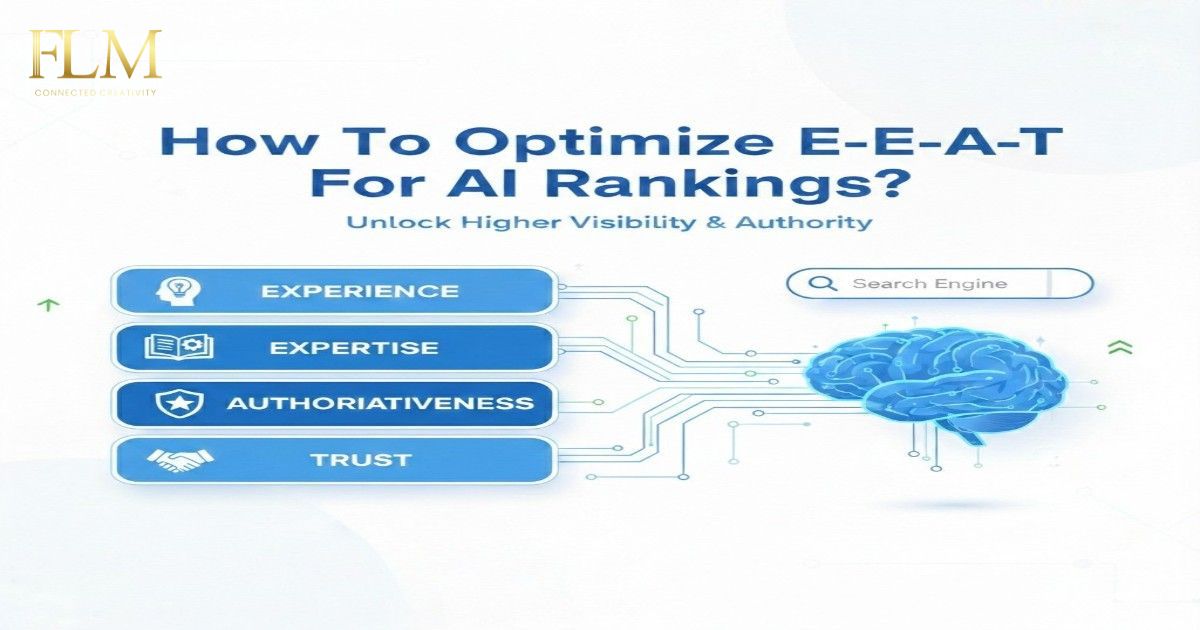
ToggleHow To Optimize E-E-A-T For AI Rankings?
How To Optimize E-E-A-T For AI Rankings?: AI has made content cheap. Trust has become expensive. Today, anyone can publish 100 blog posts a month using AI tools. Yet most of those pages never rank, never convert, and quietly disappear from search results. The reason is simple: search engines no longer reward content that exists just to exist. They reward content that feels earned.
This is where E-E-A-T (Experience, Expertise, Authoritativeness, Trustworthiness) stops being a guideline and becomes a survival framework—especially in competitive industries and local markets.
I’ve worked with businesses that had:
- Thousands of AI-written pages
- Strong keyword coverage
- Decent backlinks
The fix was never “better prompts.”
It was rebuilding trust signals from the ground up.
This guide explains how to optimize E-E-A-T for AI rankings the way it actually works in practice, not theory.

Why E-E-A-T Matters More After AI
Before AI, publishing itself was a skill. After AI, judgment is the skill. Search engines now face the same problem users do: “Which content was written because someone knows the subject—and which was written because software could?” E-E-A-T is Google’s way of answering that question at scale.
If your content:
- Sounds correct but feels hollow
- Explains what without why or when not
- Avoids responsibility or accountability
…it may index, but it won’t last.
Experience: The Ranking Signal AI Can’t Fake
This is where most AI content fails instantly. Experience is not storytelling. It’s friction. Real experience includes:
- Constraints
- Trade-offs
- Mistakes
- Uncomfortable truths
Step 1: Replace “Best Practices” With “What Happened When We Tried”
This is where most AI content fails instantly. Experience is not storytelling. It’s friction. Real experience includes:
- Constraints
- Trade-offs
- Mistakes
- Uncomfortable truths
Step 2: Include Situations Where Advice Didn’t Work
This is counterintuitive—but powerful.
Example: “This strategy failed for early-stage sites with no brand searches. We only saw results after 4–6 months of consistent publishing.”
AI avoids uncertainty. Humans don’t. That honesty builds both user trust and algorithmic confidence.
Expertise: Knowing What Not to Recommend
Expertise is not how much you know. It’s what you refuse to oversimplify. In SEO and AI content, weak expertise shows up as:
- Universal advice
- No thresholds or prerequisites
- No mention of risk
How to Demonstrate Real Expertise in AI Content
1. Answer the Question Behind the Question
If someone searches “optimize E-E-A-T for AI rankings”, what they really want to know is:
- “Why isn’t my content trusted?”
- “Why did my rankings stall?”
- “Why does competitor content outrank mine despite weaker SEO?”
Address those directly.
2. Add Conditional Guidance
Experts speak in conditions, not absolutes.
Example:
- “This works only if your site already has brand searches.”
- “Avoid this if your content is lead-driven, not traffic-driven.”
That nuance is impossible without real understanding.
Authoritativeness: Why Publishing More Is Often the Wrong Move
One of the most damaging mistakes businesses make with AI is volume without gravity.
Authoritativeness is not:
- Domain age
- Content count
- AI polish
It is recognition over time.
What Actually Builds Authority Signals
From real campaigns, these signals move the needle:
- Fewer topics, covered deeply
- Repeated mentions of the same entity (brand, people, locations)
- Consistent stance and opinion across content
- Clear ownership of ideas (not anonymous posts)
A site publishing 30 deeply connected pages will outperform a site publishing 300 disconnected AI articles.
Trustworthiness: Where Rankings and Conversions Intersect
How to Make AI Content Trust-First
Practical Trust Signals That Matter
- Clear author bios with real backgrounds
- “Who this is not for” sections
- Updated dates with actual revisions
- Transparent limitations and risks
- Real contact and business presence

The Human-in-the-Loop Model That Actually Scales
We worked with a service business competing against heavy AI publishers.What we did differently:
- One long-form page
- Detailed decision scenarios
- Honest exclusions (“don’t hire us if…”)
- Real implementation breakdowns
Result:
- Lower traffic than competitors
- Higher dwell time
- Better lead quality
- Stable rankings through updates
That’s E-E-A-T in action.
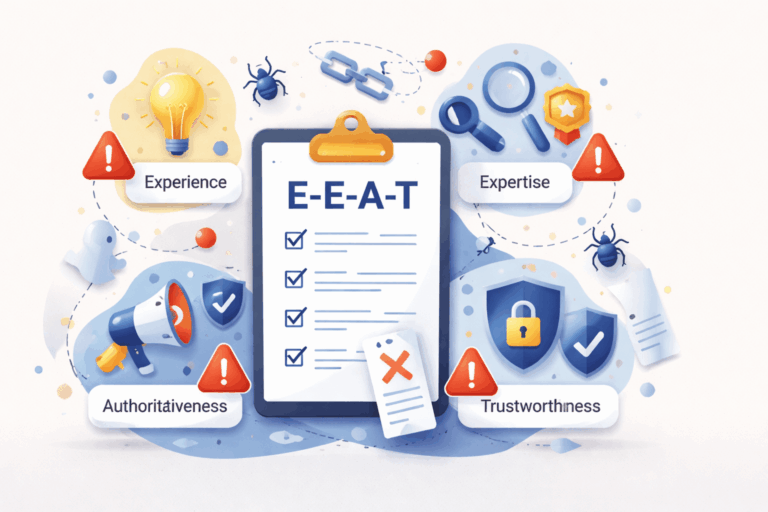
Mistakes That Quietly Kill E-E-A-T
Avoid these if you want AI content to survive:
Publishing Without a Named Expert
Content without a visible author lacks accountability. When readers can’t see who is behind the advice, trust drops instantly—especially in high-stakes niches. Search engines also struggle to assess credibility without clear author signals. A named expert with real background turns content from “information” into “guidance.”
Avoiding Opinions to Stay “Safe”
Neutral content feels safe, but it also feels useless. Real expertise involves taking a stance, explaining trade-offs, and saying when something doesn’t work. Opinion-free content reads like a summary, not experience. Search engines increasingly reward clarity over caution.
Writing for Algorithms Instead of Buyers
Content written to please algorithms often ignores real decision-making questions. It may rank briefly but fails to convert because it doesn’t address fears, objections, or intent. Buyers want clarity, not keyword placement. When users disengage, rankings eventually follow.
Treating Trust as a Footer Checklist
Trust isn’t built by adding a privacy policy and an “About Us” page. It’s created through honest language, transparent claims, and real-world proof throughout the content. When trust signals are isolated instead of embedded, users sense the disconnect. Search engines do too.
Chasing Keywords Without Ownership
Targeting keywords without owning the topic leads to shallow content. You rank temporarily but lose ground when stronger voices appear. Ownership comes from depth, repetition, and lived understanding of a subject. Search engines reward brands that consistently show they belong in the conversation.
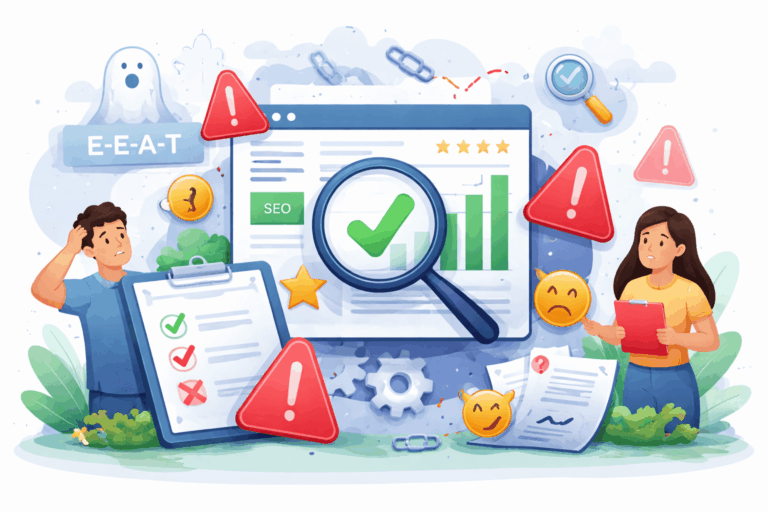
Why E-E-A-T Fails Even When Your SEO Looks “Right”
Many websites follow SEO best practices yet still struggle to earn trust and long-term rankings. The issue is rarely technical—it’s strategic. When content is created without ownership, conviction, or buyer-first thinking, E-E-A-T signals weaken quietly, even if traffic and indexing appear healthy.
Missing Human Ownership
When content isn’t clearly tied to a real expert or decision-maker, it lacks accountability. Anonymous or brand-only publishing makes advice feel generic and replaceable. Search engines and users both struggle to understand why this source deserves trust over others.
Over-Optimized, Under-Helpful Content
Pages built primarily for algorithms often prioritize keywords over clarity. They answer what but avoid why, when, or for whom. This disconnect leads to poor engagement, signaling to search engines that the content isn’t truly satisfying intent.
Trust Signals Treated as Add-Ons
Placing trust elements only in footers or legal pages creates a credibility gap. Real trust is built within the content through honest language, transparent claims, and realistic expectations. When trust feels secondary, rankings and conversions eventually decline together.
Conclusion:
You don’t “add” E-E-A-T to content. You earn it through clarity, restraint, and responsibility.
In an AI-dominated search environment:
- Helpful content survives
- Confident content converts
- Honest content compounds
If your content helps people make better decisions—even if that means telling them not to buy—you are aligned with how modern search works.
That’s how you optimize E-E-A-T for AI rankings without chasing algorithms.
How To Optimize E-E-A-T For AI Rankings?: FAQS
E-E-A-T stands for Experience, Expertise, Authoritativeness, and Trustworthiness, which search engines use to evaluate content credibility beyond keywords.
AI content itself isn’t a problem, but unreviewed or generic AI content often lacks experience and accountability, weakening E-E-A-T signals.
Include real-world examples, case studies, mistakes, and outcomes that reflect actual hands-on involvement, not just theoretical advice.
Yes, clear author identities with relevant background help search engines and users assess expertise and trustworthiness.
No, technical SEO supports visibility, but sustained rankings require credible content, honest intent, and consistent authority signals.
References
About the Author