
The real estate market in 2026 is driven by data, regulations, and end-user demand rather than speculation. Prices and demand depend on interest rates, supply, government policies, and digital-first buyer research.
Table of Contents
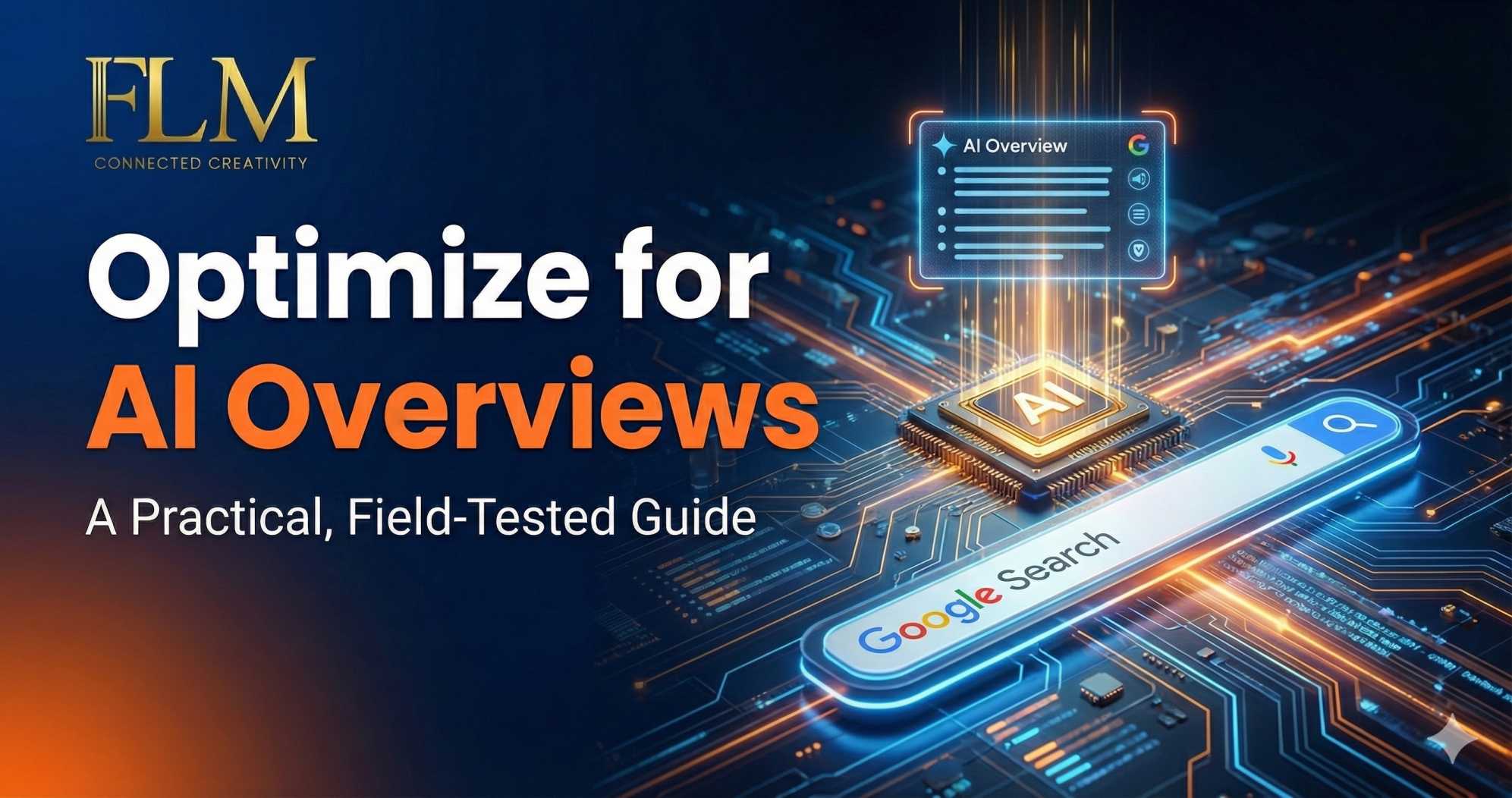
ToggleHow to Optimize for AI Overviews and Rank High on Google (A Practical, Field-Tested Guide)
Google search is no longer just about blue links.
AI Overviews are now shaping what users see first, what they trust, and what they never click at all. In many cases, the AI summary becomes the answer — and your website either becomes a source inside it or disappears from the conversation entirely.
I’ve seen this shift firsthand across multiple industries: real estate, healthcare, local services, and SaaS. Sites that relied only on rankings are losing visibility. Sites that structure knowledge correctly are winning authority even with fewer clicks.
This guide explains how AI Overviews actually choose content, what Google is rewarding right now, and how you can engineer your content to be selected, not skipped.

The Real Impact of AI Overviews (What Google Doesn’t Say Clearly)
In audits I’ve run for local and national businesses, we consistently see:
Fewer clicks on basic informational queries
Users increasingly get answers directly from AI Overviews, reducing the need to click on traditional organic results for simple “what,” “why,” and “how” searches.
More trust placed in the first AI-generated explanation
Searchers tend to trust the first AI summary they see, especially when it appears clear, factual, and well-structured, making early visibility critical.
Strong brand recall for sites mentioned inside the overview
Even without clicks, brands cited in AI Overviews gain higher recognition and authority, influencing future searches and purchase decisions.
Here’s the uncomfortable truth most SEO blogs avoid:
Ranking #1 without being cited in AI Overviews is often weaker than ranking #5 and being referenced.
Users don’t scroll the way they used to. They scan the summary, absorb the explanation, and move on — or refine their query.
This means your goal is no longer just traffic.
Your goal is representation.

Why Google Selects Certain Pages for AI Overviews (Observed, Not Theoretical)
1. Pages Must Already Be “Trust-Eligible
Almost every cited page:
As we all know about AI, AI is used everywhere. AI has the solution to every problem not in marketing but every aspect of business.
Ranks on page 1
Pages already ranking in the top results signal relevance and reliability, making them more likely to be selected as trusted sources by AI Overviews.
Has a history of stable indexing
Websites that are consistently indexed without frequent drops or errors demonstrate long-term trust and technical reliability to Google.
Shows topical consistency
Content that focuses on a clearly defined subject area helps Google understand expertise, increasing the chances of being cited in AI-generated summaries.
AI Overviews don’t rescue weak SEO.
They amplify strong foundations.
If your page is poorly optimized, thin, or disconnected from a topic cluster — it won’t be selected no matter how well written it is.
2. AI Prefers Pages That Answer Before They Explain
From my experience optimizing content for real estate developers and clinics, the pages that get cited:
Start with a direct definition or explanation
Open with a clear, factual statement that immediately answers the user’s question, making it easy for AI systems to extract and summarize.
Remove unnecessary introductions
Skip long background or filler content and focus on delivering value upfront to improve clarity, relevance, and extractability.
Avoid opinionated language early
Use neutral, fact-based language at the beginning to build trust and ensure the content is suitable for AI-generated summaries.
Example (bad):
In today’s digital era, many people are curious about…
Example (AI-friendly):
“Stamp duty is a government tax paid during property registration. In Delhi NCR, it typically ranges from X% to Y% depending on buyer category.”
3. Structured Information Beats “Well-Written” Content
This is where many good writers lose.
AI systems extract information, not emotions.
Pages that win consistently use:
Short paragraphs
Keep paragraphs concise to improve readability and make key information easier for AI systems to scan and extract.
Clear subheadings
Use descriptive, intent-based subheadings to clearly signal what each section explains, helping both users and search engines.
Bullet logic
Break complex ideas into bullet points to present information in a clean, structured, and easily digestible format.
Lists, steps, tables, FAQs
Organize content into lists, step-by-step guides, tables, and FAQs to improve clarity and increase eligibility for AI Overviews and featured results.
If your content looks good to humans but is hard to skim, AI will ignore it.
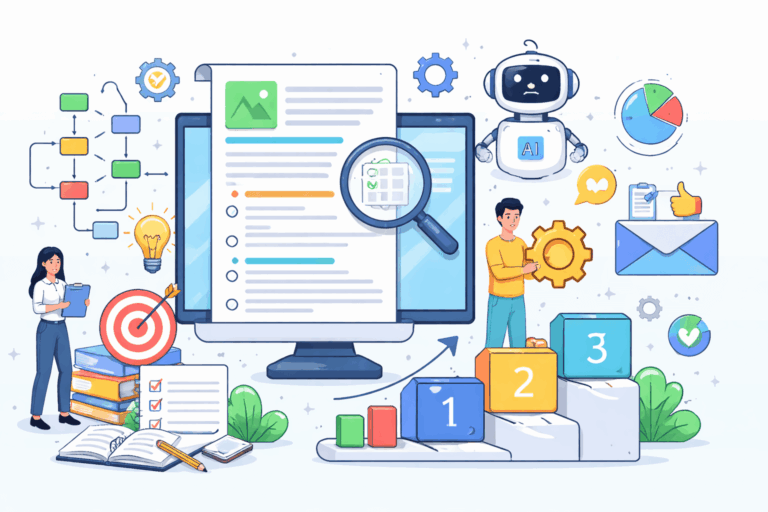
How I Structure Content Specifically for AI Overviews (Step-by-Step)
Step 1: Define the Primary Question Explicitly
Before writing anything, identify:
What exact question is Google trying to answer?
Identify the core user intent behind the search query so your content directly addresses the problem Google wants to solve.
What would a one-paragraph perfect answer look like?
Craft a concise, complete explanation that fully answers the query in a single paragraph, making it ideal for AI summaries and featured placements.
Then place that answer:
Immediately after the H1
Place the core answer directly below the main heading so search engines and AI systems can find it instantly.
In plain, neutral language
Use simple, factual wording that explains the topic clearly without jargon, emotion, or exaggeration.
Without branding or selling
Avoid promotional language or brand mentions early on to keep the content informative, objective, and suitable for AI summaries.
Step 2: Break the Topic Into “Extraction Blocks
Each section should answer one specific sub-question:
What is it?
Explain the concept in simple, factual terms so users immediately understand what is being discussed.
Why does it matter?
Describe the real-world impact or importance of the topic and how it affects the user’s decision or outcome.
How does it work?
Break down the process or mechanism step by step to remove confusion and build understanding.
What are the risks?
Highlight potential downsides, limitations, or consequences so users can make informed choices.
What mistakes do people make?
Identify common errors or misconceptions to help users avoid costly or irreversible problems.
Step 3: Use Question-Based Headings
Instead of:
Understanding the Market
Use:
How does the real estate market work in 2026?
Step 4: Anchor Content Around Entities, Not Keywords
For example, in real estate content:
Locations
Specific cities, regions, or micro-markets that define where a property or transaction applies and influence pricing and demand.
Legal terms
Regulatory and contractual terms that explain ownership rights, compliance requirements, and legal obligations in real estate.
Authorities
Government or regulatory bodies responsible for approvals, registrations, and oversight of real estate transactions.
Processes
Step-by-step actions involved in buying, selling, or registering property, from verification to final possession.
Financial instruments
Loans, mortgages, subsidies, and investment tools that fund property purchases and impact affordability and returns.
Link related concepts internally:
Customers are more aware of ethical marketing for products and services. This awareness affects the future of digital marketing in Ahmedabad and worldwide.
Registration → Stamp Duty → Circle Rate → RERA
Property registration legally records ownership, with stamp duty paid based on the government-defined circle rate. RERA regulates projects to ensure transparency, compliance, and buyer protection.

Real Buyer Problems AI-Optimized Content Must Solve
Real users ask:
“Is this legal?”
Clarify whether a property or transaction complies with local laws, regulations, and approvals.
“What can go wrong?”
Highlight potential risks, pitfalls, or complications that could affect the buyer or investment.
“How do I verify this?”
Explain the steps or checks needed to confirm legality, ownership, and authenticity.
“What mistakes should I avoid?”
List common errors or misconceptions buyers make and how to prevent them for a safer transaction.
Example from Real Estate SEO
We added:
A section on common buyer mistakes
Highlights frequent errors buyers make to help them avoid costly or legal problems.
A checklist for verification
Provides step-by-step actions to confirm property authenticity, legality, and compliance.
A neutral explanation of risks
Explains potential downsides or complications objectively, without exaggeration or promotion.
Technical SEO That Actually Helps AI Overviews
Schema That Works in Practice
From multiple tests:
FAQ schema → strongest impact
Helps Google understand question-and-answer content, increasing eligibility for AI Overviews and featured snippets.
HowTo schema → good for process queries
Highlights step-by-step instructions, making process-oriented content easier for AI and users to extract.
Review schema → helpful for credibility
Signals user feedback and evaluations, boosting trust and authority in Google’s eyes.
Page Speed and Clean Code Matter More Than Ever
AI extraction struggles with:
Heavy scripts
Large or excessive scripts slow page loading and make content harder for AI systems to extract.
Popups covering content
Overlays and interstitials block information, reducing readability and AI accessibility.
Delayed loading sections
Content that loads late or asynchronously can be missed by AI crawlers, lowering chances of inclusion in summaries.
Mobile Experience Is Non-Negotiable
If your content:
- Scrolls poorly
- Uses tiny fonts
- Breaks structure on mobile

How to Build Trust Signals AI Actually Respects
What helps:
- Clear author attribution
- Industry-specific experience
- Consistent publishing history
- Neutral, balanced tone
- Real examples, not hype
What hurts:
- Over-promotional language
- Absolute claims (“best,” “guaranteed”)
- Unsupported statistics

What’s Working Best Right Now
From active projects and audits:
- Depth > length
- Clarity > creativity
- Entities > keywords
- Structure > storytelling
- Updates > static pages
Conclusion:
Build content that:
- Answers before it persuades
- Explains before it sells
- Structures before it decorates
AI Overviews don’t kill SEO — they filter it.
Only the clearest, most useful, most credible content survives.
If you want long-term visibility, build for humans first, but structure for machines.
That balance is where modern SEO lives.
How to optimize content for AI Overviews :FAQs
01
AI Overviews are AI-generated summaries shown at the top of Google results that provide direct answers to user queries. They combine information from multiple trusted sources to help users understand a topic quickly without opening multiple pages.
02
Google typically selects content from pages that already rank well, are well-structured, and demonstrate strong topical authority. Clear answers, factual accuracy, and clean formatting increase selection chances.
03
No. Page-one ranking is important, but not enough. Google favors content that answers questions directly, uses clear headings, and presents information in a format that AI can easily extract and summarize.
04
Start with a clear, direct answer after the main heading. Use question-based subheadings, bullet points, short paragraphs, and lists to make information easy to scan and quote.
05
Yes, but entity-based optimization is more important than keyword stuffing. Google looks for topic depth, related concepts, and contextual relevance rather than repeated exact-match keywords.
Reference
About the Author

Mitesh Vyas
Hi, I’m Mitesh Vyas, an SEO Specialist with 7+ years of hands-on experience in helping businesses grow through organic search. I focus on creating SEO strategies that not only rank but also drive real business growth.
I specialize in Technical SEO, On-Page Optimization, High-Quality Link Building, and Local SEO strategies that drive measurable rankings and revenue.
I have worked with startups, local businesses, and agencies to improve search visibility, increase website traffic, and generate qualified leads using Google-compliant, white-hat SEO practices.


