
Table of Contents
ToggleHow User Behavior Impacts SEO Rankings in 2026
How User Behavior Impacts SEO Rankings: In 2026, Google’s search algorithms have evolved far beyond simple keyword matching. Today, the search engine prioritizes user behavior and experience above almost everything else. For local businesses in Coimbatore—or anywhere else—understanding how users interact with your site can make the difference between appearing on page one or being buried in obscurity.
From my years working with small businesses and observing traffic patterns firsthand, I’ve noticed one clear trend: sites that focus on real user needs consistently outperform those designed solely to appease algorithms. This article will break down the practical steps you can take to optimize your website for real users, not bots, while improving search engine rankings sustainably.

Why User Behavior is the New SEO Currency
How Google Measures User Engagement
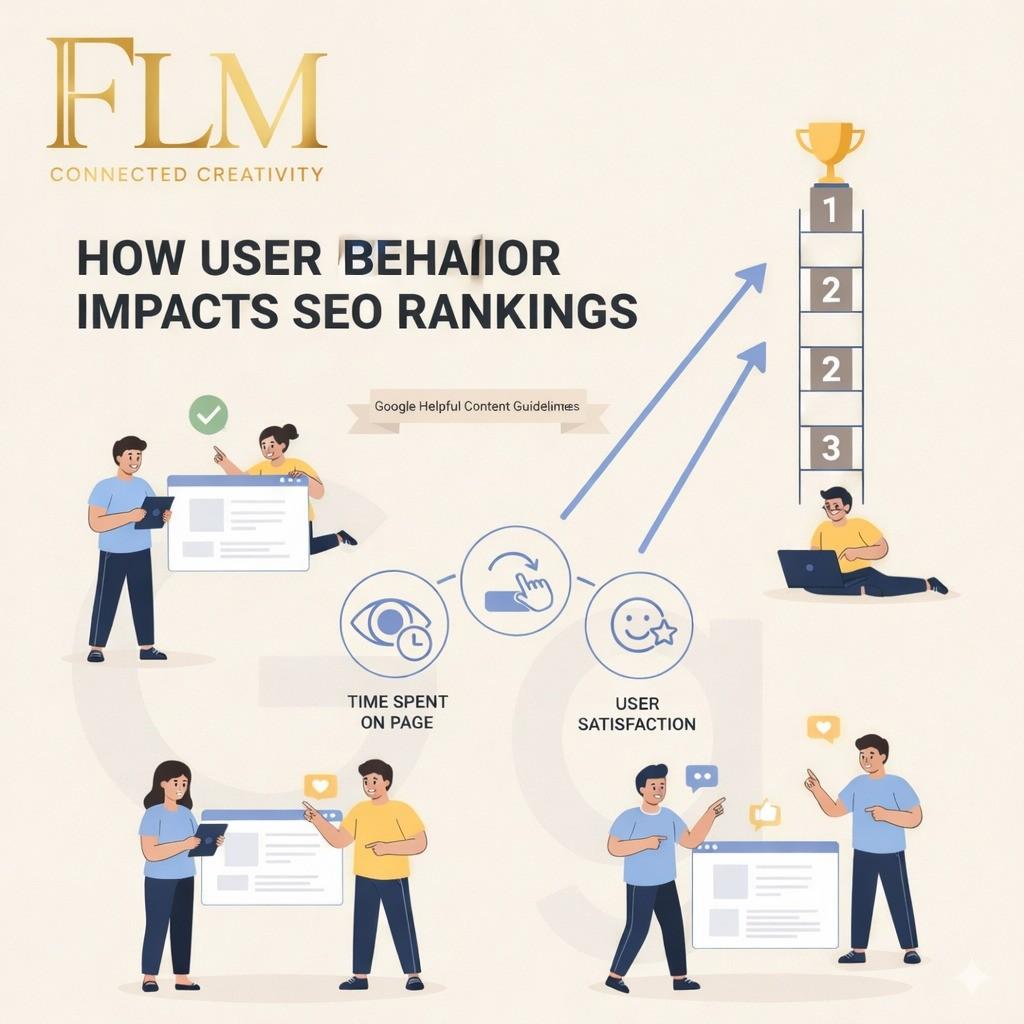
Google evaluates how users interact with your website to determine its relevance and quality. Key signals include time spent on page, bounce rate, scroll depth, and repeat visits. If users stay longer and engage with content like videos, images, or interactive tools, it signals value to Google. The more positive engagement your site generates, the higher it is likely to rank.
Common User Behavior Mistakes That Hurt Rankings
Many websites unintentionally drive visitors away, negatively affecting SEO. Slow-loading pages, confusing navigation, intrusive pop-ups, and non-mobile-friendly designs are the most common culprits. Even high-quality content can fail if users leave quickly or struggle to find information. Fixing these issues is critical to improve engagement metrics and search visibility.
Real-Life Examples of User Behavior Impacting SEO
Consider a local physiotherapy clinic whose website had long, text-heavy pages and slow videos. After simplifying navigation, compressing media, and adding short exercise demo videos, visitors stayed longer, and appointment bookings increased. This improvement in user behavior directly led to higher local search rankings within a few months. Real-world adjustments like these show how engagement metrics drive SEO success.

Step-by-Step Guide to Improving User Behavior and SEO Rankings
1. Prioritize User Experience (UX)
User experience is the foundation of SEO in 2026. Google evaluates how visitors interact with your site—if they leave quickly, it signals a poor experience. Focus on mobile-first design, as the majority of users in India browse via smartphones. Optimize page load speed using compressed images, minimized scripts, and browser caching. Navigation should be intuitive, with clear menus and search functionality, so visitors can find information without frustration. Accessibility also matters—legible fonts, high-contrast colors, and alt text for images improve both usability and search visibility.
2. Create Content That Solves Real Problems
Content should directly address the questions and pain points of your target audience. Conduct a search intent audit to classify queries as informational (users seeking knowledge), transactional (ready to book or purchase), or navigational (looking for a specific page). Use headings, bullet points, tables, and visuals to make content scannable and easy to digest. Incorporate actionable tips and step-by-step guides that help users immediately.
3. Strengthen Technical SEO
Even the best content can underperform if technical aspects of your site are weak. Ensure your website is HTTPS-secure, loads quickly, and has no broken links or errors. Implement structured data/schema markup to highlight services, author information, testimonials, and events, increasing the chances of rich snippets in search results. Organize your site architecture with logical categories and internal links to make crawling easy for Google bots. Conduct quarterly technical audits to prevent issues from creeping in unnoticed.
4. Build Trust and Authority
Demonstrating expertise, authority, and trustworthiness (E-A-T) is essential. Include detailed author bios with qualifications, certifications, and years of experience. Share client testimonials and case studies to provide social proof. Display awards, recognitions, or certifications to reinforce credibility. Google values sites that not only provide answers but show they are backed by real expertise.
5. Match Content to Search Intent
Understanding the why behind a search query is more important than focusing solely on keywords. For example, a user searching “vertigo exercises” expects guidance, while “vertigo treatment near me” seeks local service options. Map pages to informational, transactional, or navigational intent, and ensure your CTAs (Call to Actions) match. This alignment increases engagement, reduces bounce rates, and improves conversion opportunities.
6. Engage Visitors With Interactive Content
Interactive content significantly improves user engagement, which is a key ranking factor. Add videos, step-by-step demos, quizzes, polls, calculators, or before-and-after images. Interactive elements encourage visitors to spend more time on the page, explore other pages, and share content socially. The longer and more engaged users are, the more Google interprets your site as valuable.
7. Optimize for Local SEO
For businesses serving a local audience, local SEO is critical. Ensure your NAP (Name, Address, Phone) is consistent across Google Business Profile, social media, and directories. Collect and respond to Google reviews to build credibility. Geo-targeted keywords and local content, like community events or case studies, help attract nearby clients. Google rewards businesses actively engaged with their community and online presence.
8. Earn Quality Backlinks
Backlinks remain a strong authority signal—but quality outweighs quantity. Seek links from trusted local websites, healthcare directories, industry blogs, and news outlets. Publish original case studies or research-backed content that others naturally reference. Avoid spammy link-building; a few relevant, high-authority backlinks are far more valuable than dozens of irrelevant ones.
9. Monitor and Adjust Regularly
SEO and user behavior improvements are ongoing. Use tools like Google Analytics, Search Console, and heatmaps to track engagement, click-through rates, and session times. Identify what works and refine strategies monthly. Adjust content, technical fixes, and interactive features based on real performance metrics to maintain rankings and improve ROI over time.

How to Get Started Right Away
Run a Full Site Audit
A complete site audit helps uncover technical issues that negatively affect user experience and rankings. Review page speed, mobile responsiveness, broken links, crawl errors, and structured data implementation. Slow pages or unresolved errors can cause visitors to leave quickly. Fixing these issues improves usability and allows Google to crawl and rank your site more efficiently.
Update or Create Content Addressing Visitor Problems
Identify the real questions and challenges your audience is searching for and create content that directly answers them. Focus on practical solutions, clear explanations, and actionable advice rather than keyword-heavy text. Well-structured content with headings, visuals, and examples keeps users engaged longer. This signals value to Google and improves both rankings and conversions.
Gather Testimonials and Showcase Expertise
Testimonials, reviews, and case studies build trust with new visitors and strengthen credibility. Highlight professional qualifications, certifications, and real success stories prominently on your site. Authentic proof reassures users that they are choosing a reliable expert. Google also favors sites that demonstrate experience, authority, and trustworthiness.
Build Relationships With Local Websites for Backlinks
Local backlinks from trusted websites help establish authority and relevance in your area. Collaborate with local blogs, news portals, directories, and industry partners to earn quality links. Focus on relevance and authenticity rather than link quantity. Strong local backlinks improve visibility in both organic and map-based search results.
Track Engagement Metrics and Adjust Strategies Monthly
SEO performance improves when you track and act on real data. Monitor metrics like bounce rate, time on page, click-through rates, and conversions regularly. Identify which pages perform well and which need improvement. Monthly adjustments based on user behavior help maintain rankings and drive consistent growth.
Conclusion
In 2026, SEO success is no longer about tricking algorithms—it’s about delivering real value to your audience. From my experience with local businesses in Coimbatore, sites that focus on usability, trust, and problem-solving see the most consistent growth.
If you want to boost your website performance and attract the right audience, consider consulting an experienced SEO agency that understands local market dynamics. Focus on your users first, and Google will naturally reward your efforts.
How User Behavior Impacts SEO Rankings: FAQs
Yes, Google uses engagement signals like bounce rate, time on page, and repeat visits to judge content quality. Positive user behavior helps improve rankings over time.
Track bounce rate, average session duration, pages per session, scroll depth, and click-through rate. These metrics show how users interact with your site.
Improve content readability, add visuals or videos, strengthen internal links, and use clear calls-to-action. Small updates can significantly boost engagement.
Most sites see improvements within 4–12 weeks once engagement improves consistently. Results depend on competition and how often changes are made.
User behavior confirms content quality, while backlinks build authority. The strongest SEO results come from balancing both effectively.
References
About the Author



DigitalStorefronts
February 3, 2026 - 3:54 amThis was a really clear and practical breakdown of how user behavior affects SEO rankings, I like how the article explains that factors like engagement, time on page, and click-through rates aren’t just metrics but real signals that search engines use to understand value.