
Table of Contents
ToggleHow Web Development Impacts SEO and Conversion Rates?
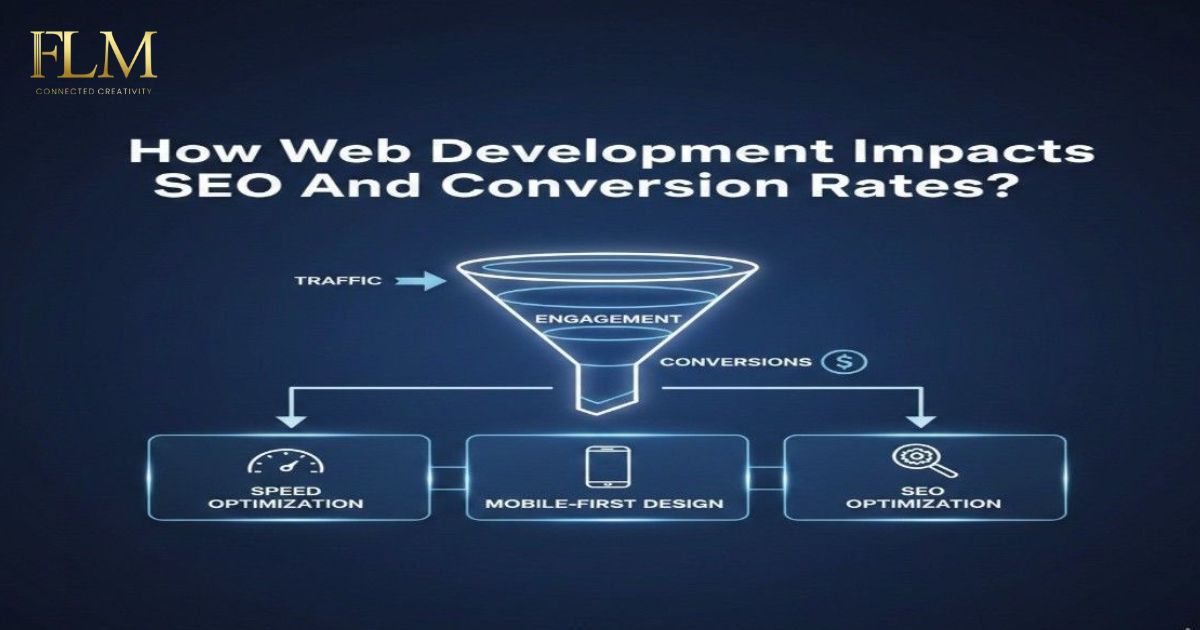
How Web Development Impacts SEO And Conversion Rates?: In my experience working with businesses that struggle online, one problem shows up again and again: They invested in a website—but not in how it’s built.
The result?
- Pages that rank poorly despite good content
- Traffic that doesn’t convert into leads
- Websites that “look fine” but don’t generate revenue
Web development isn’t just about design or code. It’s the engine behind search visibility and user decisions. When development is done right, SEO and conversions improve naturally. When it’s done wrong, no amount of marketing can fully fix it.
Let’s break down how web development actually impacts SEO and conversion rates—and what businesses should focus on if they want measurable growth.

Why Google and Users Judge Your Website the Same Way
Search engines are no longer ranking pages based only on keywords. They evaluate how real people experience your website.
From Google’s perspective:
- Slow sites signal poor quality
- Confusing navigation signals low usefulness
- Broken elements signal low trust
From a buyer’s perspective:
- Slow sites feel unprofessional
- Poor UX feels risky
- Friction kills intent
When development ignores these signals, both SEO and conversions suffer at the same time.

The Technical Foundations That Decide SEO Success
1. Speed Is Not a “Nice to Have”—It’s a Revenue Factor
- Crawl efficiency
- Mobile rankings
- Bounce rate
- Conversion drop-off
I’ve seen service websites lose 40–50% of potential leads simply because pages took more than 4 seconds to load.
Speed affects:
What actually works in practice:
- Lightweight frameworks instead of bloated builders
- Image compression at upload—not after publishing
- Eliminating unnecessary plugins and scripts
- Server-level optimization (often ignored)
2. Mobile Experience Determines Visibility, Not Desktop Design
Many businesses still approve websites on large screens first. That’s a mistake.Google indexes your mobile version first, and users make decisions on phones faster than anywhere else.
Common mobile issues I see:
- CTAs placed too low
- Forms impossible to fill
- Text too small to scan
- Menus hiding important pages
Good development prioritizes thumb-friendly navigation, readable spacing, and instant clarity—especially for local and service-based businesses.
3. Code Quality Affects Indexing More Than Most People Realize
SEO-friendly code isn’t about tricks—it’s about clarity.
Search engines need:
- Proper heading hierarchy
- Clean HTML structure
- Logical internal linking
- Correct schema implementation
Poorly structured code creates:
- Indexing delays
- Ranking instability
- Misinterpretation of content
Strong development ensures your content is understood exactly as intended.

How Development Choices Influence Conversions (Not Just Traffic)
SEO brings visitors. Development decides whether they stay—or act.
1. UX Is About Removing Doubt, Not Adding Design
Buyers don’t want to think. They want reassurance.High-converting sites share common traits:
- Clear value proposition above the fold
- Simple navigation paths
- Obvious next steps
- No distractions from the primary goal
Every extra click or confusing layout element lowers conversions. Development should guide—not impress.
2. Trust Is Built Through Functionality, Not Claims
You can say “We’re reliable” all day. But buyers believe what they experience.
Trust killers I frequently audit:
- Forms that fail silently
- Pages without SSL
- Broken buttons
- Outdated layouts
Trust builders include:
- Fast-loading pages
- Working contact systems
- Secure browsing
- Consistent brandin
3. Conversion Tools Must Be Built, Not Added Later
Many websites treat lead generation as an afterthought.Effective development plans conversion from day one:
- Optimized contact forms
- Smart CTA placement
- Live chat or quick inquiry options
- Landing pages built for intent, not design awards
When these elements are baked into development, conversion rates improve without aggressive marketing.

Analytics Integration: Development’s Most Overlooked Responsibility
If tracking isn’t built correctly, decisions are guesswork. A solid development setup includes:
Analytics Configuration
Proper analytics configuration ensures every visitor interaction is accurately tracked from day one. It connects your website with tools like Google Analytics and tag managers to collect clean, reliable data. Without correct setup, traffic numbers become misleading and decision-making turns into guesswork. Accurate analytics is the foundation of performance improvement.
Event Tracking for Forms and Buttons
Event tracking measures how users interact with key elements like contact forms, CTAs, and buttons. It reveals which actions drive leads and which points cause drop-offs. Without event tracking, you only see visits—not intent. This data helps refine user journeys and increase conversion rates.
Heatmap Readiness
Heatmap readiness allows tools to visually track where users click, scroll, and stop engaging. It shows real user behavior instead of assumptions. Heatmaps expose design flaws, ignored CTAs, and friction points quickly. Development must support these tools to avoid performance or tracking conflicts.
Conversion Goal Setup
Conversion goal setup defines what success actually means—form submissions, calls, sign-ups, or downloads. Clear goals help measure ROI and optimize campaigns effectively. Without goal tracking, traffic growth feels good but results stay unclear. Proper setup turns data into actionable growth insights.
This allows businesses to:
- Identify drop-off points
- Improve UX intelligently
- Increase ROI over time
Development should enable insights—not hide them.

What Most Competitors Miss (But Matters Long-Term)
Heatmap Readiness
A scalable website is built to grow without losing SEO strength. As new pages, products, or locations are added, the site structure, URLs, and internal linking remain clean and organized. Proper database handling, flexible architecture, and performance optimization ensure growth doesn’t slow the site down. Without scalability, rankings often drop as the site expands.
Maintenance Readiness
Maintenance-ready websites allow updates without breaking speed, design, or SEO elements. Clean code, modular components, and proper version control make content and feature updates safe and efficient. When maintenance is ignored, small changes can cause downtime, errors, or ranking losses. Ongoing performance depends on how update-friendly the site is.
Search Intent Alignment
Search intent alignment ensures the website is built around how users actually search and make decisions. Page structure, content layout, and navigation guide users to answers quickly. When design prioritizes aesthetics over intent, users get confused and leave. Websites that match intent naturally earn better rankings and higher conversions.

Choosing the Right Development Partner: What Actually Matters
Don’t ask only:
- “Can you design this?”
Ask instead:
- How will this site load faster?
- How will it convert visitors?
- How will it support SEO over time?
- How will we measure success?
A strong development partner understands business outcomes, not just visuals.
Conclusion:
Ahmedabad is developing to become a business hub of the future and, with it, intense competition. Marketing through digital channels for Ahmedabad is not a luxury anymore, it’s an essential strategy for survival.
How Web Development Impacts SEO and Conversion Rates?: FAQS
Clean code, fast loading speed, and mobile-friendly structure help search engines crawl, index, and rank pages more effectively.
Yes, slow pages, broken layouts, and confusing navigation increase bounce rates and reduce user trust and conversions.
Faster websites rank higher in search results and keep users engaged, leading to more leads and sales.
Responsive design improves user experience on all devices, increasing dwell time and conversion rates from mobile traffic.
A clear site structure improves internal linking, user navigation, and helps search engines understand content relevance better.
reference
About the Author


