
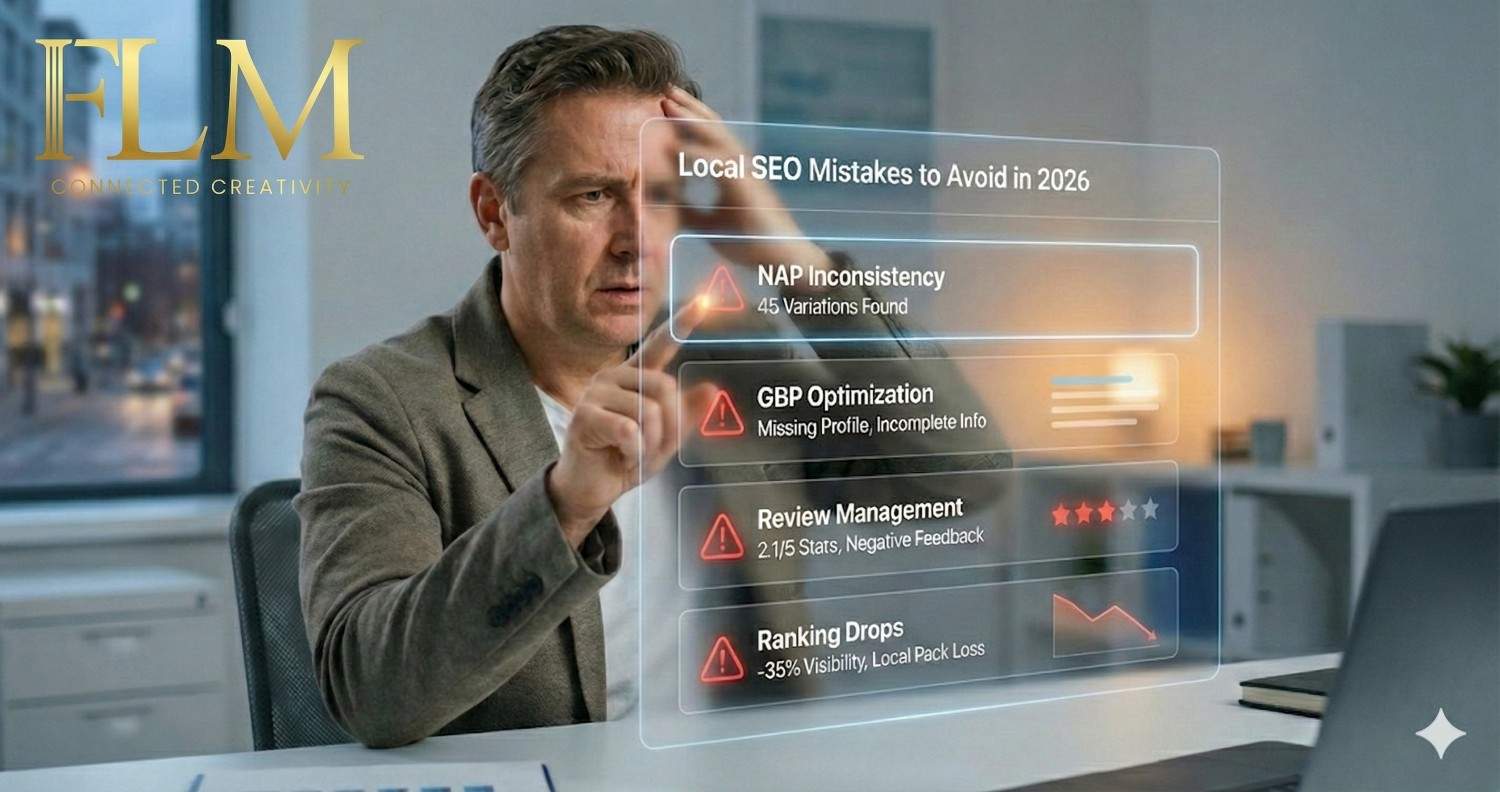
Local SEO mistakes to avoid in 2026: In 2026, local SEO is no longer about quick optimizations or chasing hacks—it’s about building real trust with both Google and local customers. Many businesses struggle to get leads not because they lack effort, but because they repeat common mistakes that silently block visibility, credibility, and conversions. This guide breaks down the most costly local SEO mistakes based on real-world experience, helping you understand what actually matters today and how to fix issues that directly impact rankings, calls, and foot traffic.
Table of Contents
ToggleLocal SEO Mistakes That Kill Leads in 2026 (And How Smart Local Businesses Fix Them)
If you run a local business—whether it’s a clinic, agency, restaurant, or service company—and Google isn’t consistently sending you calls or enquiries, local SEO is almost always the missing piece.
Over the last few years, I’ve worked on local SEO campaigns across competitive cities, and one thing is clear in 2026:
Local SEO is no longer about ticking boxes. It’s about signals, trust, and intent. Google Maps rankings today are influenced by real-world behavior, not just keywords and tags. Businesses that still treat local SEO like “basic on-page SEO + a Google profile” are quietly losing to smarter competitors.
Below are the most damaging local SEO mistakes I see businesses make in 2026, along with exact fixes we use in real campaigns.
Read More: How to optimize service pages for SEO
Mistake #1: Treating Google Business Profile Like a Listing Instead of a Sales Asset
Most businesses “set up” their Google Business Profile once and never touch it again. That’s a mistake.
In 2026, your Google Business Profile (GBP) is often the first and last interaction a customer has before deciding to call—or choose your competitor.
Real problem I see:
Profiles Missing Services, Products, FAQs, and Updates
When key sections of your Google Business Profile are empty, Google has less context about what you actually offer and when to show you. Customers also struggle to quickly understand whether you’re the right fit for their needs. Completing these sections improves relevance, visibility, and user confidence at the decision stage.
Generic Descriptions Copied from the Website
Copy-pasted descriptions don’t answer local search intent or highlight why your business stands out in your area. A well-written profile description should reflect real experience, local expertise, and customer outcomes—helping both Google and users trust your business as a credible local option.
No Conversion Intent (No Clear Reason to Choose You)
Many profiles provide information but give users no reason to take action. Clear trust signals—such as years of experience, service guarantees, response time, or local success stories—help visitors feel confident choosing you over competitors and turn visibility into real inquiries.
What actually works now:
Think of your GBP as a mini landing page, not a directory listing.
Step-by-step fix:
1. Rewrite your business description to answer:
- Who is this for?
- What problem do you solve locally?
- Why should someone trust you?
2. Add every relevant service (with descriptions)
3. Use the Q&A section strategically
- Pricing questions
- Service area questions
- “Do you offer same-day service?”
4. Post weekly updates
- Offers
- Project photos
- Client wins
5. Upload real photos, not stock images
- Office
- Team
- Work in progress
Real-world result:
One local service business we optimized saw a 38% increase in calls from Maps alone within 60 days—without changing their website.
Mistake #2: Collecting Reviews Randomly Instead of Systematically
What customers actually check:
- Are reviews recent?
- Do they mention the service I need?
- Do they sound real?
Smart review strategy in 2026:
It’s not about begging—it’s about process.
Step-by-step fix:
1. Trigger review requests after success moments
- After job completion
- After positive feedback
2. Use service-based prompts
- “Could you mention the service you used?”
3. Diversify keywords naturally
- Location
- Service type
- Outcome
4. Respond to every review
- Google reads responses
- Customers trust responses
Insider insight:
Businesses that grow reviews consistently outperform competitors who spike reviews and go silent—even if total numbers are similar.
Mistake #3: Targeting Broad Keywords That Will Never Rank Locally
I still see local businesses trying to rank for:
- “Best SEO agency”
- “Top dentist in India”
- “Real estate consultant”
These keywords don’t convert locally—and Google knows it.
Why this fails:
Local search is intent-based, not ego-based. Google wants to show businesses that are:
- Nearby
- Relevant
- Trusted
What to do instead:
Build your content and pages around location + service + intent.
Examples that actually convert:
- “Emergency dentist in [Area Name]”
- “3 BHK property consultant in [Locality]”
- “SEO agency for small businesses in [City]”
Pro tip:
Create dedicated location pages only when:
- You truly serve that area
- You can add unique content (not copy-paste)
Thin location pages hurt more than they help in 2026.
Mistake #4: Ignoring Mobile Experience (Even Though Most Local Searches Are Mobile)
Here’s a harsh truth: Your website doesn’t need to be “beautiful.” It needs to be fast, readable, and usable on a phone.
Most local leads come from:
- People standing outside
- People in cars
- People comparing options quickly
Common mobile issues:
- Slow loading
- Buttons too small
- Forms hard to fill
- Maps not clickable
What Google cares about now:
Core Web Vitals (Especially Mobile)
Core Web Vitals measure how fast and stable your site feels on mobile devices, which directly impacts rankings and whether users stay or leave before contacting you.
Click-to-Call Usability
If users can’t easily tap to call your business on mobile, you lose high-intent leads even if you rank well in local search results.
Page Interaction Speed
Slow response to taps, scrolling, or form inputs creates frustration and lowers trust, making both users and Google less likely to favor your site.
Fix checklist:
- Page load under 3 seconds
- One-tap call button
- Sticky contact CTA
- Simple service pages
- No intrusive popups
Case insight:
We improved mobile UX for a local clinic and saw:
- Bounce rate drop by 22%
- Map rankings improve without new backlinks
- Bounce rate drop by 22%
Mistake #5: Messy Business Information Across the Web
Inconsistent NAP (Name, Address, Phone) data is one of the quietest ranking killers. You may not notice it—but Google does.
Common issues:
- Old phone numbers on directories
- Slight name variations
- Different addresses listed online
Why it matters:
Google uses cross-platform trust signals to confirm legitimacy. If your data is inconsistent, Google hesitates to rank you aggressively.
How to fix it properly:
1. Audit major directories:
- Bing
- Apple Maps
- Justdial / Yelp / Local portals
2. Standardize:
- Business name
- Address format
- Phone number
3. Update citations gradually (not all at once)
Trust signal bonus:
Consistent listings improve not just rankings—but conversion trust.
Local SEO Mistakes Most Competitors Still Miss (But You Shouldn’t)
No local authority signals
- No local backlinks
- No local mentions
- No community involvement
Fix:
Sponsor events, collaborate locally, get mentioned on local sites.
No service-based content
Most websites explain who they are, not what problems they solve.
Fix:
Write pages answering real buyer questions:
- Cost
- Timelines
- Comparisons
- Risks
No tracking beyond rankings
Rankings don’t pay bills—calls do.
Fix:
- Calls from GBP
- Direction requests
- Form submissions
- Keyword-to-lead mapping
CONCLUSION:
If I had to summarize modern local SEO in one sentence: Google rewards businesses that look real, act real, and deliver real value locally.
Forget shortcuts. Focus on:
- Real customers
- Real signals
- Real intent
That’s how local businesses win Maps rankings—and turn visibility into leads.


