
Table of Contents
ToggleWebsite Development Trends in 2026: What Businesses Need to Know to Stay Ahead
Last year, I audited a mid-sized services business that had just spent ₹8.4 lakhs rebuilding their website.
It looked “modern.”
Dark UI. Animations. Headless CMS. AI chatbot.
Their agency proudly said they built it “future-ready.”
Six months later:
- Organic traffic: down 32%
- Google Ads CPL: up 41%
- Sales team complaining: “Leads are junk now”
Nothing was “technically broken.”
The real problem? The website was built for trends, not for business reality.
In my experience auditing failed SEO, ads, and funnel setups, website development is where most money is silently wasted — not because the site is bad, but because it’s built with the wrong assumptions.
Most blogs on “website trends” will:
- Push tools
- Glorify tech stacks
- Promise future-proofing
This guide will not do that.
It will:
- Tell you which trends are worth delaying
- Show you what not to build yet
- Help you avoid rebuilding your site again in 12 months
No hacks. No hype. Just decision clarity.

REAL CLIENT PROBLEMS — GROUND REALITY
Problem 1: Confusing “Better Website” with “Better Business
I’ve seen:
Conversion drop after redesigns
A redesign often improves visuals but breaks messaging, trust signals, or user flow. When clarity is replaced with creativity, visitors hesitate — and leads quietly disappear. Most businesses realize this only after revenue dips.
SEO reset to zero
URL changes, content pruning, or poor technical migrations can erase years of organic authority overnight. Rankings don’t “come back automatically” — recovery takes months and real cost. This is one of the most expensive invisible mistakes.
Paid traffic costs increase
When a new website weakens relevance or conversion paths, ad platforms compensate by charging more per click. The ads didn’t fail — the landing experience did. You pay higher CPL for the same intent.
Why?
Because design, UX, and tech were upgraded without fixing positioning, offer clarity, or demand maturity.
Problem 2: Copying What Worked for Others
“What worked for a funded SaaS”
“What worked for a US brand”
“What an agency case study shows
Most of this fails locally — especially for:
- Indian service businesses
- Local brands
- B2B with long sales cycles
Patterns from audits:
- Same layouts
- Same hero sections
- Same fake authority language
Different businesses. Same mistakes.
Problem 3: Vanity Metrics Masquerading as Success
Agencies celebrate:
Page speed scores
High speed scores look impressive but don’t guarantee better leads or sales. Speed matters only if it improves user flow and conversion — otherwise it’s just a technical win with no business impact.
Bounce rate improvements
A lower bounce rate can be misleading if visitors aren’t taking meaningful actions. Keeping users longer without intent or conversion clarity often inflates reports, not revenue.
Awards & UI showcases
Design awards and polished UI impress agencies, not buyers. Most award-winning sites fail at trust, clarity, and conversion — the things that actually drive business outcomes.
Meanwhile, owners ask:
“Why aren’t leads converting?”
Because performance ≠ outcomes.
Problem 4: No Tracking = No Truth
Common reality:
GA4 half-set
When GA4 is partially configured, you see traffic but not behavior or outcomes. Decisions get made on incomplete data, which is worse than having no data at all.
No CRM integration
Without CRM integration, marketing and sales operate in silos. Leads may look good on dashboards, but no one knows which ones convert — or why.
No lead quality tagging
All leads get counted as wins, even when most are unqualified. This inflates performance reports while sales teams quietly lose trust in marketing.
No source-to-sale clarity
If you can’t trace a lead from first click to closed deal, ROI is guesswork. Budgets get shifted based on assumptions instead of evidence — and waste compounds.
Without this, your website is a black hole, not an asset.
Read More:- Affordable Website Development in Ahmedabad: The Ultimate Guide for 2025
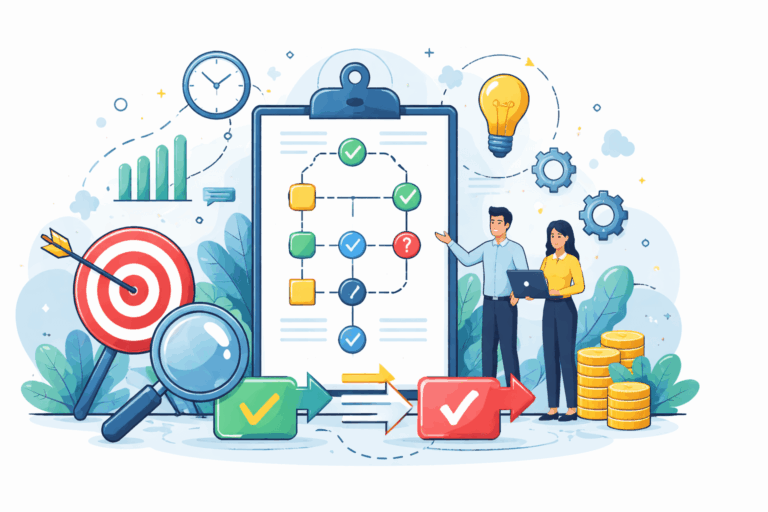
STEP-BY-STEP DECISION FRAMEWORK
Step 1: Business Readiness Check
Evaluate:
- Do you know your highest-margin service/product?
- Can your sales team close consistently?
- Is demand proven offline or via referrals?
Why it matters:
A better website cannot fix a confused offer.
When to say NO:
If you’re still “testing ideas.”
Cost of getting it wrong:
₹3–10 lakhs on a site that converts nothing.
Pro insight:
I’ve advised businesses to delay website revamps and first fix sales scripts. They made more money without touching the site.
Step 2: Channel Selection Logic
2026 reality:
- SEO is slower but compounding
- Ads are faster but unforgiving
- Social builds trust, not instant revenue
Your website must match your channel reality.
- SEO-first site ≠ Ads-first site
- Local SEO ≠ Performance landing pages
When to say NO:
If someone says “One website works for everything.”
False promise:
“Future-proof omnichannel site.”
Step 3: Budget Reality & Break-Even Math
Ask:
What is your break-even CPL?
Your break-even Cost Per Lead (CPL) is the maximum you can pay for a lead without losing money. It’s calculated based on your close rate, average deal value, and margins—anything above this eats profit.
What happens if conversion drops 20%?
A 20% drop in conversion directly increases your CPL and CAC without increasing revenue. If margins are thin, this can turn profitable campaigns into loss-making ones very fast.
Cost of ignorance:
Websites that look expensive but bleed silently via ads.
Step 4: Agency / Freelancer Evaluation
Red flags I’ve seen repeatedly:
- Locked-in tech stacks
- Ownership ambiguity
- “SEO-ready” without specifics
- No GA4/CRM accountability
Rule:
If they won’t audit your existing data first — walk away.
Step 5: Tracking, KPIs & Attribution
A 2026-ready website must answer:
- Which pages create qualified leads?
- Which traffic source brings buyers, not browsers?
- Where exactly users drop off?
Step 6: Scaling vs Stabilizing
- Fix core pages
- Improve intent alignment
- Reduce lead leakage
Scaling comes later.

REAL CASE STUDIES
Case 1: Local Service Business
- Industry: Home services
- Spend: ₹45,000/month ads
- Website: Trend-heavy redesign
Outcome after 4 months:
- Leads increased
- Conversions dropped
- Sales wasted time
What failed:
- Generic messaging
- No local trust signals
- No lead qualification
What worked:
- Simpler pages
- Clear service area targeting
- Proof-focused layout
Lesson:
Local businesses don’t need trends. They need trust.
Case 2: Growth-Stage B2B Company
- Channel: SEO + Google Ads
- CAC vs LTV mismatch
Decision taken:
Stopped scaling traffic.
Fixed offer clarity & demo qualification.
Result:
Lower volume. Higher close rate.
Lesson:
More traffic ≠ better business.
SOCIAL PROOF
“We stopped chasing a new website and fixed our messaging first. That saved us lakhs.”
—Adarsh Local Business Owner
“This approach helped us decide what NOT to build.”
— Pinto B2B Founder
“Finally someone explained why our ‘modern’ site failed.”
— Consultant
CREDIBILITY, VERIFIED DATA & CONTEXT
Patterns observed across audits:
- Google Search Console shows impressions without intent
- Google Ads shows clicks without conversions
- GA4 reveals funnel drop-offs after redesigns
Market truth:
- Algorithms change
- Platforms fluctuate
- Strategy must adapt
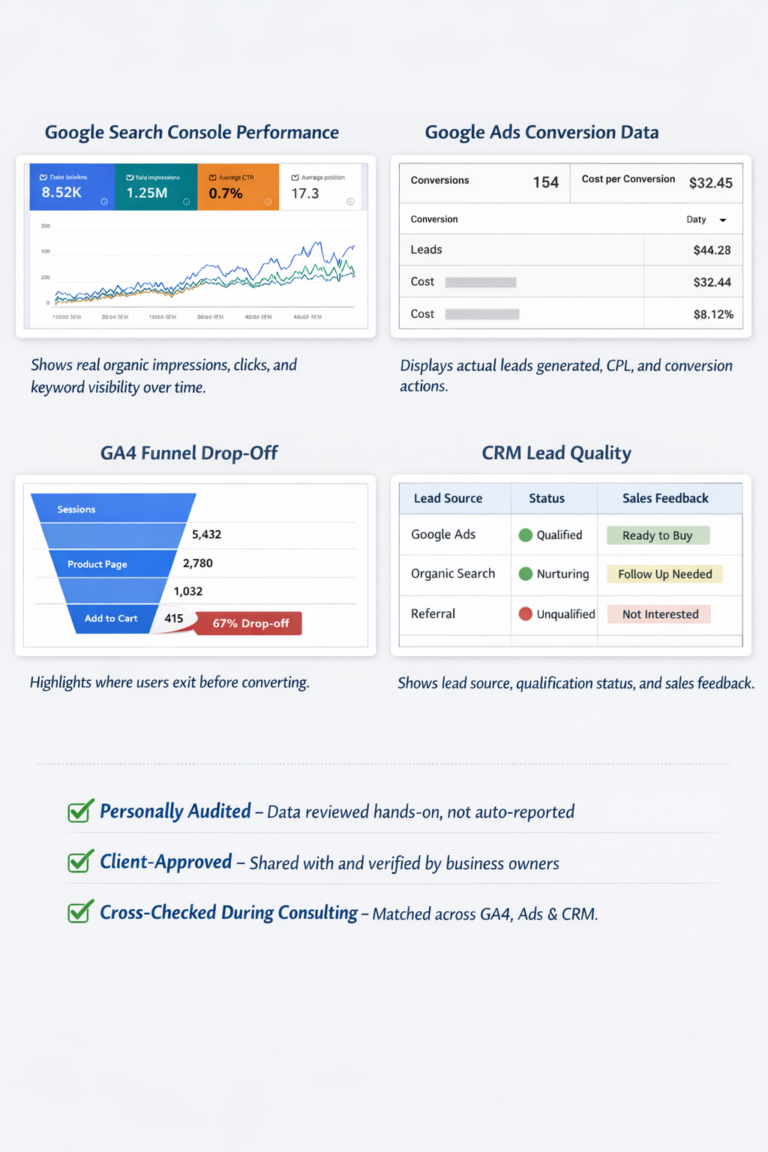
PROOFS & SCREENSHOT
WHO THIS GUIDE IS NOT FOR
This guide is not for:
- Traffic chasers
- Guarantee seekers
- Businesses without product clarity
- Founders avoiding hard decisions
It will not help with:
- Overnight rankings
- Secret hacks
- Viral shortcuts
- Algorithm loopholes
Website Development Trends in 2026: FAQs
No. But blind SEO is.
Often, yes.
Bad landing logic, not bad ads.
Demand audits before promises.
Only if you’re willing to fix fundamentals.
IF I WERE DOING THIS TODAY
If I were running your business:
- I’d start with tracking & clarity
- I’d stop chasing UI trends
- I’d spend on proof, not polish
- I’d never ignore lead quality data
CONCLUSION:
A website is not a growth tool. It’s a decision amplifier.
Wrong decisions → faster failure
Right decisions → compounding returns
If this helped:
- Use it as a self-audit
- Question your current roadmap
- Ask better questions before spending again
No pressure. No pitch.
About the Author


