
Table of Contents
ToggleWhy Cheap Digital Marketing Damages Long Term Growth?
Three months into hiring a “budget growth agency,” a D2C founder I audited was excited. Leads were up. Website traffic doubled. The agency’s dashboard looked busy and impressive.
By month six, sales hadn’t moved. The sales team complained that most “leads” were students, job seekers, and people who clicked by mistake.
By month nine, the ad account was stuck in learning mode, SEO rankings yo-yoed, and the founder was afraid to fire the agency because “we’ve already spent so much — maybe next month it’ll turn around.” That pattern is painfully common.
In my experience auditing digital marketing for real businesses, cheap marketing almost always shows up later as expensive damage control. Not because low budgets are evil — but because cheap execution cuts corners that quietly poison future growth.
Most “budget marketing” advice and growth blogs fail real businesses because they:
- Optimize for vanity metrics instead of revenue reality
- Pretend every business can copy what worked for a random SaaS or influencer
- Ignore how platforms like Google and Meta actually penalize bad data and shortcuts over time
This guide won’t sell you services. It will give you clarity — even when the right answer is: pause marketing, fix foundations, or don’t hire anyone yet.

REAL BUSINESS PROBLEMS
Here’s what decision-makers actually face when they go cheap — not theory, stuff I’ve audited across local businesses, startups, and scaling brands:
Fake Metrics Sold as ROI
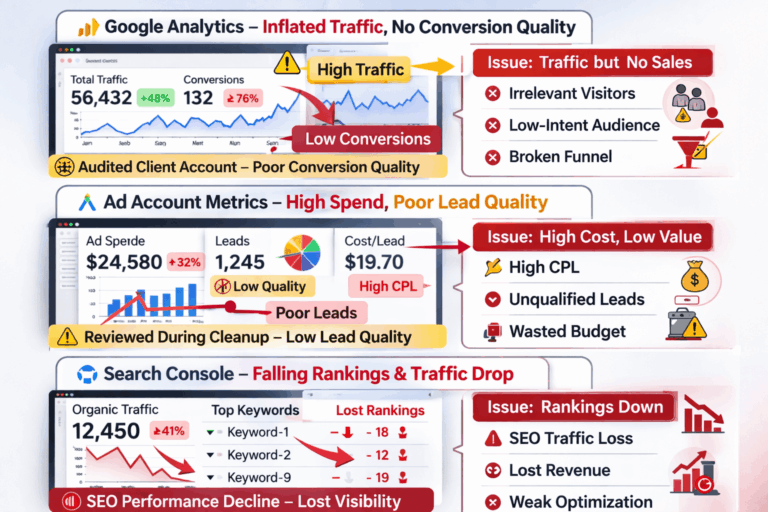
Cheap agencies inflate surface-level metrics because they’re easy to show and hard to challenge. Traffic, CTR, and “leads” go up, but revenue quality quietly drops. Inside Google Analytics, revenue per session declines as low-intent users flood in. Inside Google Ads and Meta Ads, cost per qualified lead rises without anyone calling it out. The business celebrates movement while actual profitability erodes.
Low-Quality Leads That Waste Sales Time
Budget execution prioritizes lead volume over lead quality because volume looks impressive in reports. Sales teams end up chasing people who can’t afford the product, aren’t decision-makers, or never intended to buy in the first place. Over time, reps stop trusting marketing-sourced leads and start ignoring them. This silent breakdown between sales and marketing damages growth far more than low traffic ever would. You don’t just waste ad spend — you waste your best people’s time.
SEO Shortcuts That Cause Long-Term Ranking Damage
Fast SEO “results” often come from link farms, spun content, and low-effort AI pages that briefly manipulate rankings. You’ll see short-term spikes, followed by drops after algorithm updates visible in Google Search Console. Recovery requires backlink cleanups, content rewrites, and months of rebuilding trust with search engines. The total cost of fixing bad SEO almost always exceeds the cost of doing it properly once. By the time you recover, competitors who played clean have moved ahead.
Ad Accounts Burned With Poor Learning Data
When campaigns are set up to chase cheap clicks and junk leads, ad platforms learn the wrong signals about who your buyer is. Even if you hire a competent team later, the account’s historical data keeps working against you, making optimization slower and more expensive. Costs rise, learning phases drag on, and performance feels “capped” for months. This damage is invisible in early reports but painful during scale. You’re not just wasting budget — you’re training the platform to misunderstand your business.
Brand Trust Erosion
Cheap copy, spammy landing pages, and fake urgency tactics slowly damage how people perceive your brand. You won’t see this clearly in dashboards, but you’ll feel it in lower repeat purchases, fewer referrals, and awkward feedback like “heard you guys are sketchy.” Trust erodes quietly, long before revenue drops show up in reports. Once a brand feels low-quality or manipulative, performance marketing gets harder and more expensive. You’re not just burning ad budget — you’re devaluing your brand equity.
High Churn of Cheap Agencies/Freelancers
Budget hires rotate fast because underpriced work burns people out or attracts low-commitment operators. Every new agency or freelancer resets context, repeats past mistakes, and changes strategy mid-stream. Momentum dies, learning is lost, and nothing compounds. You spend more time re-explaining your business than actually improving growth. The hidden cost isn’t just money — it’s months of stalled progress.
The Hidden Cost of Redoing Everything Later
Cheap execution creates technical and strategic debt that someone else has to clean up later. I’ve personally seen teams forced to rebuild tracking from scratch, remove toxic backlinks, relearn buyer personas, and retarget audiences that were already burned out. None of this work shows up as “growth,” but it’s mandatory just to get back to zero. You end up paying twice: once for bad work, and again for the cleanup that should’ve been unnecessary.

STEP-BY-STEP DECISION FRAMEWORK
Step 1: Business & Growth Stage Clarity
What to do:
Define your stage clearly before you spend a single dollar on marketing. Survival means you’re trying to stay afloat and confirm there’s real demand. Validation means you’re proving people will pay consistently, not just click or inquire. Scale means you already have working unit economics and want to grow volume profitably. Each stage needs different channels, budgets, and expectations — mixing them is how marketing money gets wasted fast.
Why it matters:
Cheap tactics work differently (or not at all) at each stage.
Mistakes to avoid:
Copying growth playbooks from companies 10x your size.
Pro tip:
If you can’t explain your unit economics, pause marketing. Fix that first.
Step 2: Channel Selection
What to do:
Cheap agencies push SEO + lead-gen ads for everyone as a one-size-fits-all solution, which is exactly Why Cheap Digital Marketing Damages Long Term Growth?. These channels get sold as universal answers even when they don’t fit your business stage, margins, or sales cycle. You end up paying for traffic and leads that your business can’t convert profitably yet. It creates the illusion of momentum while locking you into the wrong growth path. By the time you realize the mismatch, you’ve already trained platforms and teams on bad signals.
Why it matters:
Wrong channel = right execution wasted.
Mistakes to avoid:
Being sold “we do everything.”
Pro tip:
One channel done properly beats three done cheaply.
Step 3: Budget vs Long-Term ROI Reality Check
What to do:
Budget for learning, not instant ROI, because early spend is about finding signal, not squeezing profit. Expect your first dollars to teach you who actually converts, which messages resonate, and where friction lives. Cheap marketing chases immediate numbers and skips this learning phase, which is why Cheap Digital Marketing Damages Long-Term Growth. When you demand instant returns, teams cut corners, over-optimize for junk leads, and poison your future data. The real ROI comes from what you learn and compound, not what you claim in month one.
Why it matters:
Platforms punish rushed experimentation.
Mistakes to avoid:
Expecting profitability in 30 days.
Pro tip:
If your budget can’t sustain 90 days of testing, wait.
Step 4: Evaluating Cheap Agencies & Freelancers
What to do:
Ask how they measure qualified leads and actual revenue, not just clicks and form fills. Cheap operators hide behind dashboards that show activity instead of impact, which is exactly why Cheap Digital Marketing Damages Long-Term Growth. If they can’t clearly explain how a lead becomes revenue in your business, they’re guessing with your money. This forces them to optimize for volume over quality and creates fake wins that don’t compound. If revenue isn’t part of the measurement conversation, you’re not buying growth — you’re buying noise.
Why it matters:
Anyone can inflate numbers.
Mistakes to avoid:
Hiring based on dashboards alone.
Pro tip:
Ask for one failure story they learned from. If they dodge, run.
Step 5: Tracking, Analytics & Fake ROI Detection
What to do:
Tie campaigns to revenue, not clicks, because clicks are easy to buy and hard to convert. Cheap execution optimizes for what looks good in reports, which is exactly Why Cheap Digital Marketing Damages Long Term Growth?. If revenue isn’t the core success metric, teams chase volume over buyer intent and flood your funnel with noise. This breaks trust between sales and marketing and hides real performance problems. If you can’t trace spend to money in the bank, you’re not measuring growth — you’re decorating dashboards.
Why it matters:
Vanity metrics hide bad strategy.
Mistakes to avoid:
Letting the agency “own” your analytics.
Pro tip:
You should be able to log into Google Analytics and understand the basics yourself.
Step 6: Knowing When to Pause, Fix, or Rebuild
What to do:
Stop campaigns when data quality is poisoned, even if dashboards still look “active.” Continuing to spend on bad signals trains platforms and teams the wrong way, which is exactly why Cheap Digital Marketing Damages Long-Term Growth. Junk leads, wrong audiences, and broken tracking compound damage the longer you let them run. Pausing feels scary, but it’s often the fastest way to protect future performance. Doing nothing for a short period is smarter than paying to learn the wrong lessons.
Why it matters:
Bad learning compounds losses.
Mistakes to avoid:
“One more month” thinking.
Pro tip:
Doing nothing is better than training platforms with garbage data.

REAL CASE STUDIES
Case 1: Small / Local Business
- Industry: Home renovation
- Monthly budget: $1,200
- Choice: Cheapest freelancer for ads + SEO
After 9 months:
- Traffic up 90%
- Leads up 60%
- Sales flat
Real cost of fixing:
- $4,500 to clean SEO
- 3 months retraining ads
Lesson:
Volume without qualification burns sales morale and ad accounts.
Case 2: Scaling Brand
- Industry: B2B SaaS
- Entry strategy: Budget agency for growth hacking
- Illusion: CAC looked low on dashboards
- Reality: Retention collapsed, churn spiked
Damage:
- Brand perception suffered
- Ad accounts polluted
Rebuild:
- Reworked funnel
- Reset targeting
- Rebuilt analytics
Lesson:
Cheap growth tactics hide churn until it’s too late.

SOCIAL PROOF
“We went cheap because we were scared of spending. Turns out we spent more fixing the mess than we would’ve doing it right once.”
— Rohan Mehta, Founder (Local Services)
“The dashboards looked great. Revenue didn’t. Our sales team almost gave up on marketing.”
— Ananya Kapoor, CMO (Mid-size B2B)
“I wish someone had told me pausing campaigns was okay. We kept pushing bad data into ads and paid for it later.”
— Kunal Verma, Marketing Head (D2C)
VERIFIED DATA & MARKET CONTEXT
Platform Algorithms Punish Low-Quality Data Over Time
Ad and search platforms learn from the signals you feed them. When campaigns optimize for cheap clicks and low-intent traffic, the platforms learn the wrong buyer profile. Over time, this pushes your ads toward worse audiences and raises your costs. Even when strategy improves later, historical data drags performance down. This is why accounts that started “cheap” often feel capped. You’re paying for bad learning long after the spend is gone.
Cheap Tactics Break Faster When Algorithms Change
Shortcuts work only while the platform tolerates them. When Google or Meta updates algorithms or policies, low-quality tactics collapse first. Sites built on weak SEO foundations lose rankings overnight. Ad strategies built on clickbait creatives and junk audiences stop converting. Businesses that relied on these hacks feel blindsided, while those with fundamentals adapt. Cheap tactics create fragile growth that doesn’t survive change.
Vanity Metrics Don’t Survive Policy & Tracking Changes
When privacy rules, attribution models, or tracking setups change, surface metrics become even less reliable. Traffic and CTR might still look fine, but revenue attribution breaks down. Teams that relied on vanity metrics lose visibility into what actually drives profit. This creates false confidence until sales numbers expose the gap. Businesses with proper measurement frameworks weather these shifts better. Cheap setups usually can’t handle tracking changes.
Data Integrity Matters More During Market Downturns
In slower markets, you can’t afford waste. Poor targeting and low-quality traffic burn cash faster when demand tightens. Clean data helps you double down on what actually converts and cut what doesn’t. Cheap execution muddies signal with noise, making smart cuts impossible. This is when bad marketing decisions compound damage fastest. Tight markets expose weak strategy brutally.

WHO THIS GUIDE IS NOT FOR
This guide is not for:
- Businesses hunting the cheapest possible solution
- Founders who want fast growth with zero risk
- Teams unwilling to understand performance data
- People who switch agencies every 2 months
This guide will not help with:
- Cheap growth hacks
- Overnight rankings
- Viral tricks
- Guaranteed ROI
- Platform loopholes
PROOFS & SCREENSHOT
Conclusion
Cheap digital marketing doesn’t just waste money — it trains your systems, platforms, and teams the wrong way. The damage shows up later when growth should be easier, but isn’t.
If you want a practical next step, build yourself a simple audit checklist:
- Can I trace marketing spend to real revenue?
- Do my sales teams trust marketing leads?
- Can I explain my funnel without agency dashboards?
- Would I pause this channel if I were paying personally?
Answer those honestly before hiring anyone.
Why Cheap Digital Marketing Damages Long Term Growth? : FAQs
No. Bad execution poisons your data and makes future performance harder and more expensive. Sometimes zero is smarter than training platforms and teams the wrong way.
When the provider can’t afford real strategy time, proper tracking setup, or structured testing. If everything is “quick” and templated, you’re paying for shortcuts.
A good one can outperform a bad agency. But most cheap freelancers lack the time, systems, and depth to run serious growth work. Skill beats labels.
Pause, audit, clean toxic work, and rebuild slowly. Recovery takes months, not weeks, and usually costs more than doing it right once.
If revenue is unclear and sales complain about lead quality, that’s already your answer. Pretty dashboards don’t fix broken economics.


