
Table of Contents
ToggleHow Digital Marketing Improves Brand Visibility?
“We’re posting daily, running ads, getting impressions — but nobody remembers our brand.”
I’ve heard this exact line from founders in Ahmedabad, Mumbai, Bangalore — different industries, same frustration.
On paper, everything looks “active”:
- Instagram: daily posts
- Ads: thousands of impressions
- Website: traffic is coming
But ask a simple question: “If I stop your ads for 7 days, will anyone search for your brand?”
Silence.
That’s where the truth hits: They don’t have visibility — they have temporary attention.
The Real Problem
Most agencies sell:
- “Brand awareness campaigns”
- “Reach and impressions”
- “Top-of-funnel visibility”
But they never answer: “Will people remember your brand after seeing it?”
Why Most Blogs Mislead You
Most content says: “Post consistently, run ads, do SEO — your brand visibility will grow.”
That’s incomplete advice.
Because:
- Reach ≠ Visibility
- Visibility ≠ Recall
- Recall ≠ Conversions
My Experience (From Audits)
In my experience auditing digital marketing campaigns:
- 70% of businesses confuse impressions with visibility
- 60% run ads that generate zero brand recall
- 80% of “active social media” brands are not recognizable
So yes — digital marketing can improve brand visibility.But only when: It builds recognition + recall + trust over time Not just activity.
REAL BUSINESS PROBLEMS (GROUND REALITY)
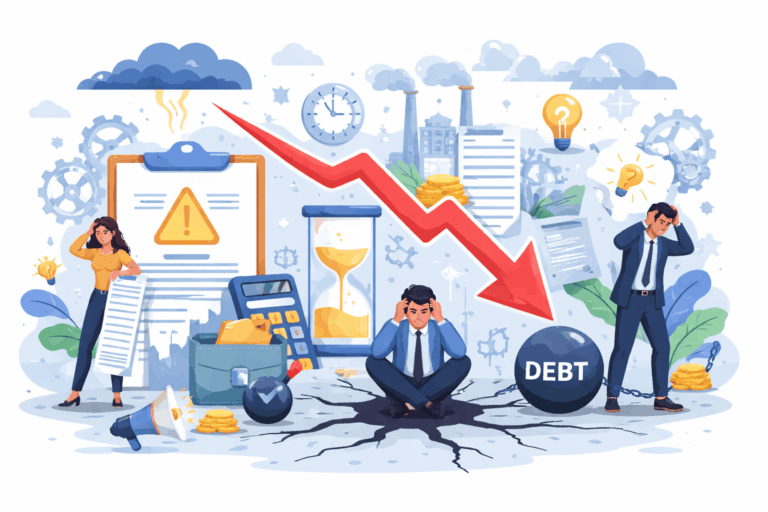
Most businesses think they have a visibility problem, but in reality, nothing about their marketing is memorable. If you understand the Ways Digital Marketing Improves Brand Visibility Online , it’s clear that visibility comes from repeated, consistent messaging—not just activity. Without that, all efforts turn into short-term attention, not recall.
Problem 1: Impressions Are Being Treated as Visibility
“I got 200,000 impressions last month.”
Okay — but: Who remembers you?
Most campaigns create:
- Scroll-by exposure
- Zero retention
- No mental availabilit
Result: Money spent, nothing built.
Problem 2: Ads Without Memory
Many brands run Meta or Google Ads like this:
- Generic creatives
- No brand identity
- No repetition strategy
Users see the ad once… and forget it instantly. That’s attention leakage, not visibility.
Problem 3: Social Media Without Positioning
Posting:
- Quotes
- Festive creatives
- Random reels
Without:
- Clear message
- Unique identity
- Consistent tone
Leads to: “Seen but never remembered”
Problem 4: SEO Traffic That Doesn’t Build a Brand
Getting traffic from blogs is good.
But if:
- Users don’t remember your name
- Content isn’t distinct
- No brand association
Then: You’re building Google’s traffic, not your brand.
Problem 5: Random Content = No Visibility
Inconsistent messaging = zero recall.
If today you talk about:
- Price
- Tomorrow quality
- Next day offers
Your brand becomes forgettable.

STEP-BY-STEP DECISION FRAMEWORK
Step 1: Define What “Visibility” Means for Your Business
What to do
Define visibility as:
- Brand recognition
- Brand recall
- Trust signals
Not:
- Followers
- Likes
- Impressions
Why it matters
If you don’t define it properly: You’ll measure the wrong things.
Mistakes
- Celebrating reach metrics
- Ignoring repeat engagement
- Not tracking brand searches
Pro Tip
Ask: “If someone sees us 3 times, will they remember us?”
If not — you don’t have visibility.
Step 2: Choose the Right Visibility Channels
What to do
Use channels based on behavior, not trends:
- SEO → builds long-term discovery
- Google Ads → captures existing demand
- Meta Ads → creates repeat exposure
- YouTube → builds memory faster
- LinkedIn → strong for B2B recall
Why it matters
Not all channels build visibility equally.
Mistakes
- Running awareness ads without frequency
- Expecting SEO to build recall alone
- Copying competitors blindly
Pro Tip
Visibility improves when users see you multiple times across channels
Step 3: Content & Messaging Consistency
What to do
Lock:
- One core message
- One positioning
- One tone
Repeat it everywhere.
Why it matters
Brands become visible when they become: Predictable and recognizable
Mistakes
- Changing messaging every week
- Designing creatives without identity
- Following trends blindly
Pro Tip
If your content can be posted by any competitor: It’s not building your visibility.
Step 4: Budget Allocation (Visibility vs Performance)
What to do
Split budget based on stage:
- Early stage → 80% performance, 20% visibility
- Growth stage → 60% performance, 40% visibility
- Scaling → balanced
Why it matters
Visibility takes time.
Mistakes
- Running awareness ads without conversion funnel
- Burning money without tracking impact
Step 5: Tracking Real Visibility Signals
What to do
- Branded searches
- Direct traffic
- Returning users
- Ad frequency vs engagement
Why it matters
These are real signals of recall
Step 6: Optimization & Scaling
What to do
Scale only when:
- Recall signals improve
- CAC stabilizes
- Repeat traffic increases
Why it matters
- Scaling reach without recall
- Increasing budget based on impressions
Pro Tip
If people don’t remember you, scaling will only amplify waste.

REAL CASE STUDIES
Case 1: Local Business (Ahmedabad)
Industry: Interior Design
Budget: ₹60,000/month
Channels: Instagram + Google Ads
Problem:
- High impressions
- Zero direct inquiries
- No brand recall
What We Changed:
- Repeated same positioning: “Space optimization experts”
- Focused creatives on before/after consistency
- Increased ad frequency intentionally
Result (8 months):
- Branded searches ↑ 3.2x
- Direct traffic ↑ 2.5x
- Inquiry quality improved
What Failed:
- Generic festive creatives → no impact
Lesson: Visibility comes from repetition + clarity — not creativity alone.
Case 2: Scaling D2C Brand
Initial Strategy: Heavy performance ads
Problem:
- Rising CAC
- No brand recall
- Low repeat purchase
What Changed:
- Introduced YouTube storytelling
- Consistent messaging across ads
- Reduced random creatives
Result:
- CAC dropped 22%
- Repeat purchases increased
- Brand search volume grew steadily
Lesson: Performance without visibility becomes expensive over time.
SOCIAL PROOF
“We thought visibility meant being everywhere. Turns out, nobody remembered us. Once we fixed messaging, results changed.”
— Founder, D2C Apparel Brand
“Our agency kept showing rich reports. But we had zero direct traffic. That’s when we realized something was wrong.”
— Marketing Head, B2B Company
“We reduced the content quantity and focused on consistency. That’s when people started recognizing our brand.”
— Local Service Business Owner

VERIFIED DATA & MARKET CONTEXT
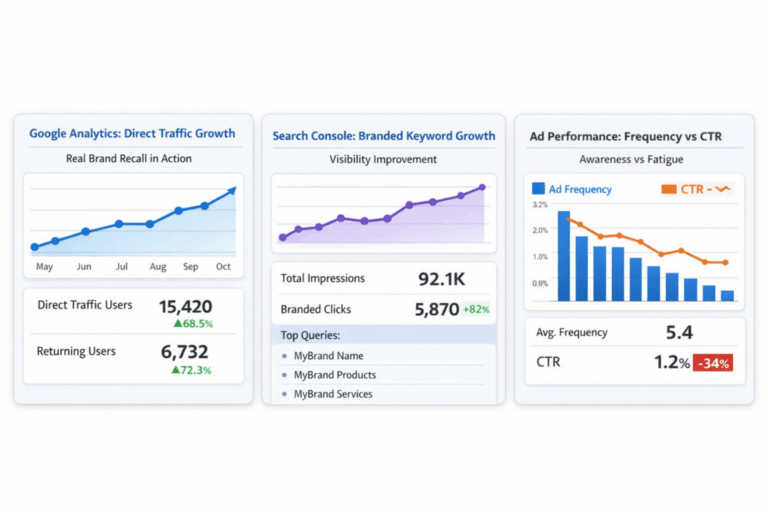
Google Analytics
Direct traffic is one of the closest practical indicators of brand recall—people typing your URL or coming back without a referral usually already know you. Returning users signal that your brand has moved beyond first-touch awareness into familiarity and trust. If both are flat, your visibility efforts aren’t sticking in memory. If they grow steadily, it means your brand is becoming recognizable, not just discoverable.
Search Console
Branded queries show whether people are actively searching for your business name or related terms. This is one of the strongest signals that visibility is turning into recall. If your non-branded traffic is growing but branded searches are not, you’re building traffic without building a brand. A consistent rise in branded queries means your messaging is sticking and people remember you enough to look you up directly.
Ad Platforms
Frequency tells you how often the same user sees your ad, which is critical for building memory—not just reach. Low frequency means people may notice you once but forget quickly; optimal repetition is what builds recall. CTR drop over time often indicates fatigue or weak messaging, not just performance decline. If users stop engaging after multiple exposures, your creatives are not reinforcing a memorable brand.

WHO THIS GUIDE IS NOT FOR
This is NOT for:
- People chasing viral reach
- Businesses expecting instant visibility
- Low-budget brands copying big-brand campaigns
- Founders ignoring product quality
This will NOT help you:
- Go viral overnight
- Hack visibility with influencers
- Fake engagement
- Guarantee recall
PROOF & Screenshots
CONCLUSION
Let’s simplify everything:
- Visibility ≠ Impressions
- Attention ≠ Recall
- Activity ≠ Growth
Real Brand Visibility Comes From:
- Consistency
- Repetition
- Clear positioning
How Digital Marketing Improves Brand Visibility?: FAQs
Because your content isn’t distinctive or consistent enough to stick. People may visit once, but nothing about your brand is memorable.
Yes—but only when people see the same message repeatedly. Without consistency and clear positioning, ads create exposure, not memory.
No. SEO brings people to your website, but it doesn’t guarantee they’ll remember you. Visibility needs repetition beyond search.
Look for signals like branded searches, direct traffic, and returning users. These show people remember and intentionally come back.
Start with performance to generate results and validate your offer. Then invest in visibility to make growth sustainable and reduce dependency on ads.


Digital Marketing Strategy For Small Businesses In India - FLM
September 2, 2026 - 7:02 am[…] Read More:- How Digital Marketing Improves Brand Visibility? […]