
Table of Contents
ToggleLanding Page Mistakes That Waste Your Advertising Budget
A ₹1.2 lakh monthly ad account. Decent CTR. Clicks coming in daily. Leads? Either junk or completely unqualified.
The agency’s diagnosis was predictable:
- “We need more data.”
- “Let’s increase the budget slightly.”
- “The algorithm hasn’t stabilized yet.”
But when I audited the account, the ads weren’t the problem. In my experience auditing paid ad accounts across Google Ads and Meta Ads, the biggest budget killer isn’t targeting, creatives, or bidding.
It’s the landing page no one wants to question.Ads are visible. Landing pages are assumed to be “good enough.”
So when results don’t come, ads take the blame — and budgets quietly bleed.
This guide is not about blaming platforms or agencies. It’s about showing you how landing pages silently destroy ad ROI, even when everything else looks correct.
However, this is the truth: clients in Ahmedabad are not just depending on the word of the mouth and the conventional advertising such as newspapers and billboards.
They are instead searching online, reviewing, and comparing before purchasing a product or service or booking a service.
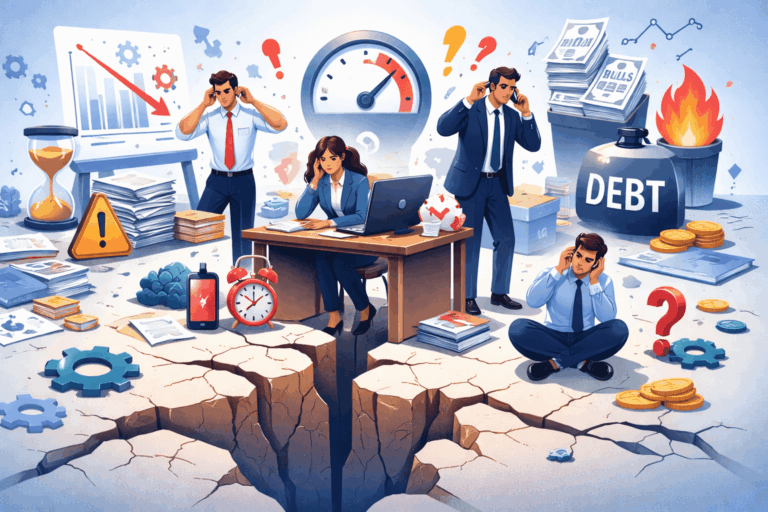
REAL BUSINESS PROBLEMS (GROUND REALITY)
These are the patterns I see repeatedly across local services, B2B, and lead-gen businesses:
High CPC, Low-Quality Leads
You’re paying premium CPCs, but leads:
Don’t Answer Calls
When leads don’t pick up calls, it usually means they never expected a follow-up. The landing page failed to set clear expectations about what happens after submitting the form. Many users fill in details casually or out of curiosity, then ignore unknown numbers. The ad money is spent, but sales time gets wasted on leads that were never ready to talk.
Can’t Afford You
This is almost always an expectation problem created by the landing page. When pricing context, service scope, or positioning is unclear, the page attracts everyone — including people far outside your budget range. Ads do their job by bringing traffic, but the page doesn’t filter who should convert. The result is leads that feel surprised or misled when the real cost is revealed.
Don’t Understand What You Actually Offer
This happens when a landing page tries to sound impressive instead of being clear. Users see features, claims, and buzzwords, but never form a simple picture of what problem you solve and for whom. They submit the form with partial understanding, then get confused during the sales call. Ad spend is wasted because clarity was sacrificed for branding language.
Good CTR, Terrible Conversion Rate
Ad clicks are healthy. Landing page conversion rate is 0.5–1%. This usually means:
- Ad promise ≠ landing page reality
- Too much information, no decision path
- Branding page pretending to be a conversion page
Agencies Optimizing Ads While Ignoring Pages
Weekly reports show:
- Keyword tweaks
- Audience changes
- Creative testing
But no one touches the landing page because:
- “Website is client-owned”
- “That’s not in scope”
- “Let’s fix ads first”
That’s backwards.
Sending Traffic to the Homepage (Still Happening)
Yes, this still happens — especially in:
- Local services
- SaaS founders running ads themselves
- Businesses with “nice” websites
Homepages are built for exploration. Ads require decision clarity. This single mistake alone wastes lakhs every year.
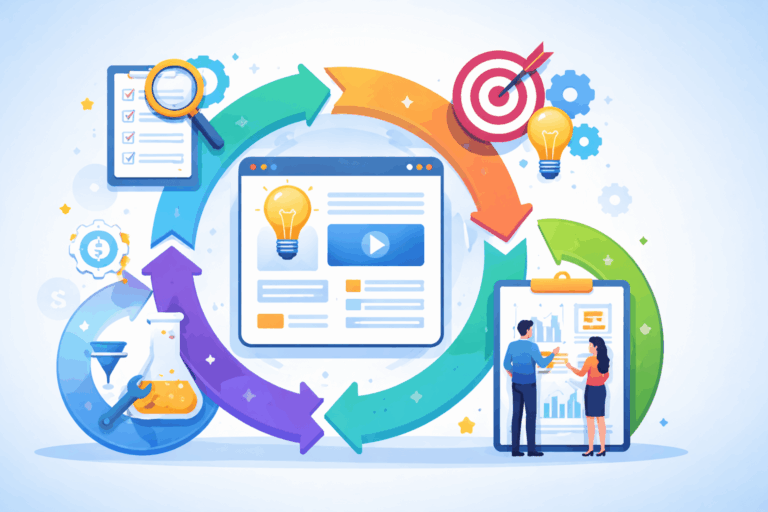
STEP-BY-STEP LANDING PAGE DECISION FRAMEWORK
Step 1: Traffic Intent vs Page Intent Mismatch
What to fix:
Match the reason someone clicked your ad with the exact action your landing page asks them to take. If the ad promises a solution, the page should continue that promise — not distract or restart the story. When intent and action don’t align, clicks turn into confusion, not conversions.
Why it impacts ROI:
Ad clicks are intent-based. Pages are often generic.
Common mistake:
Running “Get Quote” ads → landing on a brand overview page.
Pro tip from audits:
If you can’t describe the page’s goal in one sentence, ads should be paused.
Step 2: Message Continuity (Ad → Page → CTA)
What to fix:
The headline should feel like the next sentence of the ad, not a new introduction. When users land, they should instantly recognize the promise they clicked for. If the headline restarts the story, trust breaks and conversions drop.
Why it impacts ROI:
Users subconsciously ask: “Am I in the right place?”
Common mistake:
- Generic headlines
- Founder story above the fold
- “Welcome to our website”
Pro tip from audits:
Your H1 should feel like the next sentence of the ad, not a brochure headline.
Step 3: Conversion Friction & Form Psychology
What to fix:
Reducing decision fatigue means guiding users to one clear action, not just shortening the form. Too many options, explanations, or distractions exhaust users before they decide. Working with a conversion-focused marketing agency helps streamline user journeys, eliminate friction points, and design pages where the next step feels obvious and easy. A focused page converts better because it makes the decision process simple and intuitive.
Why it impacts ROI:
Every extra doubt lowers lead intent quality.
Common mistake:
- Asking for too much, too early
- No context before the form
- No expectation setting
Pro tip
Low-quality leads often come from confused users, not bad targeting.
Step 4: Trust Signals & Credibility Gaps
What to fix:
Users need reassurance before they’re willing to share personal details. Showing proof early builds trust and reduces hesitation. When credibility comes after the form, most visitors never reach it.
Why it impacts ROI:
Ads bring strangers. Pages must earn trust fast.
Common mistake:
- Testimonials hidden at the bottom
- No real faces, no real names
- Claims without evidence
Pro tip
If a user must “assume” you’re legit, your page is failing.
Step 5: Mobile UX & Load Speed Reality
What to fix:
Most ad traffic comes from mobile, yet many pages are still designed for desktop screens. Designing and testing mobile first ensures clarity, speed, and usability where it actually matters. If the mobile experience fails, your ad budget leaks silently no matter how good the ads are.
Why it impacts ROI:
- 60–80% of ad traffic is mobile.
- Most landing pages are not.
Common mistake:
- Heavy banners
- Slow fonts
- Pop-ups blocking CTAs
Pro tip
A slow page doesn’t just reduce conversions — it attracts junk leads who bounce late.
Step 6: Tracking, Lead Quality & Feedback Loops
What to fix:
A submitted lead doesn’t mean the ad worked — it only means someone filled a form. Real tracking must extend to lead quality, follow-ups, and sales outcomes. Without this feedback loop, ad platforms keep optimizing for volume, not value.
Why it impacts ROI:
Platforms optimize for volume, not quality unless you tell them otherwise.
Common mistake:
Judging success on CPL alone.
Pro tip
If sales feedback isn’t closing the loop, ads will keep sending the wrong people.

REAL CASE STUDIES
Case 1: Local Service Business
- Industry: Home renovation
- Monthly ad spend: ₹80,000
- Original issues:
- Homepage as landing page
- No service-specific messaging
- Long form with no structure
- Conversion rate:
- Before: 0.9%
- After: 2.4%
- Lead quality: Fewer leads, but 3× higher closure rate
- What didn’t work: Adding more testimonials without fixing headline
- Core lesson: Clarity beats persuasion.
Case 2: Scaling Performance Brand
- Funnel: Ads → Single-offer landing page → Call
- CAC before: ₹6,200
- Wrong assumption: “More features = more trust”
- Fix: Reduced copy by 40%, added decision framing
- Outcome: CAC stabilized at ₹4,300
- Lesson: Pages don’t need more information — they need better sequencing.

SOCIAL PROOF
“We thought leads were bad because of targeting. Turns out the page was attracting the wrong people.”
— Rohit Mehta, Marketing Head, B2B Company
“CTR was fine, CPL was fine — but sales hated the leads. Fixing the page changed that.”
— Ankit Shah, Solo Founder, Performance Brand
“Nothing scaled until we stopped sending paid traffic to a page built for investors.”
— Neeraj Patel, Founder, Growth-Stage Business

VERIFIED DATA & PLATFORM CONTEXT
Google Analytics: Bounce Rate vs Session Depth
Bounce rate alone doesn’t explain why ads fail — session depth does. A low bounce rate with shallow sessions often means users are scrolling but not engaging meaningfully. This indicates curiosity without intent, usually caused by unclear messaging or weak page structure. Tracking both together shows whether visitors are actually moving toward a decision or just killing time.
Ad Metrics: CTR vs CVR Mismatch
A healthy CTR with a poor conversion rate is a classic landing page warning sign. It means the ad promise is strong, but the page doesn’t deliver on it. Platforms keep sending traffic because clicks look good, while conversions quietly suffer. This mismatch is one of the fastest ways ad budgets get wasted.
Page Speed & Mobile UX Reports
Slow load times and clumsy mobile layouts don’t just reduce conversions — they attract low-intent users. Serious buyers leave early, while accidental or impatient users submit forms. Mobile UX reports reveal where frustration starts and intent drops. Ignoring this data means paying premium CPCs for substandard experiences.
Platform UX Updates Affecting Forms & Tracking
Ad platforms regularly change how forms, tracking, and user flows behave. These updates can break attribution, delay lead capture, or alter conversion signals without obvious errors. If you’re not reviewing UX and tracking after such changes, performance drops feel “random.” In reality, the system is optimizing on flawed signals.
PROOFS & SCREENSHOT
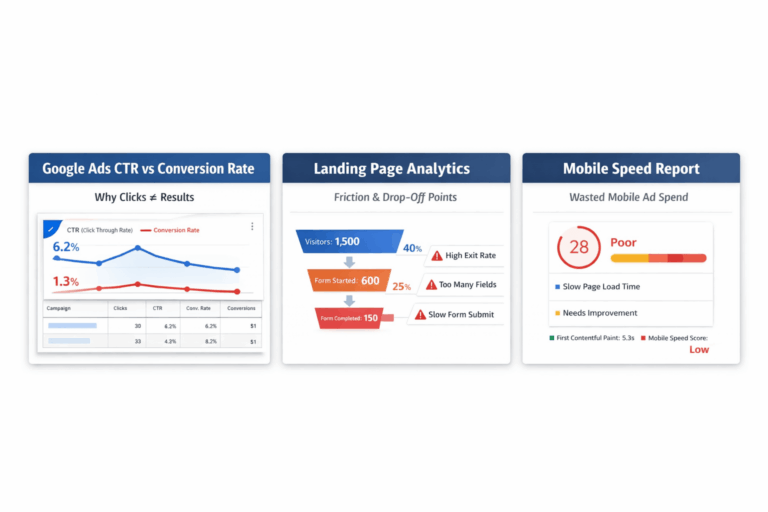
Conclusion:
Most ad budgets aren’t wasted because of platforms. They’re wasted because landing pages aren’t built for paid traffic reality.
If ads feel “off” — trust that instinct.
Next steps (non-sales):
- Use a landing page self-diagnosis checklist
- Map ad intent → page intent
- Validate before increasing spend
If you want, ask yourself one question now: “If I landed on this page as a stranger — would I trust it enough to convert?” That answer is usually the truth ads reveal too late.
Landing Page Mistakes That Waste Your Advertising Budget: FAQs
If clicks are coming but lead quality is poor, the issue is rarely targeting. The landing page is attracting the wrong intent or failing to qualify users. Ads bring people in — pages decide who converts.
Yes. Running ads on a broken page only teaches platforms to optimize for the wrong behavior. Pausing saves money and prevents bad data from polluting future performance.
When CTR is healthy but CVR is weak, targeting has done its job. The disconnect happens after the click, which points directly to the landing page experience.
It matters a lot. Homepages are built for exploration and credibility, not conversion. Landing pages are designed to drive one clear decision from paid traffic.
With steady traffic, meaningful changes usually reflect within 1–2 weeks. Clarity and friction reduction improve performance faster than ad-level optimizations.


