
Table of Contents
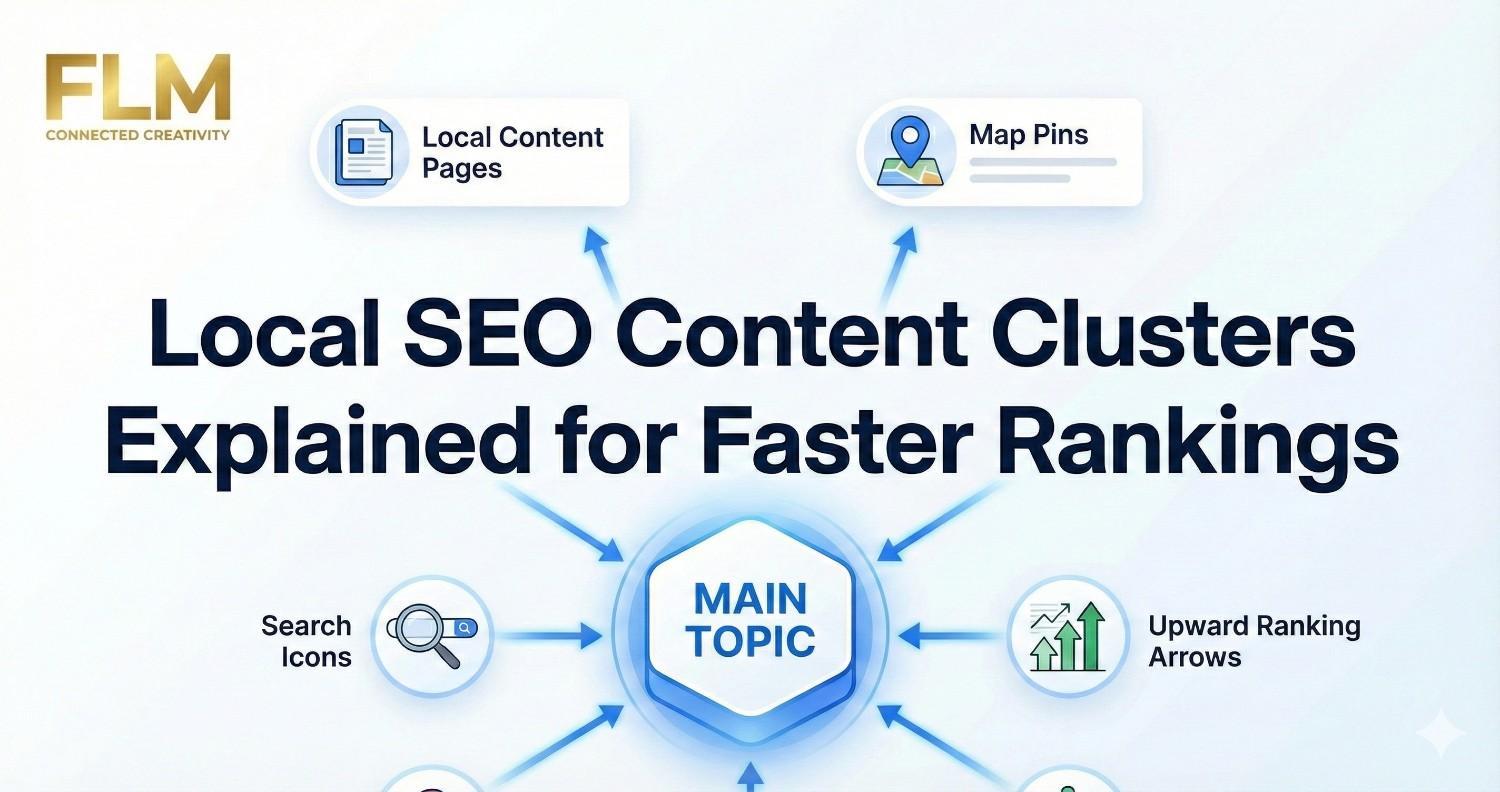
ToggleLocal SEO Content Clusters Explained for Faster Rankings
Every January, I see the same pattern with local businesses.
The phone was quieter than expected in December. Website traffic looks “okay” in Analytics, but enquiries don’t match it. Rankings move up one week and vanish the next. And the same question lands on my desk:
“What should we do differently this year so Google actually understands our business?”
After working with real estate developers, brokers, home service brands, and local professional firms for years, I can tell you this with confidence:
The problem is rarely effort. It’s almost always structured.
That’s why local SEO content clusters have become non-negotiable in 2026.

Why Random Content Fails
Most local websites didn’t fail SEO. They grew without a plan.
A blog about pricing. A page targeting a suburb. Another post answering a customer question. All published months apart.
Each page tries to rank alone.
From Google’s point of view, that creates three problems:
- No clear expertise signal – You look like you know a little about many things, not a lot about one.
- Weak internal relevance – Pages don’t reinforce each other.
- Unstable rankings – Any update can knock isolated pages down.
Read More: Local SEO mistakes to avoid in 2026

What a Local SEO Content Cluster Really
Forget marketing jargon. Here’s the practical version.
A content cluster is a connected group of pages that answers every meaningful question a local buyer asks before choosing a service or property.
1. One Core Authority Page
This is not a sales page.
It’s a deep, educational anchor that explains the full topic:
Service overview
Clearly explains what the service does, the outcome it delivers, and the core problem it solves—without hype or jargon.
How it works
Breaks the process into simple, logical steps so users understand what happens, when, and why it matters.
Who it’s for
Defines the ideal customer and use cases, while also clarifying who may not benefit to build trust.
Local considerations
Addresses location-specific factors like regulations, market behavior, pricing norms, or local risks that affect decisions.
Example (real estate):
“Buying Residential Property in Gandhinagar: A Complete Local Buyer Guide”
2. Supporting Pages That Solve Specific Problems
Each page tackles one buyer concern, not one keyword.
Examples:
Is Koba a Good Area for Long-Term Investment?
Explains growth drivers, infrastructure plans, and real price trends to assess long-term potential realistically, not hype-driven.
3. Intentional Internal Linking
Every supporting page links up to the pillar. The pillar links out to every supporting page.
This tells Google:
“This website understands this topic better than others.”

Why Google Rewards This Model
Google is no longer impressed by keywords. It measures confidence and completeness.
Content clusters send strong signals:
- Topic depth instead of surface coverage
- Clear relationships between questions
- Longer user engagement
- Lower pogo-sticking (users don’t bounce back to search)
Because Google must decide:
Which business should I trust in this specific area?
A structured site wins that decision more often.
Read More: Local SEO checklist for Ahmedabad businesses

How Content Clusters Mirror Real Buyer Behaviour
Buyers don’t think in keywords.
From my experience with real estate buyers, the journey usually looks like this:
Is this area safe and growing?
Buyers want assurance that the neighborhood is secure, developing, and holds future value—not just hype.
What kind of property fits my family or budget?
People need clear matches between their lifestyle needs, budget limits, and property types.
What are the risks?
Understanding legal, financial, and physical risks helps buyers avoid costly mistakes.
What will this cost long-term?
Total ownership cost—maintenance, taxes, upgrades, and resale value—matters more than the headline price.
Can I trust this builder or agent?
Trust is earned through verified experience, reviews, transparency, and consistent professionalism.
When your site does this:
- Users stay longer
- Pages rank together
- Enquiries increase across multiple pages, not just one

Where Most Local Businesses Go Wrong
Mistake 1: Location Stuffing
Creating 20 pages like:
“Best Real Estate Agent in [Area]”
This triggers duplication, not authority.
Mistake 2: Writing for Google, Not Decisions
Blogs written only to rank, not to help someone choose. Google sees through that now.
Mistake 3: No Ownership of a Topic
Trying to rank for everything instead of dominating one category. Clusters fix all three.

A Step-by-Step Framework You Can Actually Use
Step 1: Pick One Money Topic
Ask:
What service or property type actually drives revenue?
Revenue comes from offerings that solve a clear, urgent buyer need—typically high-intent services or property types with proven demand, trust, and repeat inquiries.
What do customers hesitate about?
Customers hesitate due to unclear pricing, fear of hidden risks, lack of trust, and uncertainty about long-term value or outcomes.
Example:
Buying Flats in Koba Gandhinagar
Step 2: Build the Pillar Page First
This page should:
- Be 2,000–3,000 words
- Answer beginner to advanced questions
- Include local examples, pricing ranges, risks, timelines
Step 3: Map 8–12 Supporting Pages
Each page answers:
- One fear
- One comparison
- One cost question
- One trust issue
Step 4: Interlink With Purpose
Links should feel helpful, not forced.
Bad:
Click here
Good:
“If you’re comparing 3 BHK and 4 BHK options in Koba, this breakdown helps.”
Step 5: Improve Over Time
Clusters are not “publish and forget.
Update:
- Prices
- Regulations
- Local trends
- Buyer preferences

Real-World Example
A regional real estate consultancy I worked with had:
- 40+ blogs
- Traffic but low enquiries
- Rankings fluctuating monthly
We:
- Deleted 12 thin posts
- Merged content into one buyer-focused cluster
- Added real FAQs from client calls
- Linked service pages into the cluster
Results in 5 months:
- 42% increase in organic enquiries
- 6 keywords entered top 3 together
- Average session time doubled

Why Content Clusters Matter Even More in 2026+
AI summaries, zero-click results, and fewer organic slots mean:
- Fewer chances to be visible
- Higher standards for trust
- Less tolerance for shallow content
Clusters help you:
- Qualify traffic
- Reduce wasted clicks
- Hold rankings during updates
- Become a reference, not just an option
Conclusion
If you do one thing this year, do this:
Stop publishing isolated content. Start building owned expertise.
One strong content cluster can outperform a year of random blogging.
SEO isn’t about chasing Google.
It’s about helping real people make real decisions — better than anyone else in your area.
Local SEO Content Clusters - FAQs
Q1. What is a local SEO content cluster?
Q2. How many pages should one cluster include?
Q3. Do content clusters replace service pages?
Q4. How long does it take to see results?
Q5. Are content clusters better than location landing pages?
References
About the Author