
Table of Contents
ToggleWhy Google Ads Stop Working For Small Businesses?
Why Google Ads Stop Working For Small Businesses?: Last year, I audited a small service business in Ahmedabad spending ₹40,000 per month on Google Ads. The owner told me:
“Ads were working earlier. Now the leads have stopped.
The agency says competition has increased and we need more budget.”
On the dashboard, everything looked healthy:
- CTR above 6%
- “Conversions” increasing
- Traffic growing month-on-month
On the ground?
- 70% calls were junk
- Sales team stopped following up seriously
- Zero clarity on which leads ever converted into revenue
This is the part most Google Ads blogs never tell small businesses: They teach how to run ads — not how to survive after paying for them.
In my experience auditing Google Ads accounts for small businesses in Ahmedabad, ads don’t “stop working” suddenly. They quietly rot while everyone celebrates the wrong numbers.
This guide is about:
- Reality over dashboards
- Survival over “best practices”
- Judgment over automation
No sales pitch. No hacks. Only clarity.
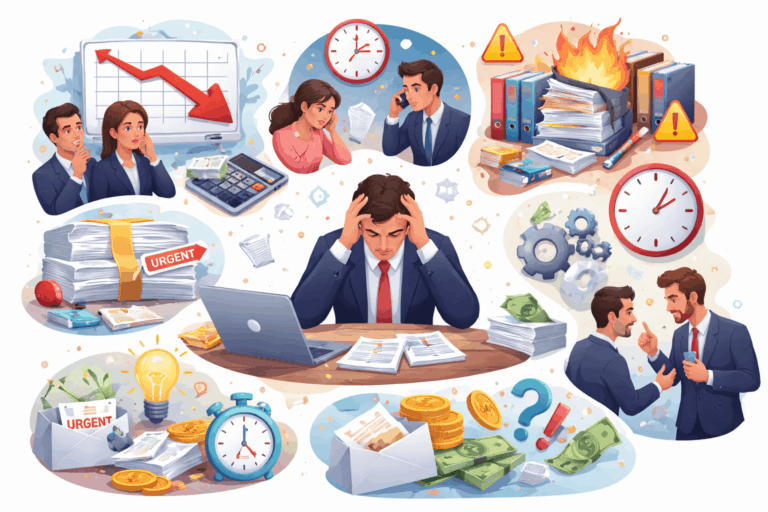
REAL BUSINESS PROBLEMS I SEE EVERY WEEK
Problem 1: Fake Success Metrics
Small businesses are shown:
- Impressions
- CTR
- “Traffic growth”
But nobody answers:
- Cost per real lead
- Cost per sales-qualified inquiry
- Cost per actual customer
If revenue is missing, every metric above it is a lie.
Problem 2: Zero Accountability From Agencies
Most agencies optimize:
- To keep campaigns running
- To avoid tough conversations
- To protect retainers
They rarely optimize for:
- Owner cash flow
- Team bandwidth
- Lead quality fatigue
When ads fail, the blame is always external:
- “Algorithm update”
- “Seasonality”
- “Competition increased”
Never strategy.
Problem 3: Automation Without Business Readiness
I repeatedly audit accounts ruined by:
- Smart Bidding without volume
- Performance Max without clarity
- Broad match without budget depth
Automation works for Google’s auction, not for fragile small businesses.
Problem 4: Confusion Between Systems
Owners assume:
- Ads = leads
- Leads = sales
- Traffic = growth
They ignore:
- Landing page leaks
- Poor call handling
- No CRM discipline
- No feedback loop to ads
Google Ads doesn’t fail alone.The business fails the ads.

STEP-BY-STEP FAILURE & DECISION FRAMEWORK
Step 1: Business Readiness & Offer Clarity
What most businesses do wrong
Run Ads for “All Services”
Running ads for every service you offer spreads your budget too thin and kills data clarity. You end up not knowing which service is actually profitable. Focus on 1–2 high-margin or high-demand services first, prove ROI, then expand.
No Clear Pricing Signal
If your pricing isn’t visible or at least hinted at, you attract the wrong audience — bargain hunters or unqualified leads. This increases cost per lead and wastes sales time. Even a starting price range filters serious buyers from time-wasters.
No Differentiation
If your ads and website sound like every competitor (“best service,” “trusted,” “quality”), customers compare only on price. Without a clear reason to choose you, marketing becomes a race to the bottom. Differentiation lowers acquisition cost and improves conversion rates.
What actually matters
- One problem
- One buyer intent
- One clear next step
Why it breaks ads
Unclear offers confuse users → low intent clicks → wasted spend.
Step 2: Account Structure & Campaign Strategy
Wrong move
- One campaign
- All services
- Mixed intents
What matters
- Separate campaigns by intent
- Control budgets, not just bids
Why ads fail
High-intent searches get starved by low-intent traffic.
Pro tip
If everything is in one campaign, nothing is prioritized.
Step 3: Keyword Intent vs Budget Reality
Hard truth: ₹30k–₹50k/month cannot fight:
- Insurance
- Real estate
- Legal
- Medical
Mistake
Chasing “high-intent” keywords without budget depth.
Reality
Small budgets lose auctions structurally, not tactically.
Step 4: Landing Pages & Conversion Leaks
Wrong assumption
“Traffic is the problem.”
Audit finding
- Slow pages
- Generic content
- No trust signals
- Weak call intent
Step 5: Tracking, Attribution & Fake Wins
What I see
Every Form = Conversion
Not every form submission is a real lead. Many are job inquiries, vendors, spam, or irrelevant requests. If you count all forms as conversions, your cost per lead looks better than reality — and you’ll keep funding campaigns that aren’t profitable.
Junk Calls Counted as Leads
Not every form submission is a real lead. Many are job inquiries, vendors, spam, or irrelevant requests. If you count all forms as conversions, your cost per lead looks better than reality — and you’ll keep funding campaigns that aren’t profitable.
No Offline Tracking
If you don’t connect leads to actual closed sales, you don’t know your true ROI. Marketing might look profitable in dashboards but fail in real revenue. Without CRM or offline conversion tracking, you’re flying blind and trusting surface-level metrics.
Result
Owners think ads work — until cash dries up.
Step 6: Sales Follow-Up & Lead Quality
Even good leads die when:
Calls Aren’t Answered
If 30–40% of ad-driven calls go unanswered, your real cost per lead doubles instantly. You don’t have a marketing problem — you have a systems problem. Scaling ads before fixing call handling is how businesses burn budget without realizing it.
Response Takes Hours
In local services, speed is revenue. If your team responds after 2–3 hours, the customer has already called competitors. Slow response kills conversion rates and makes good campaigns look bad. Before increasing spend, fix response time.
Sales Teams Distrust Ads
When sales teams say “ads leads are low quality,” it’s often a tracking or targeting issue — or a filtering issue. But if marketing and sales aren’t aligned on what a qualified lead looks like, you’ll keep arguing instead of optimizing. Partnering with a performance-driven digital marketing agency can help bridge this gap by aligning lead qualification metrics, tracking systems, and conversion feedback loops. Fix definitions and feedback loops before scaling.
Read More:- How To Run Profitable Google Ads Campaigns
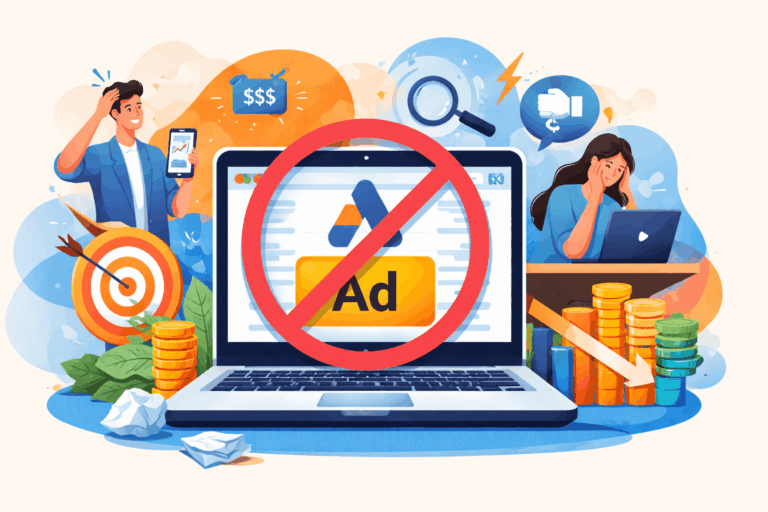
WHEN GOOGLE ADS WON’T WORK — BE HONEST
When Your Offer Isn’t Clear
If customers can’t quickly understand what you do, who it’s for, and why you’re different, ads will only amplify confusion. Marketing doesn’t fix unclear positioning — it exposes it. Clarify your core offer before spending ₹1 on traffic.
When Your Budget Is Survival-Level
If you’re spending your last ₹30,000 hoping marketing “saves” the business, that’s desperation spending. Both SEO and Ads require testing, iteration, and patience. Survival-level budgets create panic decisions and early shutdowns before campaigns mature.
When Operations Can’t Handle Leads
If you miss calls, delay responses, or lack a follow-up system, more leads will not increase revenue — they’ll increase waste. Scaling traffic without fixing operations is like pouring water into a leaking bucket.
When SEO or Referrals Are Cheaper
If referrals are already generating profitable business and your organic rankings are improving, jumping into aggressive ad spending may reduce margins unnecessarily. Sometimes the smartest move is to strengthen what’s already working instead of chasing paid growth.
When Demand Isn’t Urgent
Google Ads work best when buyers need something now. If your service is low urgency or high consideration, ads can become expensive education campaigns. In such cases, SEO and content may build trust more sustainably.

REAL CASE STUDIES
Case Study 1: Local Service Business
- Industry: Home services
- Budget: ₹35,000/month
- Problem: Leads dropped suddenly
What was wrong
- Broad keywords
- No negative keyword control
- All services in one campaign
Changes
- Paused 60% keywords
- Focused on one service
- Fixed landing page clarity
Result (4 months)
- Fewer leads
- Higher close rate
- Lower stress
Lesson: Volume hides inefficiency.
Case Study 2: Scaling Business
- Industry: Professional services
- Spend: ₹1.2L/month
- Problem: Poor lead quality
Issues
- Performance Max misuse
- No call qualification
- Broken attribution
Fix
- Search-only reset
- Offline conversion imports
- Sales feedback loop
Outcome
- Slower growth
- Predictable revenue
Lesson: Automation amplifies mistakes first.

SOCIAL PROOF
“We realized ads weren’t broken — our expectations were. We expected instant ROI without fixing our follow-up process.”
— Dr. Amit Patel
“Pausing ads saved more money than optimizing them. We were spending just to feel active, not because the numbers made sense.”
— Rohit Mehra
“The audit hurt, but it stopped the bleeding. We finally saw where the waste was happening instead of blaming the platform.”
— Sandeep Verma
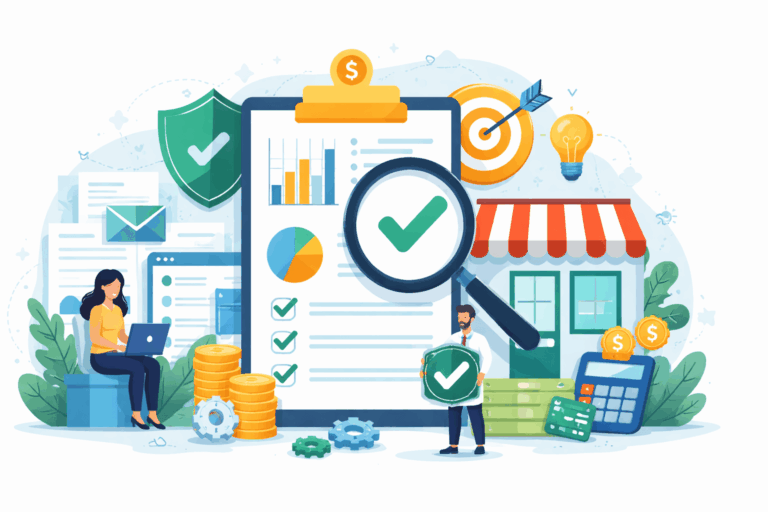
VERIFIED DATA & SMALL BUSINESS CONTEXT
Google Ads Search Term Reports
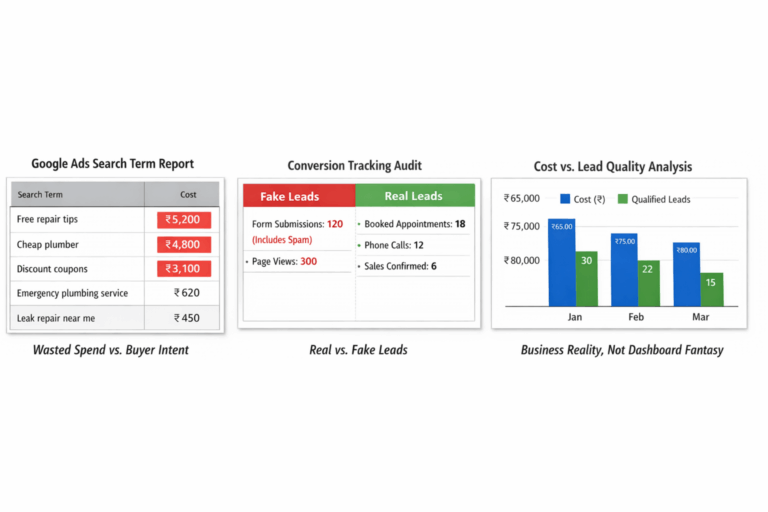
This shows what people actually typed before clicking your ad — not what you think you’re targeting. I’ve seen businesses waste 30–40% of spend on irrelevant queries because nobody checked this weekly. If you don’t audit search terms, you’re paying for curiosity, not intent.
Conversion Tracking Audits
Most accounts track something — but not the right thing. Duplicate conversions, thank-you page reloads, or “all page views” marked as goals can fake performance. A proper audit ensures you’re optimizing for real revenue signals, not technical errors.
CRM Lead Logs
Your CRM tells the truth that ad dashboards don’t. It shows which leads were qualified, which converted, and which were junk. If marketing reports 100 leads but CRM shows 18 real prospects, that gap is where your budget is leaking.
Call Recordings
Listening to 20–30 real calls changes everything. You’ll quickly know if ads are attracting the wrong audience, if pricing is scaring people off, or if your team is mishandling inquiries. Without call audits, you’re guessing about “lead quality.”
Month-on-Month Spend vs Revenue
If ad spend increases but revenue stays flat, something is broken — targeting, conversion, or operations. Tracking spend against closed revenue (not just leads) prevents emotional scaling decisions based on vanity growth.
PROOFS & SCREENSHOT
Conclusion:
Google Ads don’t fail small businesses. Misalignment does.
Before spending another ₹1, ask:
- Do I know my real cost per customer?
- Can my team handle leads?
- Is my offer clear?
- Is my budget realistic?
- Would stopping ads hurt or help?
Clarity saves more money than optimization.
Why Google Ads Stop Working for Small Businesses?: FAQs
Early success often hides inefficiencies. When competition increases and auctions tighten, weak targeting, poor follow-up, and bad tracking get exposed. What worked in a low-CPC environment collapses when costs rise. The platform didn’t suddenly “break” — your margin for error disappeared.
Ads generate immediate demand capture. SEO compounds over time and lowers dependency on paid traffic. If survival is the goal, Ads help. If long-term stability is the goal, SEO wins. The mistake is treating them as replacements instead of tools for different stages.
Enough to test properly — but not so much that you panic after 30 days. If losing the first 2–3 months of spend would emotionally destabilize you, your budget is too high. Marketing needs testing room. Desperation spending leads to premature shutdowns and wrong conclusions.
If revenue isn’t part of the conversation, truth isn’t either. If reports focus on clicks, impressions, CTR, or “ranking improvements” without discussing cost per sale, lifetime value, or closed revenue, you’re being shown activity — not outcomes.
If clarity is missing — yes. If tracking is broken, calls aren’t answered, sales aren’t aligned, or you don’t know your real cost per customer, scaling ads is reckless. Pause. Fix systems. Then restart with control.
References
About the Author